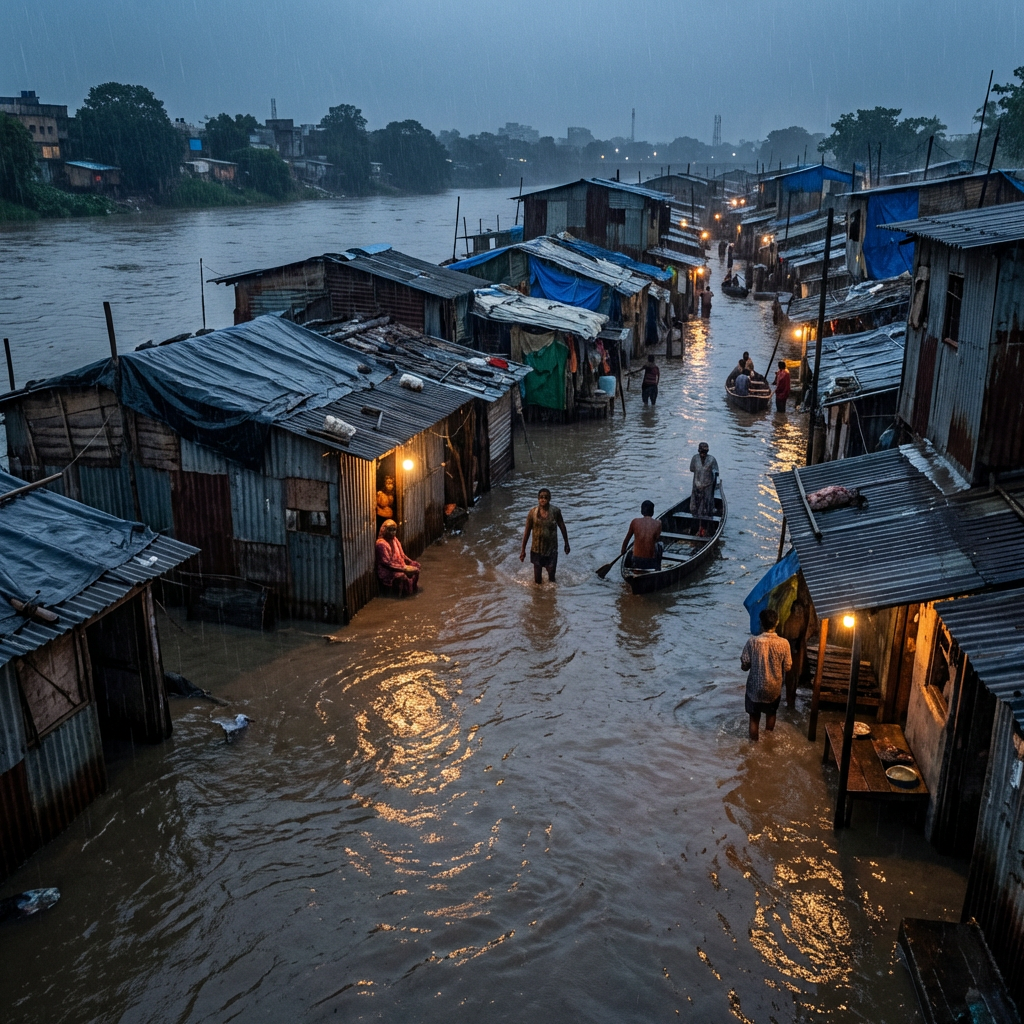
For generations, the Buriganga River has been the lifeblood of Dhaka, its bustling ports and banks giving rise to the sprawling city we know today. Yet, for many living on its polluted fringes, this river is less a source of sustenance and more a sinister symbol of entrapment, a murky barrier between a desperate present and a hopeful future. This is a story about that crossing, from the shadow of the river’s edge to the sunlight of new possibilities, showing how resilience and opportunity can rewrite a seemingly predetermined destiny.
Watching the Black Water Swallow the City
From his small hut in Kamrangirchar, the buriganga was Arif’s constant, ominous companion. Each monsoon, the “black water” rose, not just as murky floodwater, but as a rising tide of dread. The river, choked with industrial waste and plastic, would seep into homes, claiming meager possessions and any fragile sense of security. For Arif and thousands like him, this was more than seasonal flooding—it was a visual metaphor for a future being eroded daily.
- The rising waters meant days of lost wages from his precarious rickshaw-pulling job.
- It meant watching his children fall sick with waterborne diseases, medical costs piling up.
- It cemented a feeling of powerlessness, of being on the frontlines of climate vulnerability with no recourse.
The riverbank, a place that should signify life and transport, felt instead like the edge of the world, with only a vast, uncertain city at their backs and a toxic river at their feet. This sense of being trapped, of needing to provide against an unforgiving environment, set the stage for desperate measures.
The Gripping Trap of Gambling Debt
Facing constant financial instability, Arif saw few avenues for quick relief. Among the cramped lanes of his neighbourhood, illegal gambling dens promised a way out—a chance to turn 100 taka into 1000, to buy medicine, to repair the roof. Initially hesitant, the pressure mounted, and he took the plunge.
> “In the dens, hope is the currency they sell you, and debt is what you always buy.”
What began as a flutter soon became a quicksand of compounding debt. The “loan sharks” operated with chilling efficiency and faux friendliness, their interest rates designed to be impossible to repay. The cycle was brutal:
- Initial Borrowing: A small, urgent loan with “simple” terms.
- Spiraling Interest: Weekly payments that often only covered the interest, never the principal.
- Psychological Enslavement: Threats that were rarely violent but always implied, targeting family and remaining dignity.
The river’s external threat was now matched by an internal, man-made crisis. The dream of beating the system had backfired, and Arif found himself in deeper poverty than before, emotionally isolated and hopeless.
A Friend’s Lifeline: An Unexpected Workshop
Salvation came not from an institution, but from a childhood friend, Kamal. Kamal had attended a skills development workshop run by a local NGO in Mirpur. Seeing Arif’s despair, he didn’t offer a loan; he offered information and companionship.
> The most powerful intervention is often simply saying, “I know a place. Come with me tomorrow.”
Skeptical but with nothing left to lose, Arif went. The workshop, held in a simple community hall, was unlike anything he expected. It wasn’t just about learning a trade like basic mobile phone repair or tailoring; it was a holistic program addressing the roots of economic despair:
- Financial Literacy: Understanding debt cycles, basic savings, and budgeting.
- Peer Support: Shared stories that dissolved shame and built collective resolve.
- Ethical Entrepreneurship: Focusing on sustainable, honest income generation.
For the first time in years, Arif felt his mind engaged on building something, rather than just surviving. The workshop provided a toolkit, both practical and psychological, to begin the long climb back.
The First Ethical Investment, A New Start
Upon completing the course, the NGO offered a critical lifeline: access to a microfinance loan with transparent, low-interest terms. This was not the predatory debt of the past, but a seed capital investment in himself. With meticulous planning from his financial literacy training, Arif made his first ethical investment.
He purchased a refurbished smartphone, a toolkit, and a small, branded stool. He became “Arif Bhai, the Fast Fix,” setting up his mobile repair station near a local market, not a gambling den. The principles he embraced were his new foundation:
- Transparent Pricing: Clear rates posted for common services.
- Small Profits, Regular Service: Building customer trust for repeat business.
- Reinvestment: Putting a fixed percentage of each day’s earnings back into tools and parts.
His first honest earnings, used to buy his daughter a new school uniform, carried a profound sense of achievement no gambling win could ever match.
Building Futures: From Slums to Startups
Arif’s story is not about a solitary hero. It is a blueprint for urban resilience. His success has created a ripple effect. He now mentors two other young men from his slum, teaching them repair skills. The NGO’s model is proving that the underemployed youth in Dhaka’s riverine slums are not a burden, but an untapped reservoir of enterprise.
This journey from the river’s edge signifies a larger shift for Dhaka’s future:
- Moving from Informality to Formality: Turning survival gigs into registered, scalable micro-businesses.
- Building Climate-Resilient Livelihoods: Creating incomes not washed away by the next flood.
- Harnessing the Digital Economy: Using technology for service delivery, mobile banking, and marketing.
The path forward involves scaling these interventions, fostering public-private partnerships, and fundamentally believing in the capacity of every individual living in the city’s shadows. The black water of the Buriganga may still rise, but for Arif and those he inspires, it no longer dictates their fate. They have crossed from its edge into the vibrant, challenging heart of the city, not as victims, but as builders of Dhaka’s new future, one honest repair, one ethical investment, at a time.
Leave a Reply