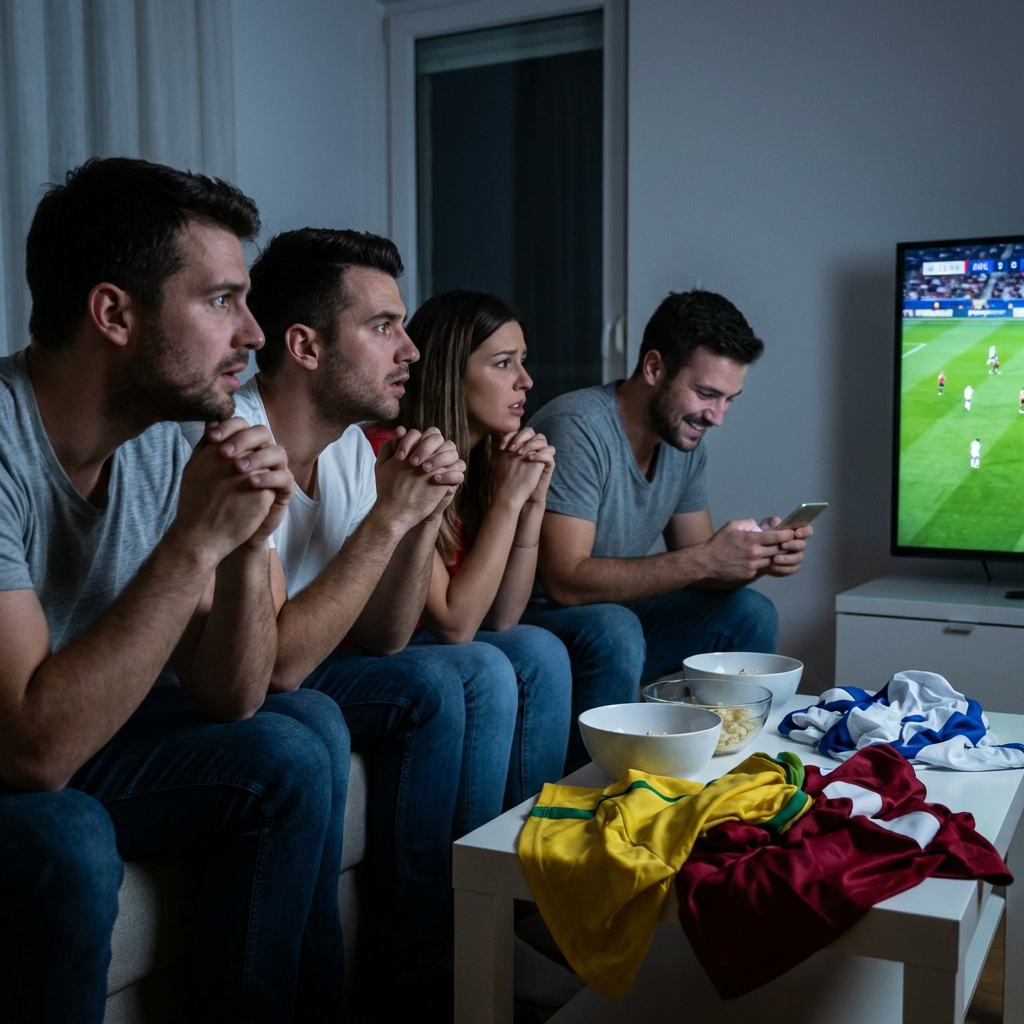
In the city of Philadelphia, fandom is less a hobby and more a hereditary condition. It’s a complex tapestry of unwavering loyalty, shared trauma, and a paradoxical, almost pathological hope. For lifelong residents like me, my friend Mark, and the entire neighborhood crew, our identity is intertwined with the green of the Phillies and the midnight green of the Eagles. We wear our hearts, and our jerseys, on our sleeves. But what happens when the bonds of brotherhood, forged in the crucible of sports heartbreak, are tested not by a loss on the field, but by a risk-free temptation off it? This is a story about a free bet—a seemingly harmless promotional gift—that became the ticking clock on a twenty-year friendship.
From Brotherly Love to a Risk-Free Obsession
Mark and I grew up on the same block in South Philly. Our friendship was built on a foundation of shared experience:
- Cheering until our throats were raw at Veterans Stadium.
- Enduring the collective misery of “The Process” with the Sixers.
- Finally, truly, believing when the Phillies won in 2008 and the Eagles in 2017.
Our Sundays were ritual. We’d gather, usually at my place, for a spread of cheesesteaks (wit’ out, obviously) and the sheer, unadulterated stress of watching the Eagles. For years, our only wager was a battle of insults and bragging rights.
Everything changed when online sportsbooks became legal in Pennsylvania. At first, it was just for fun—a few bucks on a prop bet to make a blowout interesting. Then, I received a promotional offer: a $50 free bet from a new sportsbook, no deposit required. It was presented as “found money,” a chance to win real cash without risking my own. It felt like a gift.
> The first rule of free-bet club should be: A free bet is never free. It’s a gateway wager.
What started as a novelty became an obsession. I wasn’t just watching the game; I was analyzing spreads, over/unders, and player props. The camaraderie of our group started to feel secondary to the potential payout. I was physically present, but mentally calculating odds.
The Winning Streak and the Deepening Cracks
My initial success with that free bet was, in hindsight, a curse. I turned that $50 in free play into a couple hundred dollars of real cash. Suddenly, I had a “system.” My confidence swelled. I began making larger, more frequent bets. The casual atmosphere of our watch parties began to shift.
The cracks were subtle at first:
- I’d excuse myself during key drives to check my phone, monitoring other games I’d bet on.
- Conversations about a player’s legacy would be interrupted by my commentary on the point spread.
- Mark, ever the traditionalist, started calling me “Vegas.” It was a joke, but the edge in his voice was new.
My obsession with the action was eclipsing my love for the team. I was chasing the dopamine hit of a notification for a winning bet, not the euphoria of a game-winning touchdown caught in a sea of fellow fans. Our friendship, once defined by a shared, pure passion, was now divided by my secret, solitary pursuit of profit.
The Bet Behind My Best Friend’s Back
The breaking point arrived during a critical late-season Eagles-Cowboys game. The stakes for the division were sky-high. The energy in my living room was electric, a pure, old-school Philly frenzy. Mark was in his element, leading the chants, living and dying with every snap.
And I was distracted. I had placed a sizable bet—not on the Eagles to win, but on the total points going over. To me, it was a smart play based on the defenses. To the friendship, it was a betrayal.
As the Eagles’ defense made a heroic goal-line stand in the fourth quarter to preserve a close lead, the room erupted. Mark hugged me, screaming, “That’s our D! That’s Philly!” My heart sank. That stand had likely killed my “over” bet. In that moment of pure collective joy, I felt a pang of private disappointment. The divided loyalty was complete. I was no longer just a fan; I was a stakeholder with conflicting interests.
Worse, when Mark asked me later why I hadn’t been cheering as hard, I lied. I told him I was worried about the offense. I had chosen my hidden bet over the honesty of our two-decade friendship.
Free Promises with a Final, Massive Cost
The Eagles won the game, securing the division. The party spilled out of my house and into the general neighborhood revelry. But my bet lost. The cost, however, wasn’t the money. It was the hollow feeling in my chest as I faked a smile. Mark knew something was off.
He confronted me a few days later. It wasn’t a dramatic blow-up, but something quieter and more devastating. He said the phrase I’ll never forget: “You’re not in it with us anymore. You’re just… auditing.” He didn’t even know about the specific Cowboys bet; he just felt my absence. The free bet promise of easy money had extracted its ultimate price: the erosion of trust and shared experience. The friendship cost was suddenly, painfully clear. Our watch parties were suspended indefinitely.
Pride, Regret, and Empty Cheers on Broad
The following season, I tried to watch games alone. I’d given up betting entirely, cold turkey, but it didn’t matter. The sounds of the game only amplified my regret. I missed Mark’s running commentary, our synchronized groans, the way we could communicate an entire paragraph’s worth of panic with just a look.
I saw him once during the playoffs, down on Broad Street amid the waving towels. We locked eyes from across the crowd, gave a curt, familiar nod—the Philly salute—but the distance between us was a chasm no touchdown could cross. The cheers around me felt empty. I had traded the intangible, priceless currency of a shared history for the fleeting illusion of a risk-free win.
The cost of that friendship gamble was final. The free bet had been spent long ago, but I was the one who ended up paying for it, over and over, every Sunday since. In the end, the house always wins—and sometimes, the house is your own poor judgment, and the prize it claims is the thing you never meant to put on the line.
Leave a Reply