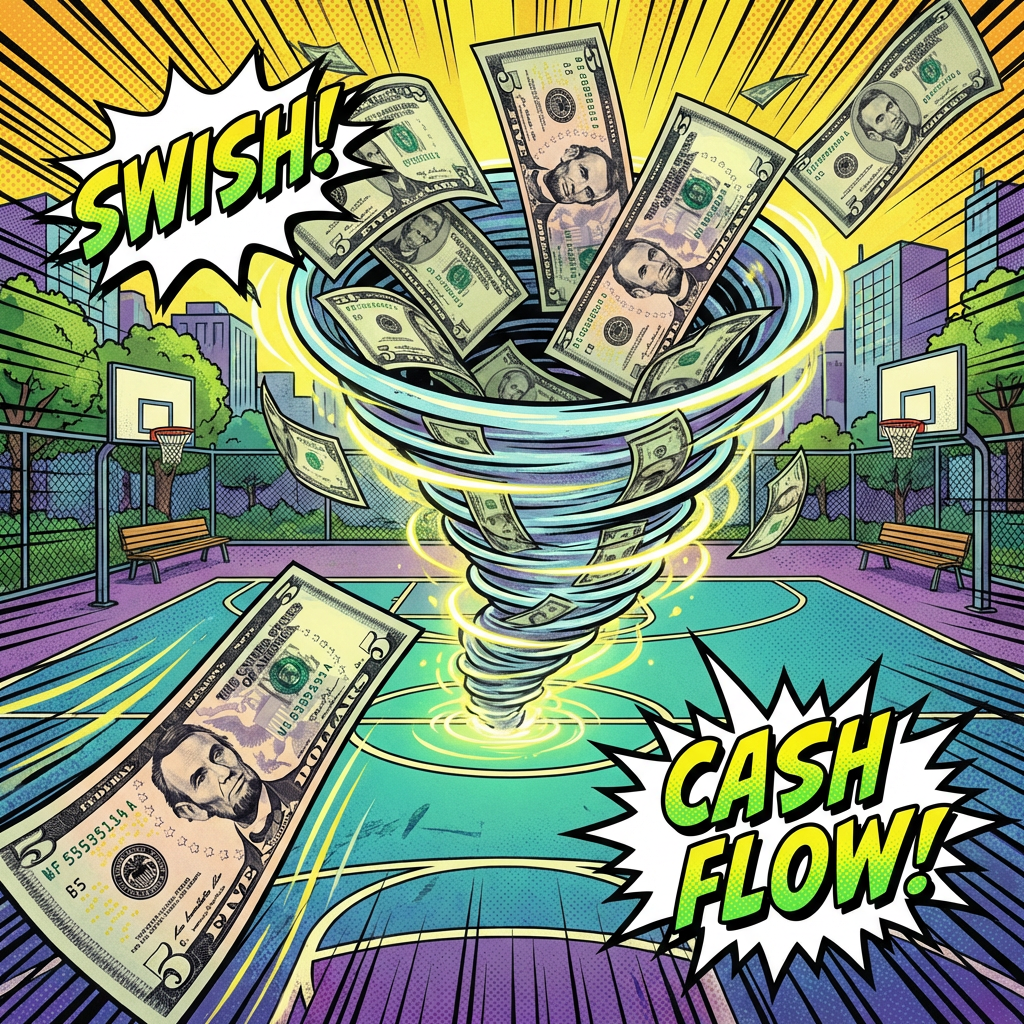
It’s a scene played out in bars, living rooms, and sportsbooks across the world, but rarely with such a quietly devastating ledger. This isn’t a story of a high-roller losing a mansion on a single parlay. This is a portrait of erosion, a chronicle of dissolution measured not in stacks of chips, but in crumpled bills pulled from a worn wallet, one after the other. It’s the anatomy of how a fan’s passion curdled into a painful addiction, five dollars at a time. We watched it happen, transaction by tiny transaction, until there was nothing left but the echo of a whistle and an empty seat.
The First Five Dollars: A “Harmless” Habit Forms
It always starts with a laugh. A group of coworkers, let’s call one of them Mark, decided to make the monotonous NBA regular season more interesting. The stakes were deliberately, almost insultingly, low.
- “The Degenerate’s Delight”: A weekly pool for the Phoenix Suns game, buy-in: five dollars. Pick the winner, the margin, the leading scorer.
- “The Friday Parlay”: Throwing another five bucks on a two-leg parlay combining the Suns’ result with a random NHL game.
- “The Prop Bet”: An extra five dollars on Devin Booker’s point total, just for fun.
The mood was jovial. A loss meant buying a cheap round of coffees the next day. A win was a minor thrill, a story for the group chat. This phase was characterized by its lack of consequence. The “friendly wager” was just a social token, a way to manufacture meaning in an 82-game grind. We were all playing along, blissfully unaware that for one of us, the wiring was different. The rush of a correct prediction, the tiny dopamine hit of a winning bet slip on a phone screen, had found its mark.
The Downward Spiral of Penny-Ante Pressure
As the season wore on, a subtle shift occurred. The laughter surrounding the losses became a little thinner for Mark. The Suns’ inevitable mid-season slump wasn’t just a sports narrative; it became a personal financial ledger. The “five-dollar frustration bet” was born.
> “Just five bucks to win back what the team owes me from Tuesday. It’s a moral victory bet.”
The logic was self-justifying and dangerous. The bets began to multiply, no longer confined to our office pool:
- Live-betting five dollars when the Suns went down by 10 in the 3rd quarter.
- A “hedge” bet of five dollars on the opposing team when a lead felt shaky.
- Five dollars on the over/under for rebounds at halftime.
Each individual action seemed trivial. But collectively, they formed a web of constant, low-level engagement. Watching the game was no longer about enjoyment; it was a live trading floor. His emotional state became directly pegged to the fluctuating point spread. A victory felt less like joy and more like relief—a temporary stay on a mounting sense of unease.
Five Bucks, Fifty Curses, Five Thousand Lost
The trivial sums became a smokescreen for a significant total. We started to piece it together. The “nickel-and-dime drain” was real. Doing the math was horrifying:
- Weekly Office Pool: $5
- Daily “Micro-Parlays”: Averaging $15/day, 5 days a week = $75
- Weekend Game “Action”: Multiple small bets totaling ~$40
- Monthly Calculated Loss: Easily over $500, most of it lost in $5 and $10 increments.
> “It’s just my entertainment budget,” he’d say, a mantra that masked the reality. “I’d spend this on a movie or a bad dinner anyway.”
But this wasn’t entertainment. It was agitation. Each missed Suns free throw wasn’t just a missed point; it was a direct debit. He knew the profiles of backup point guards on opposing teams not out of fandom, but out of risk assessment. The “cost of fandom” had been fundamentally corrupted. We weren’t watching a fan suffer through a losing streak; we were watching a gambler trapped in a losing system of his own design, blaming the players, the referees, the coach—anyone but the choice to place the bet.
From Coworker To Helpless Witness
Our role morphed from co-participants to horrified spectators. The group chat, once for memes and highlights, became a minefield. A missed Suns cover would trigger a string of vitriolic, all-caps messages. The easygoing colleague we knew receded, replaced by a perpetually stressed, sunken-eyed version who checked his phone under the table during meetings.
- The Borrowed Five: He’d “forget his wallet” at lunch, needing to borrow a few bucks, always with a vague promise to pay back tomorrow.
- The Isolation: He stopped joining for post-work drinks, not out of dislike, but likely because he didn’t have the cash. The communal aspect of fandom was gone.
- The Rationalization: Any expression of concern was met with deflection. “You guys worry too much. It’s under control. I’m due for a hot streak.”
We discussed an intervention, but how do you confront someone about five-dollar bets? The societal image of a gambling problem didn’t fit. There were no secret loansharks, no emptied retirement accounts (that we knew of). Just a slow, persistent leak that was draining his spirit, dollar by dollar, long before it emptied his bank account.
The Final Possession And A Quiet Goodbye
The end wasn’t dramatic. It was a Tuesday night game against a mediocre opponent. The Suns were up by 4 with ten seconds left. We later learned he had put his last fifty dollars—not in fives, but in one desperate lump—on the Suns to win by 6 or more. The other team hit a meaningless three-pointer at the buzzer. They won by 1, but they didn’t cover the spread.
He didn’t rage. He sent a single, calm message to the group: “I’m done with this. With all of it. Congrats to whoever won the pool.” He left the chat. He stopped talking about basketball altogether. A few months later, he left the company. The official reason was a new opportunity, but we all understood. He had to leave the scene of the crime, to sever every tie to the ecosystem of his loss.
We never saw a grand collapse. We witnessed an erosion of spirit, paid for in the smallest currency available. His story is a cautionary tale not about the dramatic fall, but about the imperceptible slide. It reminds us that the most dangerous risks aren’t always the giant leaps, but the tiny, repeated steps taken onto thinning ice. His passion for a team was slowly, five dollars at a time, gambled into oblivion, leaving behind only the memory of a fan who used to just enjoy the game.
Leave a Reply