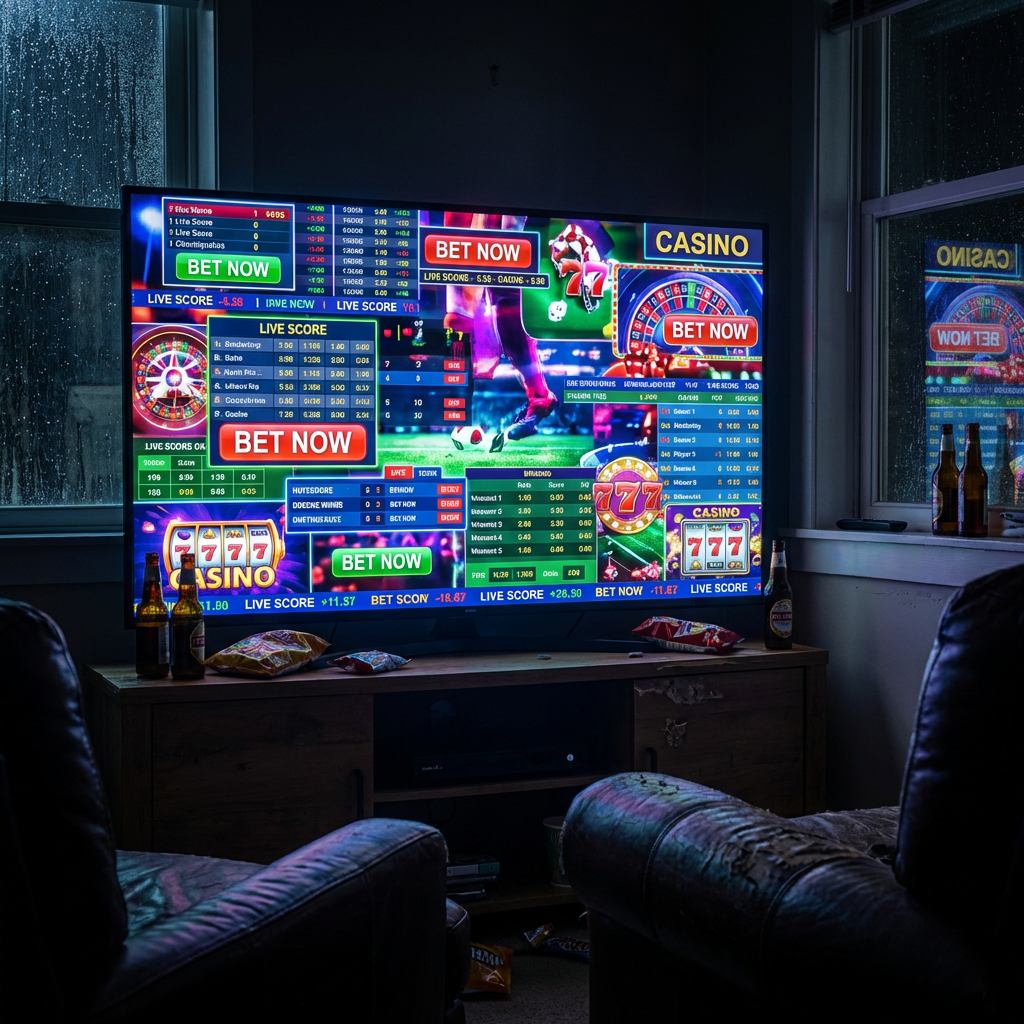
There was a time when watching sports was an escape. It was a dedicated period for the raw, human drama of competition: the impossible catch, the tactical masterstroke, the last-gasp shot that decides a championship. Today, flipping on the game can feel like plugging directly into a frenetic trading floor, where every human achievement is immediately quantified, packaged, and sold back to the viewer. The very action we tune in for is increasingly in danger of disappearing beneath the dual flood of sports betting odds and relentless commercial integration, transforming a communal experience into a high-stimulus marketing funnel. This article explores how the fundamental act of watching sports is being reshaped and what we’re losing in the torrent.
From Courtside Drama to a Deluge of Digits
The screen during a typical broadcast is no longer a simple window onto the field. It has become a layered, real-time data stream. Alongside the score and clock, we now see a constant, pulsating sidebar:
- In-Play Betting Odds: Who will score next? Will the next pitch be a strike? The over/under for points in the quarter. These numbers shift with every play, demanding attention.
- Fantasy Statistics: The running tally of your fantasy quarterback’s performance floats in a corner, making you root for individual stats over team success.
- Prop Bet Updates: An endless scroll of wagers on non-game outcomes, from the length of the national anthem to a coach’s jacket color.
The in-game sports betting overlay creates a parallel narrative. It’s no longer just about the triumph of an underdog; it’s about whether they beat the 7.5-point spread. The dramatic final drive is also a tension-filled moment for the “over” bettors needing one more touchdown. While data can enhance understanding, this particular data set is designed not to clarify the sport, but to create a financial stake in its every micro-event. The spontaneous joy of a goal is now filtered through the question: “Did I cash my bet?”
A Normalized Storm of Commercial Temptation
Advertising has always been part of sports broadcasting, but the nature of the integration has undergone a qualitative shift. It’s no longer just commercials during timeouts; the commercialization is woven into the fabric of the presentation itself.
- Branded Segments: The “Fast Break” is sponsored by a car company; the halftime report is presented by a fast-food chain, with analysts often sitting in front of massive, glowing logos.
- On-Player & On-Field Ads: Jerseys carry betting company logos, and digitally inserted advertisements make the on-field boards change for television viewers, creating a virtual billboard that shifts with the camera angle.
- Talent Endorsements: Broadcasters, the traditional trusted narrators, now read live betting lines and promotional offers for sportsbook partners as part of their play-by-play or analysis.
This creates a seamless, inescapable environment where sponsorship saturation blurs the line between content and sales pitch. The message is constant and normalized: the game is not just something to watch, but something to actively consume and wager upon through these ever-present gateways.
> Important Tip: To maintain perspective, try watching a recording of a game on delay. Fast-forwarding through commercials and pre-packaged segments can starkly reveal how much of the modern “live” experience is manufactured commercial time.
When Fandom is Buried Under Algorithms
This ecosystem subtly rewires why and how we watch. The algorithmic audience engagement model, perfected by tech platforms, has migrated to sports. Fans are no longer just fans; they are “users” whose attention and disposable income are the primary targets.
- Emotional Investment shifts from purely tribal (my city, my team) to transactional (my parlay, my fantasy lineup).
- The narrative focus bends toward storylines that boost betting and fantasy relevance—player props, statistical anomalies—over classic team-oriented plots.
- The communal, social experience of watching the big game can fracture into individuals staring at their phones, tracking bets and updating fantasy apps, only glancing up for the key moments that affect their personal bottom line.
The danger is the erosion of organic fandom—the kind built on generational loyalty, shared heartbreak, and collective joy—in favor of a distracted viewership driven by personalized financial incentives and algorithmic recommendations for the “next best bet.”
The Glitchy Reality Behind Broadcast Euphoria
The broadcast itself often works overtime to paper over this commercial reality with a veneer of seamless, high-octane excitement. The presentation is all rapid cuts, thumping music, and analyst panels brimming with unshakeable certainty. However, this is often a manufactured broadcast euphoria designed to keep energy levels—and engagement with ads and betting offers—high.
This gloss can feel dissonant, especially when technical issues arise or when the on-field product is poor. The cheerful, promotional tone persists regardless, highlighting the disconnect between the marketed spectacle and the actual sporting contest. It prioritizes the feeling of non-stop entertainment over a respectful presentation of the game’s natural rhythms, its tensions, and its quiet, strategic moments.
Losing the Game Within the Flood of Odds
Ultimately, the core concern is one of displacement. With so much cognitive real estate occupied by shifting odds, fantasy alerts, and brand messaging, what happens to the game itself? The subtle chess match between pitcher and batter, the coordinated team defense, the sheer athletic poetry of movement—these can become background noise to the main event of data and commerce. We risk promoting a superficial viewing culture where the surface-level action that impacts a betting slip is prioritized over a deeper appreciation of sport as craft, narrative, and human endeavor.
The solution isn’t necessarily a wholesale rejection of modern broadcasting, but a conscious recalibration. It requires viewers to be aware of how their attention is being courted and for leagues and broadcasters to remember that the long-term value of their product lies in the integrity and beauty of the contest, not just in its utility as a platform for gambling and advertising. We must learn to see past the flood, lest we one day look up and find the game we loved has quietly floated away.
Leave a Reply