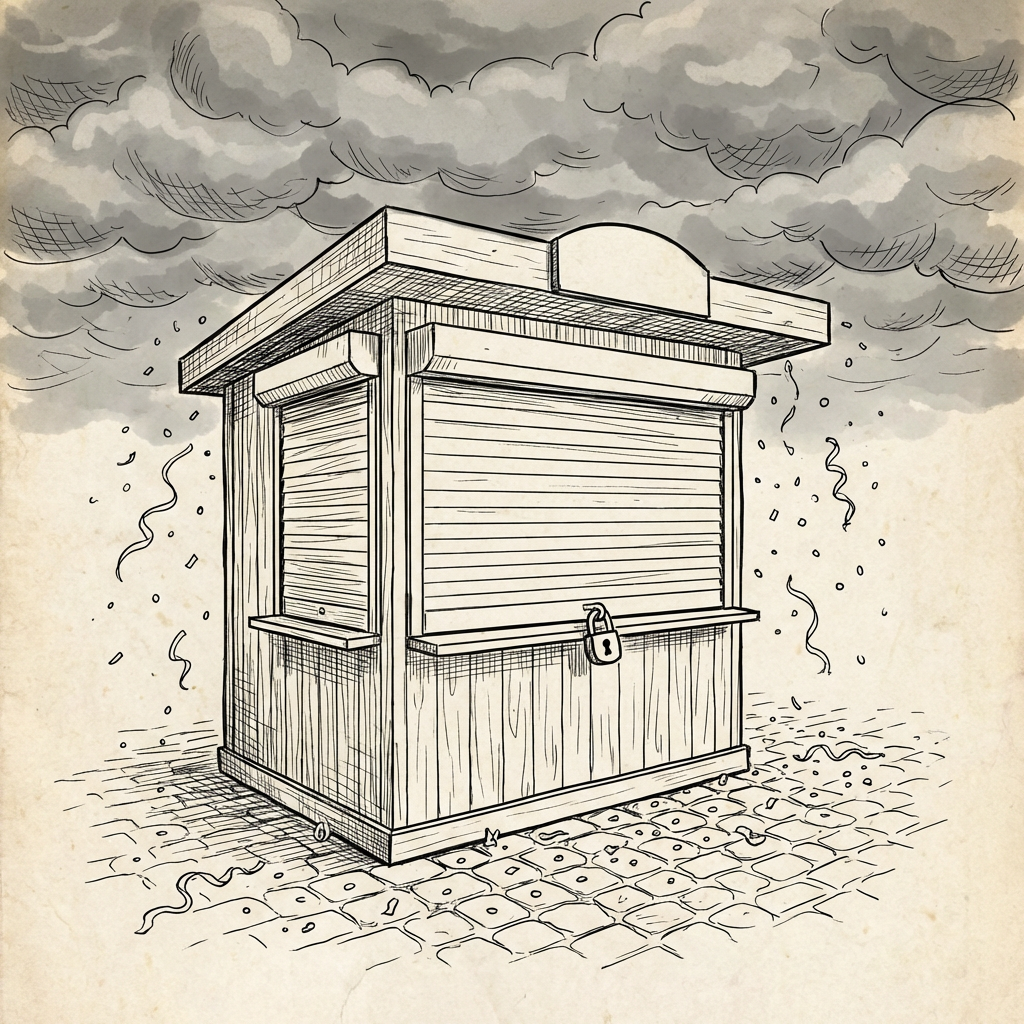
In the heart of Buenos Aires, the neighborhood kiosko is more than a shop. It’s a community anchor—a place to buy cigarettes and sodas, yes, but also to exchange gossip, share mate, and witness the micro-dramas of daily life. So when one shuts its roll‑down metal gate for good, it’s more than a business failing; it’s a small, silent alarm bell. The story of Gerardo’s kiosko on a quiet block in Villa Crespo is one of those alarms, a casualty of a phenomenon that unites and divides with equal ferocity: Argentina’s pasión for soccer, supercharged by the high‑stakes desperation of a World Cup.
A Kiosk’s View of a Neighborhood’s World Cup Fever
For over twenty years, Gerardo’s unassuming kiosk was the block’s dependable constant. Its narrow interior, lined with candy bars, phone chargers, and bags of palitos salados, served as a front‑row seat to the neighborhood’s rhythms. The 2022 World Cup in Qatar, with the Argentine national team—La Scaloneta—as a prime contender, transformed those rhythms into a roaring crescendo. The air hummed with anticipation. Gerardo, like many kiosk owners, became an unofficial bookmaker for the block.
- It started with friendly wagers: a six‑pack of Quilmes on the outcome of a group stage match.
- Then came the lottery pools (porras) for predicting exact scores.
- Finally, it escalated to significant sums of money borrowed on promises of post‑victory payouts.
“The kiosk became a de‑facto betting parlor,” Gerardo later reflected. “Every conversation was about odds, handicaps, and Messi’s form. The camaraderie was electric, but you could feel the pressure building with every match Argentina won.”
The Rising Stakes: Bets and Broken Promises
As Argentina advanced, the bets grew larger and more complex. The neighborhood’s collective hope was now intertwined with individual financial stakes. What was once communal joy began to fray under the weight of debt and guarantee.
> “In Argentina, betting on football isn’t just about money. It’s a proof of faith, a tangible share in the team’s destiny. But when that faith costs you rent, it becomes a different kind of religion.”
Key pressures that emerged included:
- The Credit Trap: Gerardo, trusting his lifelong neighbors, extended significant credit for bets. “They’d say, ‘Che, Gerardo, anotame. When we win, I pay you with interest.‘”
- Social Coercion: Not participating in the communal betting pools could be seen as a lack of patriotism or trust.
- Escalating Guarantees: Individuals, overly confident in an Argentine victory, pledged belongings or future wages as collateral for last‑minute bets.
A Brother’s Bet and a Father’s Lost Legacy
The tipping point wasn’t a stranger’s debt, but a family rift. Two brothers, Pablo and Esteban, both regulars at the kiosk, entered into a heated, high‑stakes wager on the semi‑final against Croatia. Pablo, betting heavily on a clean Argentine win, used money that was not his to risk—funds earmarked for their aging father’s medical treatments.
When Argentina won 3‑0, Pablo’s triumph was short‑lived. Esteban, who had taken the opposite side of the complex bet, could not cover his loss. A violent argument erupted right outside the kiosk, shattering the pre‑game unity. Their father, learning of the gambled‑away funds, suffered a severe health setback. The block watched, choosing sides in whispers. The kiosk, the neutral ground, was now the backdrop to a familial and communal tragedy. The legacy of care was lost to the rush of the bet.
The Final Straw: Shuttering Doors Mid‑Tournament
The fallout from the brothers’ dispute created an untenable atmosphere. Gerardo was caught in the middle, holding worthless IOUs from Esteban and facing daily, tense inquiries from Pablo. The very relationships that formed his customer base were poisoned.
- Loyal patrons avoided the kiosk to escape the lingering animosity.
- Collections on betting debts became impossible, gutting Gerardo’s operating capital.
- The joy of Argentina’s run to the final was replaced, for him, with dread and threatening murmurs.
Two days before the epic final against France, Gerardo made his decision. He quietly emptied the shelves, settled what supplier debts he could, and pulled down the security gate for the last time. In a city pulsing with World Cup mania, one small light on a Villa Crespo block went dark. He left a simple note: “Cerrado por duelo” (Closed due to mourning).
Aftermath: Empty Tables and Silent Streets
Argentina’s victory, and the massive celebrations that engulfed the city, felt distant on Gerardo’s old block. The void left by the kiosk was profound. The physical space—once a hub for buying alfajores or debating tactics—was just a shuttered storefront. The social space it facilitated had vanished.
- The informal morning gathering over coffee died.
- Neighborhood news now traveled slower, if at all.
- The brothers, and those aligned with them, maintained a cold, silent truce, avoiding the corner altogether.
The kiosk’s closure serves as a stark, small‑scale metaphor. The very passion that binds a nation—the collective dream of World Cup glory—can also dissolve the local glue that holds a community together when channeled through the volatile medium of debt and desperation. The block in Villa Crespo gained a long‑awaited star on its national jersey but lost its daily meeting point. It’s a reminder that even in moments of historic collective joy, the stakes are never just about the game; they are woven into the fragile fabric of everyday life, which can tear apart long before the final whistle blows.
Leave a Reply