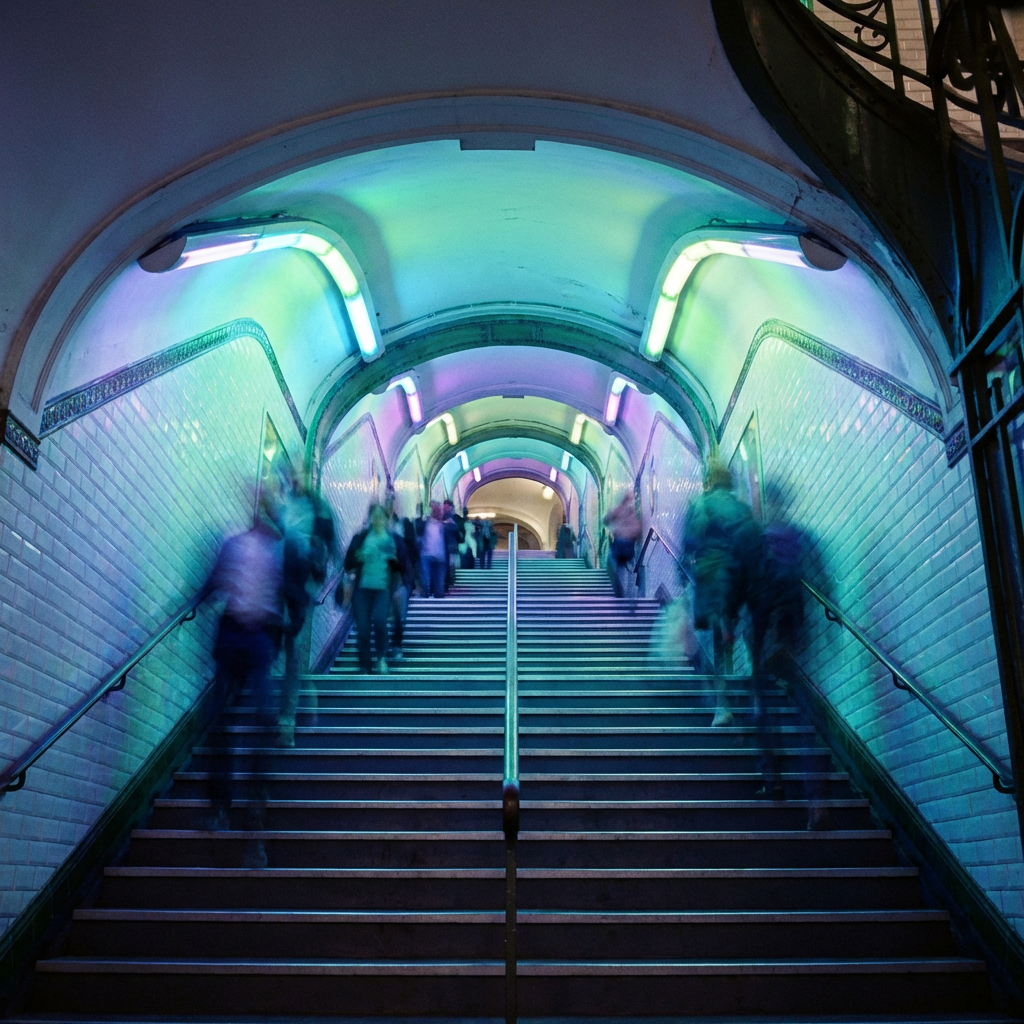
Perched atop its hill, overlooking the swirling chaos of Paris, the district of Montmartre has long been a haven for dreamers, artists, and those running from, or towards, something else. Its cobblestones have felt the weight of immortalized geniuses like Picasso and Toulouse-Lautrec, and its air still thrums with the aspirations of countless unknown creators. But beneath the postcard-perfect views from the Sacré-Cœur and the cheerful clamor of the Place du Tertre, there exists another, quieter narrative. It is kept not in a gallery or a guidebook, but in a worn, leather-bound ledger, maintained by a figure known only as the Silent Prophet.
The Quiet Keeper of Montmartre’s Accounts
He is not a prophet of scripture, but of consequence. An elderly man of indeterminate age, he is a fixture as constant as the stone steps, yet most tourists’ eyes slide right past him. You might see him on a bench near the Moulin de la Galette, or tending a small, forgotten garden plot behind a crumbling wall. His presence is one of profound observation, a listening silence that seems to absorb the district’s secrets—not to judge, but to record. The Debt Ledger of Montmartre is his life’s work, a chronicle not of francs and euros, but of the intangible economy that truly governs this artistic enclave: the economy of favors, sacrifices, and unspoken promises.
> “In Montmartre, the most binding contracts are written in glances and sealed with a shared bottle of cheap wine.”
His method is simple, yet profound. He watches, he listens, and he writes in a script so small and precise it seems to be written for the page itself. An owed inspiration, a stolen motif, a loan of courage, a promise of shelter broken—these are the transactions that fill his book.
A Ledger Not of Tickets, But of Lives
To mistake this ledger for a simple list of who owes whom money is to misunderstand Montmartre entirely. Here, currency takes a different form. The Prophet’s entries are cryptic to an outsider but crystal clear in their context. They speak of debts that shape destinies.
Some typical entries, as those who have glimpsed the ledger whisper, might include:
- The Unpaid Model: “22 Juin: The painter from rue Lepic—one week of patience from the girl from Clichy. Balance: her portrait, hung facing the wall.”
- The Borrowed Line: “14 Mars: The poet at Le Consulat—a perfect metaphor, overheard and taken from the Romanian accordionist. Balance: a dedicated verse, never written.”
- The Shelter Debt: “5 Janvier: The sculptor—a winter’s refuge in a warm atelier, provided by the retired baker. Balance: a small cherub for the tombstone, still unmade.”
These are the silent balances that crisscross the district, creating an invisible web of obligation and gratitude that is the true social fabric of the hill.
The Street Musician and the Hocked Guitar
A often-recounted tale involves a brilliant but penniless guitarist from Barcelona. He played soulful flamenco-tinged blues at the foot of the funicular. A well-known music producer, slumming it for “authenticity,” heard him and later used a distinctive riff in a global hit, giving no credit. The musician, defeated, hocked his beloved guitar to pay rent.
The Prophet noted the transaction. The debt—the stolen creative spark—entered the ledger. Months later, the producer’s career mysteriously began to falter: small delays, lost contracts, a critical backlash. Coincidence, perhaps. Yet, regulars swear that when the guitarist, by a twist of fate, recovered his instrument from the pawnshop with an anonymous stub, the producer’s fortunes slowly stabilized. The ledger, it seemed, had been balanced.
Disappearing Down the MÈtro’s Deepest Debt
The ledger also records losses. The most chilling entries are not of debts owed, but of debts erased by disappearance. Montmartre, for all its charm, can be a sinkhole for hope. The Prophet notes when someone’s emotional or creative credit has been catastrophically overdrawn.
> “The deepest abyss in Paris is not under the Opéra, but the moment a dream here turns to ash.”
An entry might simply read: “The dancer from Prague—creditors: the mocking audience, the jealous compagnie, the cold studio. Asset: belief. Status: Bankrupt. Exit: Abbesses station, southbound, 03:17.” These entries are never closed, only marked with a simple, grey line. The debt remains, haunting the space left behind, a warning of the hill’s unforgiving nature when the intangible economy collapses.
Whispers and Walls: The Ledger Unveiled
No one knows where the ledger is kept. Some say it is hidden in a time capsule within the Passe-Muraille wall, the very stone that swallowed Marcel Aymé’s fictional character. Others believe it’s buried in the small vineyard on Rue des Saules. The Prophet himself is the sole key. The ledger’s power does not come from being read, but from being known to exist. It is the district’s conscience.
The unveiling of a debt is never a public spectacle. It is a quiet moment: a torn sketch slipped under a door, a suddenly returned and much-needed loan, an unexpected promotion or opportunity that rights an old wrong. Those in tune with Montmartre’s secret rhythms recognize these as settlements from the Prophet’s ledger.
In a world obsessed with quantifiable finance, the Debt Ledger of Montmartre’s Silent Prophet stands as a testament to the heavier, realer economy of the human spirit. It suggests that for every inspired gain, there is a cost; for every act of kindness, a future credit; and for every theft of soul, an eventual, quiet reckoning. The Prophet does not enforce these balances—the life of the hill itself does. He is merely the scribe, ensuring that in the heart of Paris, even the most silent debts are never truly forgotten.
Leave a Reply