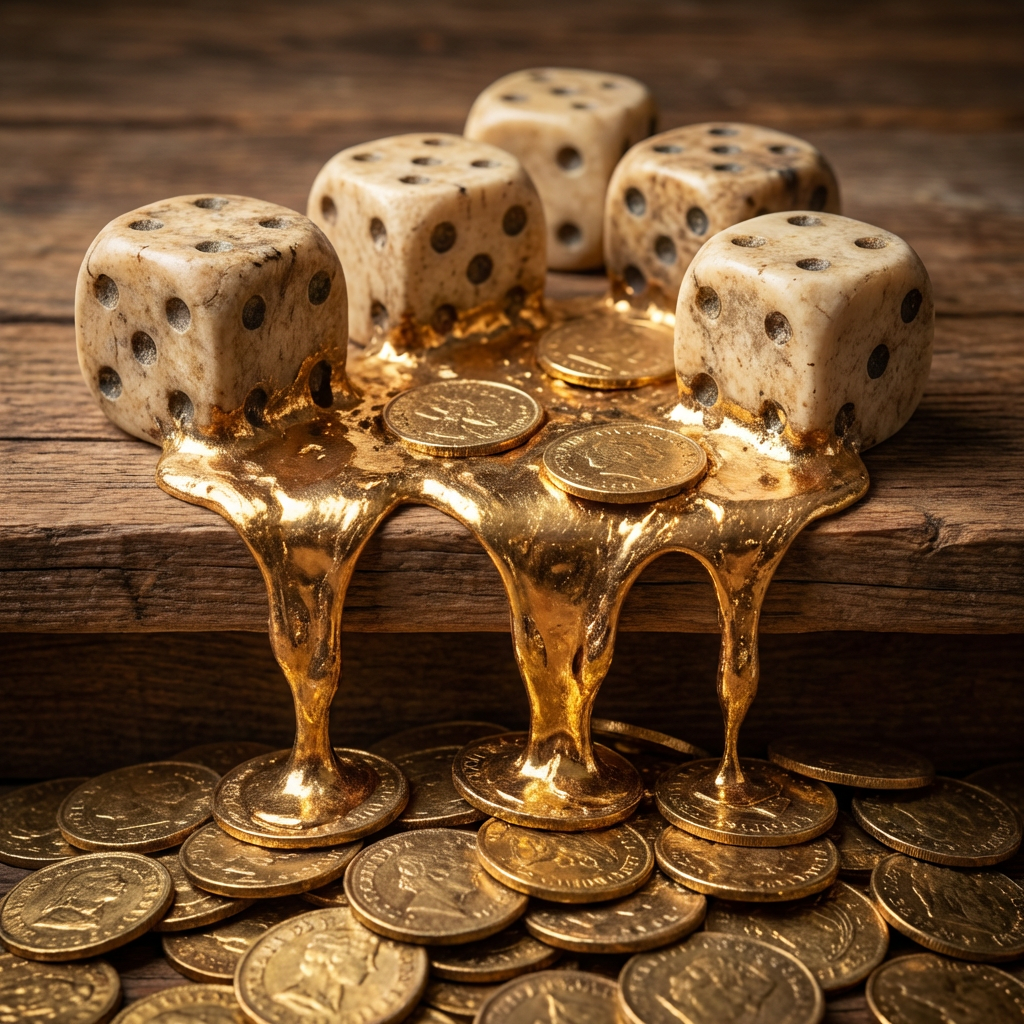
For centuries, the Grand Bazaar of Istanbul has been more than a marketplace; it is a crucible of civilization. Beneath its labyrinthine vaults, where the scents of spice and leather mingle, a timeless human drama unfolds—one of risk, reward, and ritual. This ancient agora, where fortunes were made on rolls of dice and trades of silk, holds a profound, often overlooked, lesson for the sterile glass towers of modern finance. The lesson is not about profit, but about purpose. It suggests that the volatile, risk-ridden spirit that has always animated trade can, and must, be directed toward ends that are transformative, not merely transactional. Here, in the echo of haggling voices and clinking coins, lies a divine revelation: finance must be harnessed to fortify faith and build enduring strength, not just wealth.
Beyond Carpets: God and the Gifts of Gamblers
In the bazaar’s shadowy corners, away from the rug merchants and jewelers, one historically found the gamblers. Their pursuit was pure chance, a surrender to fleeting fortune. Yet, in a profound twist of social and religious ingenuity, this human inclination toward risk was not merely condemned; it was spiritually redirected. Historical accounts and moral tales from the region speak of a principle: wealth acquired through such empty chance was viewed as tainted, yet its energy was potent. The true value lay in its redemptive potential.
> A coin won in idle chance is a seed planted in barren soil. Its only harvest is in the act of giving it root in fertile, faithful ground.
Thus, the “gifts of gamblers” were not celebrated as legitimate earnings, but their donation was seen as a powerful act of purification. This created a fascinating moral economy where:
- The volatility of chance was acknowledged as a real, destructive force.
- The capital it produced was separated from its immoral source.
- The recirculation of that capital into communal, faith-based projects (like building wells, supporting schools, or maintaining places of worship) was its divine purpose.
This framework reveals a crucial pre-modern insight: the source of capital and its ultimate application are inseparable in determining its true worth.
A Divine Nudge in the Ancient Marketplace
How did this principle manifest in the daily bustle? The bazaar was governed by an intricate web of ethics—part commercial, part sacred. The call to prayer would halt transactions, a daily reminder that a higher ledger existed beyond the financial one. Trust was built on reputation and faith, not credit scores. Within this environment, the gambler returning to donate his winnings was performing a public ritual of atonement and re-alignment.
- The Act: Donating ill-gotten gains.
- The Intent: Cleansing the wealth and oneself.
- The Impact: Strengthening the communal fabric that mere speculation erodes.
This was a divine nudge within the marketplace—a system designed to catch and redirect the morally hazardous energy of pure speculation toward stability and growth. It recognized that human nature contains a spark of the gambler, and rather than extinguishing it, the ancient wisdom sought to channel that spark away from personal ruin and toward communal light.
The Genesis of Ethical, Strength-Building Markets
This redirection is the true genesis of an ethical market. A market’s strength cannot be measured by its volatility index alone, but by its resilience and its capacity to build. The bazaar model posits that financial systems should be judged on what they construct in the human and spiritual sphere. When capital flows toward productive, faith-fortifying ends, it creates a virtuous cycle:
- Infrastructure that serves the community (not just facilitates more trade).
- Social Capital in the form of deepened trust and mutual aid.
- Spiritual Resilience, offering a counter-narrative to the idolatry of wealth.
A market that only moves money from one speculative pocket to another is like a gambler playing against himself—the sum gain is zero, and the risk of collapse is total. A strength-building market, conversely, invests in assets that appreciate in non-financial ways: wisdom, health, solidarity, and divine favor.
From Dice to Trades: A Redirection of Spirit
The modern analogue to the gambler’s dice is not the casino, but the purely speculative trade—the high-frequency transaction seeking fractional advantage, the derivative bet on failure, the asset bubble inflated on narratives detached from real value. The spirit is identical: a pursuit of gain decoupled from productive contribution.
The bazaar’s revelation demands we redirect this spirit. How can the immense energy and intelligence poured into modern financial engineering be harnessed? The path is in designing instruments and markets that are inherently value-aligned.
> Modern finance needs products where profitability is intrinsically linked to positive, measurable impact—where faith in a better outcome is the engine of the trade itself.
Imagine:
- Financial vehicles that directly fund ethical infrastructure, where returns are tied to its success.
- Investment platforms that screen not just for risk/return, but for spiritual and communal contribution.
- Trading principles where a portion of speculative gain is automatically directed into strengthening the very systems the market relies upon (education, environmental health, ethical discourse).
The Bazaar’s Lesson: Finance Must Fortify Faith
The echoing corridors of Istanbul’s Grand Bazaar ultimately teach that finance divorced from a higher purpose is a dangerous, hollow force. It was never meant to be an end in itself. The eternal human drive to risk and to gain is a powerful spiritual current—it can erode the banks of society or it can be channeled to turn mills, irrigate fields, and quench thirst.
Modern finance, with its global reach and digital velocity, stands at a similar crossroads. It can continue to be a temple to chance, where faith is placed in algorithms and luck. Or, it can heed the ancient, divine nudge: to become a tool for fortifying faith in our collective future. This means building systems where success is measured not just in percentages, but in peace, justice, and the flourishing of human potential. The capital is here, the ingenuity is proven. What remains is the will to redirect the spirit of the gambler toward the purpose of the builder, transforming the marketplace from a cage of chance into a garden of growth.
Leave a Reply