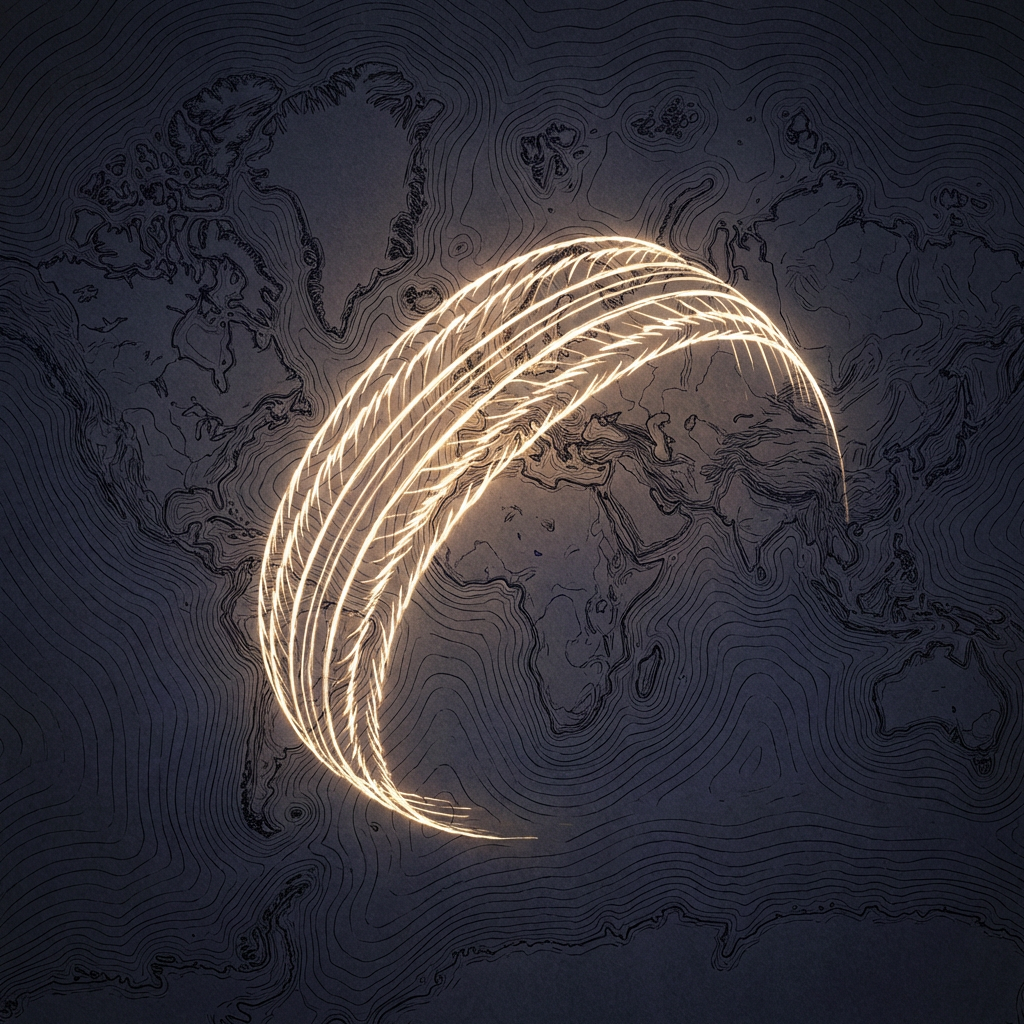
In the quiet murmur between nightmares and waking, sometimes a dream is more than neurons firing—it is a message, a plea, a blueprint for a world we have almost forgotten how to imagine. Such was the dream countless people shared one fateful night. It was not of prophets or revelations, but of something disarmingly simple: a single cricket ball, whose silence became the loudest call for peace the world had ever known.
The Vision: A Cricket Ball Bigger Than The Moon
It began suddenly and simultaneously, across every continent and time zone. As people slept, the same vivid imagery flooded their minds. They saw not a terrifying spectacle, but a serene, impossible sight in the night sky.
- A perfectly stitched cricket ball, its red leather glowing with a soft, internal light, hung in the heavens.
- It was immense, its curve visible against the tapestry of stars, appearing even larger and closer than a full moon.
- There was no sound, no voice, no text. Just the silent, profound presence of this object of sport, suspended in the cosmic dark.
This was not an omen of doom, but one of profound stillness. The ball did not move; it simply was. And in that shared dream-space, the relentless inner monologue of fear, ideology, and hatred that fueled daily life simply… stopped. For the duration of the dream, there was only calm observation.
A Glowing Crack in a World of Conflict
The world those dreamers went to sleep in was one defined by division. Proxy wars, cyber-attacks, resource scrambles, and the deep hum of ideological strife formed the grim soundtrack of the era. Then, they awoke.
>The sheer universality of the vision was its most powerful feature. Generals and grunts, presidents and protestors, citizens of embattled nations and neutral observers—all had seen the same exact thing.
This common experience created an instant, unspoken bond. The first hour of global awakening was a bizarre symphony of confusion and revelation. News anchors, pale with sleeplessness, stammered as they confirmed their competitors were reporting the same story. Social media, often a cauldron of conflict, was briefly unified by a single, awe-struck hashtag: #TheCricketBallDream.
It acted as a psychological reset. The dream’s imagery was so specific, so benign, and so utterly divorced from any national, religious, or political symbol, that it circumvented normal defenses. It created a brief, fragile window where the usual “us vs. them” narrative was irrelevant. The only relevant “us” was now Homo sapiens, the species that had just experienced a collective hallucination.
From Battlefields to Playing Fields: The Pivot
What happened next was not organized by any world body; it was a spontaneous, grassroots cascade of human instinct. The shared symbol demanded a shared response. And since the symbol was a piece of sporting equipment, the response drifted toward play.
- In a trench-lined conflict zone, a young soldier, recalling the dream’s peace, stood up and tentatively tossed a ration tin to a foe across the divide. After a tense moment, it was tossed back. By afternoon, a makeshift soccer match had begun in the no-man’s land.
- Rival street gangs in a megacity, whose members all bore the same stunned look, called a truce. They met not for negotiation, but for a series of basketball games in a neutral court.
- Diplomats, scheduled for another fractious meeting, instead found themselves on the embassy lawn, awkwardly trying to explain the rules of cricket or baseball to one another, laughter punctuating the clumsy swings.
The pivot was not towards formal peace treaties—those would come later. It was a pivot toward shared human activity. The act of playing, of engaging in a contest governed by agreed-upon rules and a spirit of sportsmanship, became the new medium for interaction. It was a tangible way to embody the neutrality and common ground the dream had invoked.
Humanity’s Wager: Investing in Games, Not Wars
This global shift in energy presented a stark, practical choice. The dream had opened a door; would humanity walk through it?
> “We have spent millennia perfecting the art of conflict,” a philosopher wrote in the wake of the dream. “The dream asks if we are brave enough to now invest our brilliance, our resources, and our passion into the art of play.”
The economic and psychological re-alignment was staggering. Almost overnight, public sentiment turned. The “peace dividend” was no longer an abstract concept.
- Budget Re-allocation: Governments, under unprecedented public pressure, began freezing military contracts and diverting funds to build community sports complexes, international youth athletic exchanges, and global “Sports for Understanding” grants.
- Industrial Shift: Arms manufacturers, seeing their stock prices plummet, started retrofitting factories to produce sporting goods, stadium materials, and equipment for Olympic-level training facilities open to all.
- New Heroes: The world’s most celebrated figures were no longer generals or strongmen, but athletes, coaches, and physical educators who toured former warzones to run clinics. The most prestigious award became one for “Bridging Divides Through Sport.”
It was a monumental gamble. The world was choosing to believe that the symbolic power of a game could be a stronger deterrent and a more potent unifier than the threat of mutual destruction. It wagered that the desire to win a match could permanently supersede the desire to win a war.
Waking Up With Tears of a Shared Dream
The dream itself never recurred. But its legacy was not the memory of the vision itself; it was the memory of the shared feeling it evoked. That became the foundational story of a new era.
People did not wake up every day in a perfect utopia. Disagreements, tensions, and inequalities persisted. But the framework for handling them had fundamentally changed. The default first question shifted from “How do we defeat them?” to “How can we engage them?”
The symbol of the cricket ball was enshrined—not as a religious icon, but as a human one. It reminded everyone that beneath the layers of culture and creed, there exists a common capacity for rules, for fair play, for the joy of effort, and for the respect earned in honest competition.
The wars did not end with a bang, but with a reverent silence under a remembered sky, and then with the sound of playful shouts, the thud of a ball, and the collective applause for a well-fought game. The dream’s true message was finally understood: peace is not a static, passive state. It is the most dynamic, engaging, and collaborative game of all. And humanity, at long last, had chosen to play.
Leave a Reply