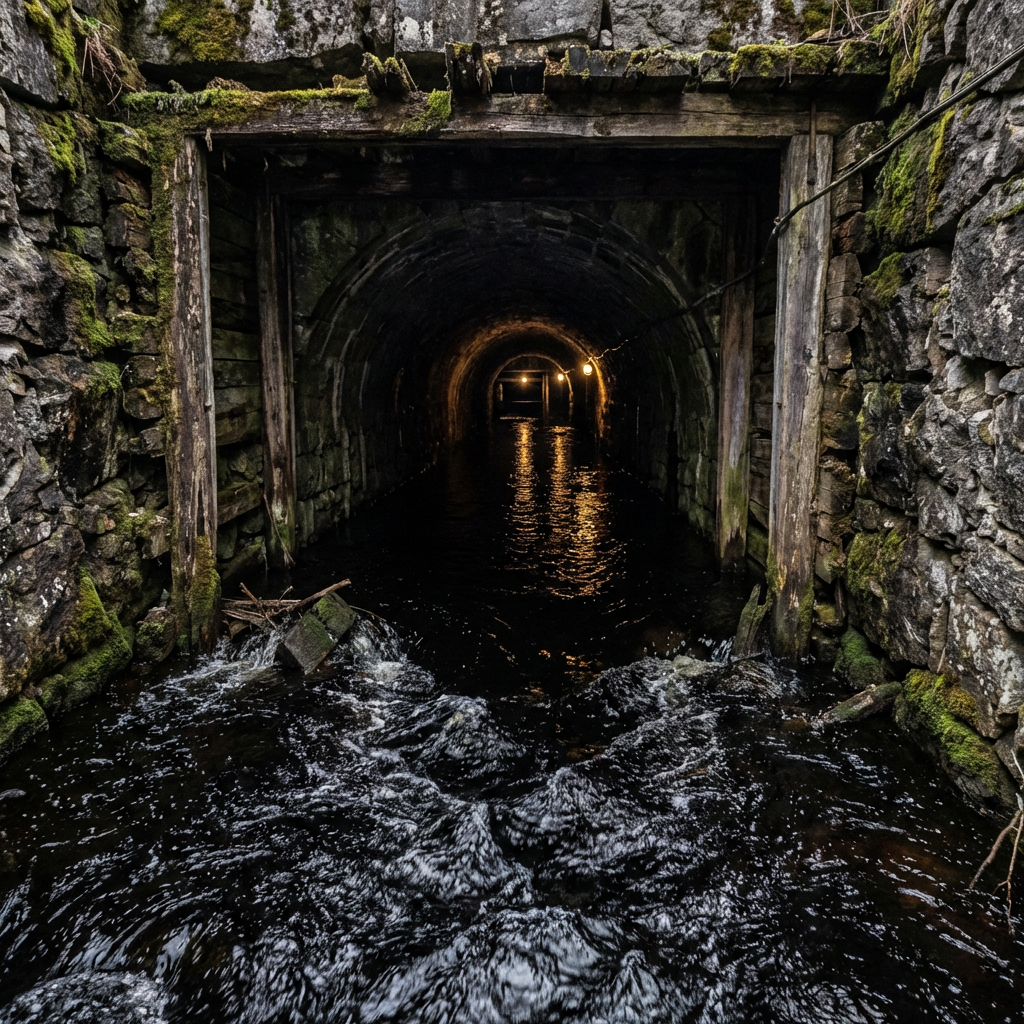
Beneath the vibrant streets and elegant architecture of Helsinki lies another city—a labyrinth of metro lines, service tunnels, and utility corridors. For decades, this subterranean network has been the silent, beating heart of Finland’s capital, a marvel of engineering. Yet, in a twist of fate worthy of the most imaginative climate fiction, it was this very underground world that faced annihilation, and its salvation arrived not from a squadron of heroes, but from a single, staggering object born from an unexpected passion: a giant puck.
The Subway’s Screaming Halt in Darkness
It began not with a roar, but with a dreadful silence. Deep within the Munkkivuori tunnel section, the familiar hum of the metro was replaced by an eerie quiet, followed by the screech of brakes as drivers lost all power. Lights flickered and died, plunging hundreds of commuters into absolute blackness. Emergency systems, designed for brief outages, sparked and failed.
- Critical systems failed sequentially: Communications arrays shorted out first, isolating the stranded trains.
- Air circulation ceased, raising immediate concerns about oxygen levels.
- Passenger panic was contained only by the rigorous Finnish culture of calm and the trained interventions of a few onboard personnel.
Above ground, control centers faced cascading errors. It wasn’t a technical glitch; sensors indicated a catastrophic environmental breach. Water, in volumes beyond any flood scenario in the city’s planning models, was invading the tunnel system from multiple points.
Black Water Floods Helsinki’s Sleep
The source was a one-two punch of climatic fury. A unprecedented “rain bomb” had saturated the region’s already high water table, while a sudden surge in the Baltic Sea, driven by a freak meteorological low, pushed saltwater inland through porous bedrock and aging infrastructure seams. This twin assault created “The Hydraulic Hammer”—a phenomenon where pressurized water finds and exploits the smallest weakness, turning cracks into caverns.
The flood wasn’t a wave; it was a relentless, rising presence. It poured into maintenance shafts, elevator pits, and ventilation ducts.
> Important context: Helsinki’s bedrock, while generally solid, is crisscrossed with fissures. Modern floodwalls protect the surface, but this event targeted the city’s underground vulnerabilities directly.
The immediate dangers were manifold:
- Drowning risk for anyone in lower tunnels or unable to evacuate trains.
- Electrocution hazard from submerged high-voltage lines.
- Long-term structural collapse of key transit arteries, which would paralyze the city for years.
- Contamination of the city’s entire underground freshwater system by the invading saltwater.
A Colossal Hockey Puck Emerges
As crisis teams scrambled, a proposal emerged from an unlikely quarter: the Helsinki City Hockey Foundation. For years, the foundation had championed a controversial, passion-project legacy: the construction of “The Guardian Puck,” a 25-ton, carbon-fiber-reinforced composite sphere, 8 meters in diameter. Designed as a symbolic monument and potential inertial energy storage unit for the city’s green grid, it was seen by many as a fantastical, expensive toy for sports enthusiasts.
Its advocates, however, had engineered it to near-indestructible specifications. Housed in a specially constructed bunker near the bottleneck of the main flooding tunnel, the puck was positioned—whether by foresight or sheer luck—at a critical hydraulic chokepoint.
> Key Term: The “Puck’s Core” was a patented damping matrix designed to absorb immense kinetic energy, a feature originally intended to manage the forces of being “slapped” by a theoretical giant hockey stick in a public display.
The decision was made. Engineers would flood the puck’s chamber and use precisely timed charges to dislodge it, turning the bizarre artifact into a rogue tidal blocker.
Pushing War Machines to the Abyss
The operation, dubbed “Power Play Salvage,” was a tense ballet of chaos and control. As the giant sphere was released, it did not simply roll. It was carried and steered by the very floodwaters it was meant to thwart. Using a series of retractable guide fins and coordinated water cannon bursts from emergency pumps, crews “directed” the puck down the main flooding conduit.
Its journey was destructive and awe-inspiring. The puck acted as a dynamic plug:
- It crushed and compacted debris in its path, clearing blockages that were accelerating water backup.
- Its mass and seal forced the main column of onrushing water to divert into older, pre-planned flood overflow channels that led to the sea.
- Most critically, it reached the primary breach point—a collapsed section near the sea wall—and lodged itself in the gap.
The “War Machines”—the relentless, mindless forces of hydraulic pressure and volumetric flow—met an immovable object. The inundation slowed from a torrent to a trickle almost instantly. The puck’s energy-absorbing core dissipated the stress, preventing a catastrophic failure that would have blown the sphere back out like a cork.
A World Saved by Sports Investing
In the aftermath, Helsinki began the long pump-out and recovery. The story that circled the globe, however, was not just one of survival, but of paradigm-shifting inspiration. “The Guardian Puck” was rechristened “The Saver.”
The event proved that unconventional investment and civic passion projects have profound, if unpredictable, value. The giant puck, a symbol of national sporting pride, became a literal savior of urban infrastructure.
The lessons learned are now studied worldwide:
- Infrastructure resilience must consider synergistic, multi-use designs. The puck was art, energy storage, and a flood defense—all without being officially any of those.
- Community passion projects deserve serious engineering and budgetary consideration, as they can foster innovation outside standard bureaucratic channels.
- Preparedness requires thinking about tools, not just plans. They had a plan for floods, but it was the tool—the puck—that executed a solution no standard plan contained.
The image is indelible: a sleek, black sphere, illuminated by construction lights, sitting placidly in a repaired tunnel, a silent monument to the day a city’s love for a game stopped a disaster. Helsinki’s flooded tunnels are dry once more, and deep within them rests a giant puck that redefined what it means to save the world—not with a sword, but with a slapshot’s dream made real.
Leave a Reply