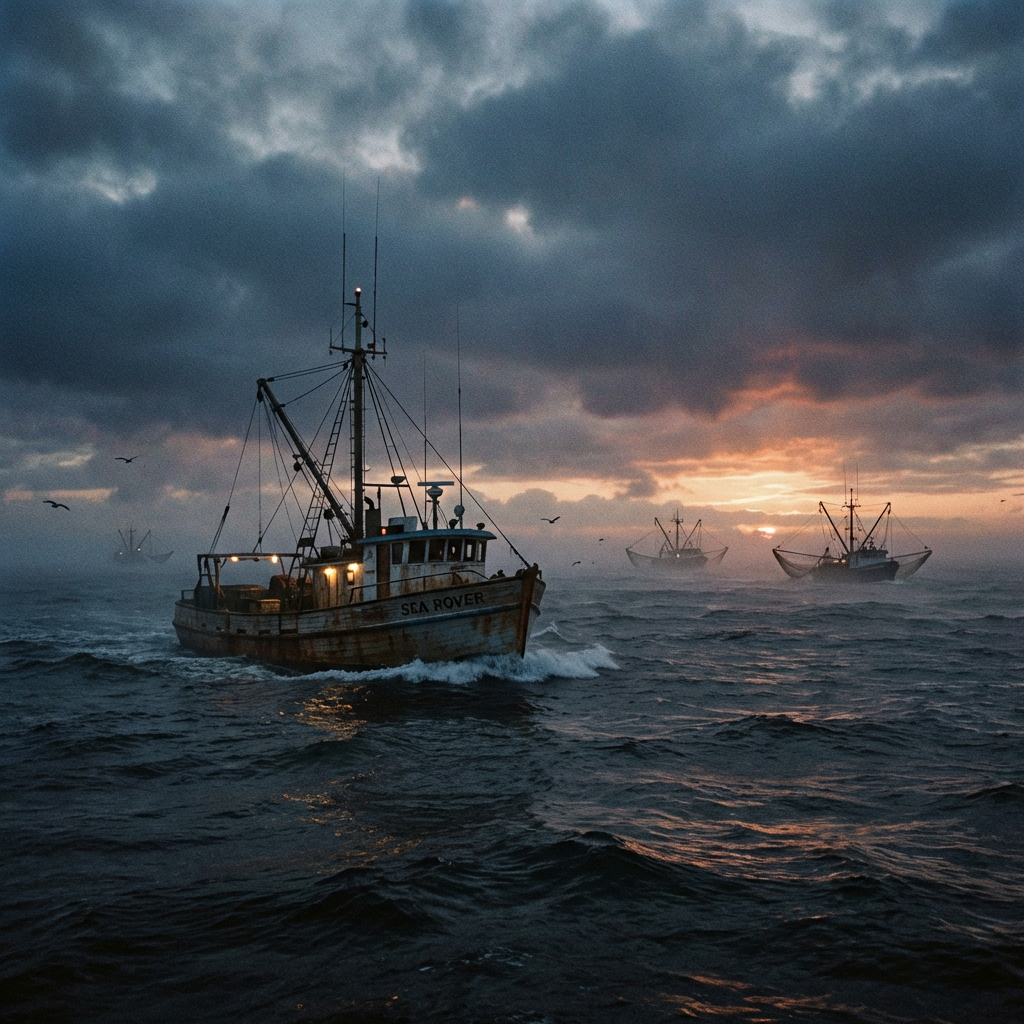
For generations, men like Séamus O’Sullivan defined their lives by the horizon. Their measure was the weight of a full net, the taste of salt in the wind, the quiet knowledge gleaned from studying the shimmer and shadow of the Atlantic off Ireland’s Dingle Peninsula. Yet today, standing on the same piers his father and grandfather stood on, Séamus sees a different ocean. It’s emptier, not just of fish, but of meaning in the old ways. It was within this crisis, born of modern technology, that Séamus experienced an astonishing revelation. He wasn’t just witnessing the end of a livelihood; he was being shown a path to a radically different kind of investment—a wager not on extracting from nature or systems, but on unlocking the vast, untapped potential within humanity itself.
From Nets to Networks: A Fisherman’s Awakening
Séamus’s story is not one of instant disruption, but of slow, profound erosion. His awakening began not with a sudden epiphany, but with a creeping awareness. Where once the communal rhythm of the harbor dictated life—pre-dawn departures, shared weather wisdom, the collective sigh of a good haul—now sat silent, autonomous vessels. His tacit knowledge, the hard-won intuition about currents, fish behavior, and weather patterns passed down through stories and experience, was being rendered obsolete by algorithms processing satellite data and sonar grids. The tools of the trade were no longer extensions of his skill but replacements for it. This created a deep dissonance. The ocean, once a partner in a delicate, understood dance, had become a mere data point in a global system of extraction. The community that formed around the shared risk and reward of fishing began to fragment, leaving a social vacuum as palpable as the ecological one forming beneath the waves. Séamus felt himself becoming a spectator to his own life’s work.
The Silent Sea: AI Trawlers and a Vacuum of Life
The modern fishing industry, epitomized by AI-driven super-trawlers, represents the zenith of a problematic paradigm: optimize to deplete. These vessels are marvels of efficiency, capable of locating and harvesting fish stocks with a ruthless precision that leaves no refuge. The consequences are multi-layered:
- Ecological Vacuum: They don’t just catch fish; they strip entire ecosystems, creating underwater deserts and disrupting the marine food web for generations.
- Economic Vacuum: They consolidate wealth and resource access, pushing independent fishermen like Séamus toward obsolescence.
- Cultural Vacuum: They sever the sacred, generational connection between people, their food source, and their heritage, replacing a culture of stewardship with one of pure consumption.
> The most profound silence is not an absence of sound, but an absence of future. The AI trawler creates a triple vacuum: of life in the sea, of purpose on the shore, and of legacy for the next generation.
For Séamus, the hum of a distant trawler wasn’t just noise; it was the sound of a world being emptied. It forced a critical question: if the system is designed to ultimately consume its own foundation, what is truly worth investing in?
A Divine Whisper in a Pub: Sports as a Code
The moment of clarity came, as it often does in Ireland, in the warm, low-light ambiance of a local pub. A football match was on the television. As Séamus watched, his fisherman’s mind, trained to observe patterns in chaos, began to decode an entirely different game. He saw not just a sport, but a perfect metaphor for human potential.
- The Field as a System: The pitch was a bounded yet dynamic ecosystem, much like a fishing ground.
- The Rules as Shared Values: The rules of the game were not restrictions, but the agreed-upon framework that made the display of skill and creativity possible.
- Training as Cultivation: He saw how raw, youthful talent was patiently coached, nurtured, and developed into refined excellence—a process taking years of dedicated investment.
- The Collective Effort: The seamless coordination, the unspoken understanding, the triumph of cohesive teamwork over individual brilliance mirrored the best days of a well-synced fishing crew.
In this moment, the what of investment shifted completely. The valuable asset wasn’t the trophy or the final score (the “catch”), but the development process itself—the coach’s guidance, the player’s perseverance, the team’s evolving synergy. Sports, he realized, was a visible, compelling code for betting on human growth within a supportive structure. The “return” was the magnificent spectacle of human achievement.
A New Wager: Betting on Human Potential
Armed with this revelation, Séamus’s perspective on value transformed. He began to see potential for this “sports model” everywhere. Betting on humanity means investing in the processes that cultivate intelligence, resilience, and creativity. It’s a long-term, regenerative investment, starkly opposed to the short-term extractive model that emptied his sea.
What does this new wager look like in practice?
- Investing in Mentors, Not Just Startups: Funding the seasoned guides who help young entrepreneurs navigate failure and refine ideas.
- Valuing Education as Skill Cultivation: Supporting teaching methods that identify and nurture individual strengths, much like a coach develops a player’s unique talents.
- Backing Community Platforms: Financing local hubs—studios, workshops, maker-spaces—that provide the “field” where people can practice, collaborate, and grow.
- Measuring Growth, Not Just Output: Assessing success by improvement, skill acquisition, and network strength, not just quarterly profit or tons of fish landed.
> The most valuable harvest is not pulled from the sea or reaped from a market; it is grown patiently in the fertile soil of human capacity.
This approach doesn’t ignore technology; it redirects it. Instead of AI that replaces, we develop AI that assists, enhances, and frees up human time for deeper creativity and connection.
Dingle’s Lesson: A Deep Investment in Humanity
Séamus O’Sullivan may never haul a net again. But from his home in Dingle, he now sees a different kind of horizon, rich with possibility. His journey from fisherman to philosopher-investor offers a crucial lesson for our age of automation and extraction.
The “Dingle Lesson” is this: When systems become so efficient that they deplete their own source of value—be it fish stocks, employee well-being, or social trust—the only sustainable, truly abundant alternative is to invest in the source of all value: people. It is to fund the coach, not just the player; the teacher, not just the curriculum; the community space, not just the business within it.
It is a move from a transactional worldview to a transformational one. The ocean taught Séamus about limits. But humanity, with its infinite capacity for adaptation, innovation, and care, showed him the path beyond them. The final, and most important, revelation was that the greatest return on investment is not a financial dividend, but a more capable, connected, and vibrant human world. That is a future worth betting everything on.
Leave a Reply