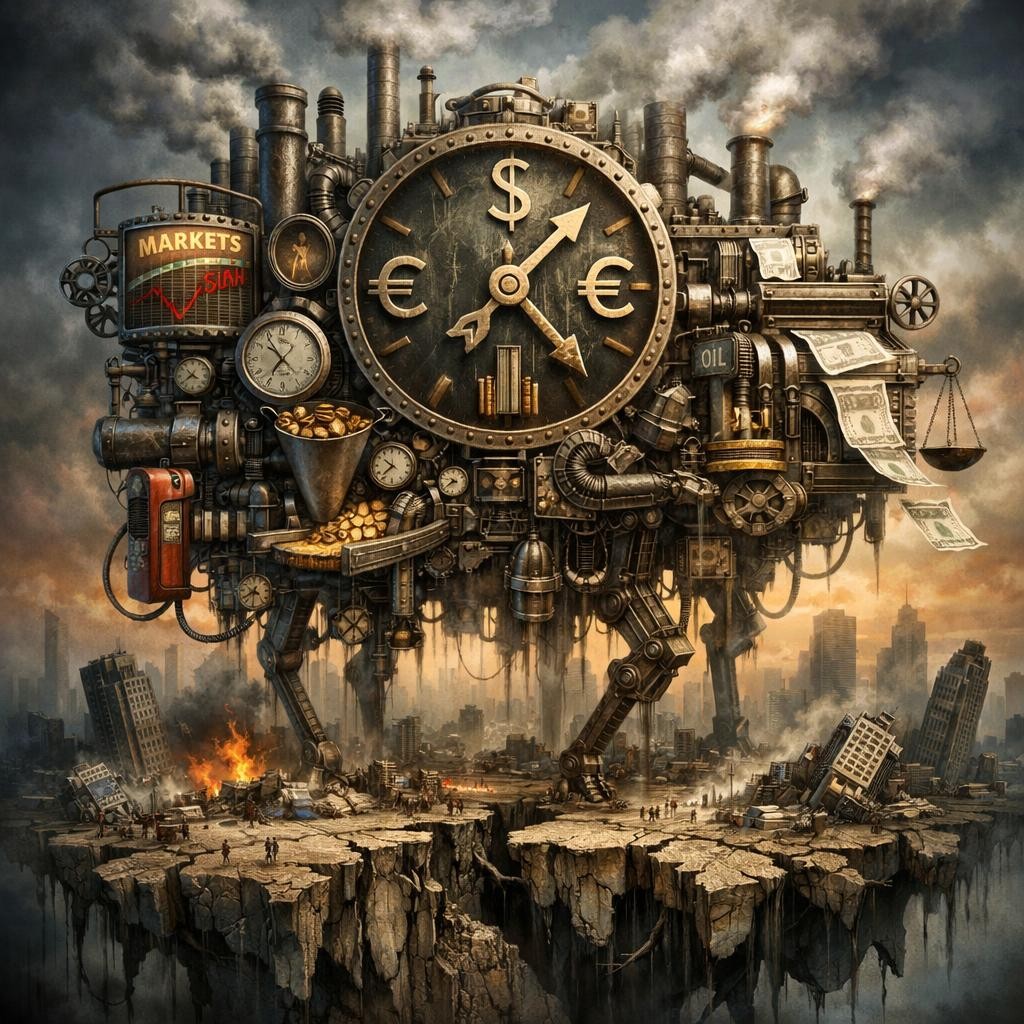
In the meticulous world of fiscal governance, auditors are typically seen as dry number-crunchers, their reports a dense thicket of figures for specialists to decipher. Rarely does an audit report transcend its bureaucratic confines to paint a vivid and disturbing portrait of a national economy’s foundational flaws. Yet, that is precisely what has occurred in Ireland, where a recent investigation has ripped back the curtain on a troubling reality: significant portions of state revenue are not a product of collective prosperity, but are instead funded by the direct financial losses of its citizens. This article delves into the mechanisms of this hidden ledger, exploring the systemic implications and the stark reckoning that may lie ahead.
The Hidden Ledger: Profit Through Public Loss
The auditor’s report goes beyond noting budget deficits or tax shortfalls. It reveals a structural dependency where the government’s income statement is buoyed by activities that systematically drain wealth from households. This isn’t about general taxation funding public services; it’s about specific revenue streams that are active accelerants of public financial distress.
Key sources of this perverse revenue include:
- Regressive Consumption Taxes: Heavy reliance on VAT and excise duties, which take a larger percentage of income from low and middle-income earners, especially during periods of inflation when discretionary spending evaporates.
- Fees-for-Failure: Revenue generated from penalties, late payment charges, and state-mandated fees attached to essential services (e.g., banking, utilities) that citizens struggle to afford.
- Financialization of Public Need: Income derived from the state acting as a lender or guarantor of last resort, profiting from the interest on debt that citizens take on to meet basic needs like housing and education.
- Asset Inflation as a Tax Base: An over-reliance on transaction taxes (like stamp duty) and capital gains, which are directly correlated with housing market inflation—a condition that represents a massive net loss in affordability and security for the majority of the public.
This creates a perverse fiscal incentive: the state becomes quietly invested in the very conditions—high personal debt, inflated essential costs, stagnant wages—that undermine the financial well-being of its populace.
When State Revenue Relies on Citizen Loss
This model transforms the traditional social contract. Instead of “we all contribute to build a better society,” it risks mutating into “your loss is our balanced budget.” The citizen is positioned not just as a taxpayer, but as a revenue unit, with their financial hardship directly converted into Exchequer receipts.
The impacts are profound and cyclical:
- Eroded Disposable Income: Money that should circulate in the local economy, supporting small businesses and creating vibrancy, is instead syphoned off to meet state targets rooted in personal deficit.
- Diminished Resilience: Households with no buffer against shocks become more reliant on state supports, creating a costly feedback loop where the state uses one hand to collect revenue that the other hand must later return in the form of crisis intervention.
- Trust Decomposition: When people intuitively understand that the system profits from their struggle, the fundamental trust in institutions and the legitimacy of taxation evaporates.
> The auditor’s finding implies a dangerous feedback loop: austerity measures or revenue grabs designed to plug short-term budget gaps often deepen the public’s financial precarity, which in turn forces the state to seek more revenue from diminished pockets.
Auditor Exposes a Societal Ponzi Scheme
The most damning conclusion from the report is the analogy, however uncomfortable, to a Ponzi-style scheme. In a classic Ponzi scheme, returns to earlier investors are paid from the capital of new investors, requiring perpetual growth to avoid collapse.
The state’s version operates on a similar principle of unsustainable dependency:
- Current public services and obligations are funded by revenue extracted from conditions causing current public loss (e.g., high housing costs).
- To maintain these services, the state requires either more citizens to enter into loss (an expanding base of “investors”) or for existing citizens to endure greater loss (higher “contributions”).
- The scheme “works” only as long as public resilience and new sources of loss can be found. It collapses when the populace is financially exhausted.
The auditor’s role was to point out that the “new entrants”—in this case, deeper wells of public financial distress—are not infinite.
Engineered Collapse: A Nation Built on Loss
Labeling this an “engineered collapse” does not imply a shadowy committee plotting downfall. Rather, it describes the inevitable outcome of short-term political and fiscal choices that are never fundamentally corrected. Policy becomes about managing the symptoms of this loss-revenue dependency (through one-off reliefs or subsidies) rather than treating the cause.
This engineering manifests in:
- Policy Myopia: Legislation that boosts transaction tax revenue by fueling property speculation, while ignoring the generational loss of housing security.
- Kicking the Fiscal Can: Using windfall revenue from crisis-driven losses (like penalty income during a cost-of-living crisis) to fund permanent expenditure, baking the expectation of perpetual public struggle into the future budget.
- The Normalization of Precarity: When the budget becomes reliant on revenue from hardship, there is a subtle, systemic resistance to policies that would genuinely alleviate that hardship, as they would create a corresponding budget hole.
The Coming Reckoning for Unsustainable Gains
The auditor’s report is a warning siren. A state that feeds on the financial vitality of its people is consuming its own seed corn. The reckoning may take several forms:
- Demographic Decline: Young generations, recognizing the stacked deck, may choose to build their lives and futures elsewhere, draining the country of talent and future taxpayers.
- Fiscal Shock: A sudden correction in the asset markets (like housing) or a break in consumer debt accumulation would violently sever key revenue streams, causing a budgetary crisis.
- Social Rupture: The loss of legitimacy could lead to widespread tax resistance, political volatility, and a breakdown in social cohesion, making governance itself more difficult and expensive.
The path away from this precipice requires courageous fiscal redesign. This means:
- Broadening the Tax Base: Shifting weight from transaction and consumption taxes toward progressive, sustainable taxation of wealth, windfalls, and multinational activity.
- Investing in Public Gain: Directing investment into pillars of public wealth—affordable housing, universal healthcare, cost-controlled education—that strengthen the financial base of the citizenry, making them more resilient and more prosperous contributors.
- Transparency and New Metrics: Adopting “well-being budget” principles that measure success not just by GDP or tax-take, but by the financial health and security of households.
The Irish auditor has done more than find a discrepancy in the books; they have diagnosed a sickness in the economic model. The question now is whether the nation has the will to undertake the difficult treatment—to stop profiting from loss and start building revenue on the solid, sustainable ground of public gain.
Leave a Reply