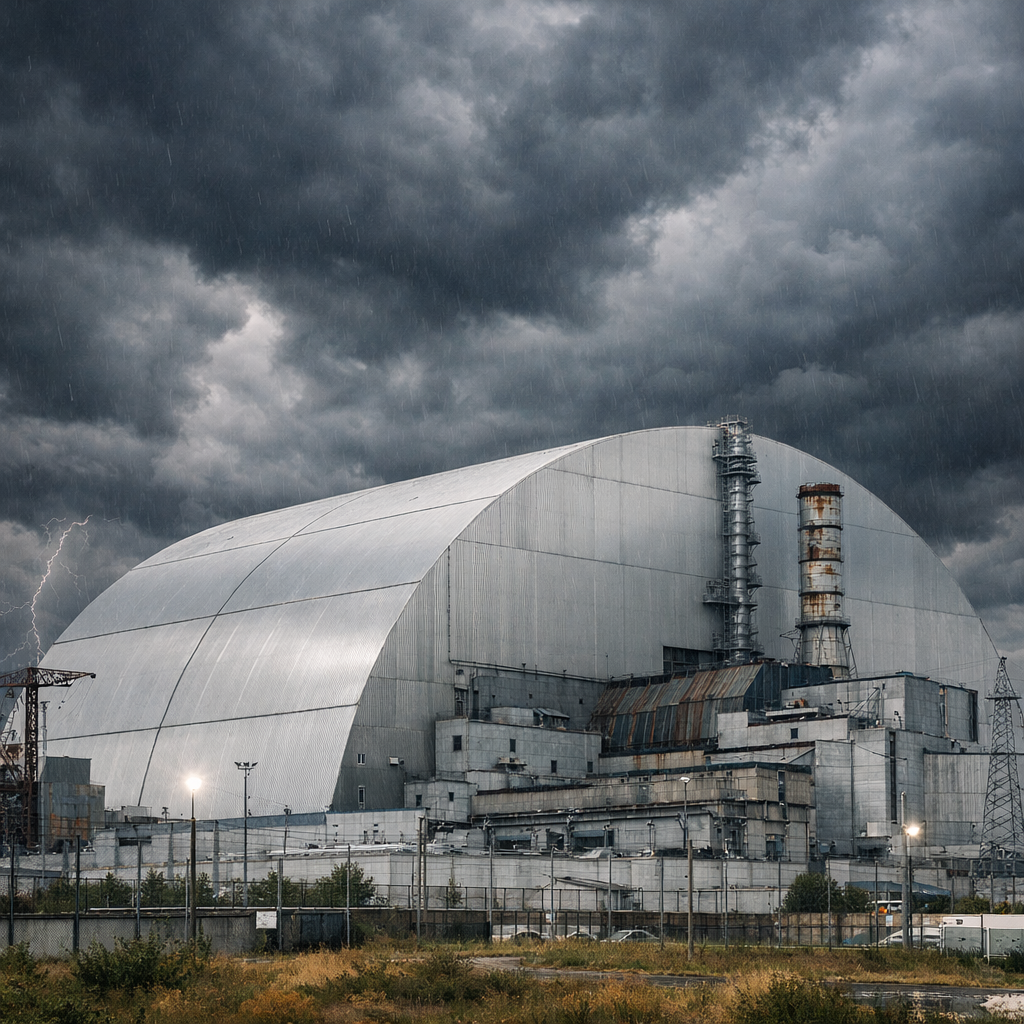
The landscape is still. In the eerie quiet of the Exclusion Zone, where trees grow through cracked asphalt and paint peels in kaleidoscopic patterns on abandoned walls, there exists a testimony more profound than any official report. It is not written in ledgers or spoken in newsreels. It is a whisper, carried on the wind that stirs the dust of Pripyat, a low hum emanating from the very earth itself. This is the story told not by survivors, but by the ashes and the atoms—a chronicle of human ambition, tragic error, and nature’s slow, resilient reclamation.
The Ghost in the Ash: An Unseen Testimony
On April 26, 1986, a catastrophic experiment at the Chernobyl Nuclear Power Plant’s Reactor No. 4 unleashed a radioactive plume that stained the skies of Europe. The immediate aftermath was a maelstrom of fire, bravery, and denial. But when the fires were quelled and the initial chaos subsided, a more enduring witness emerged: the irradiated environment.
- The Sarcophagus, and later the New Safe Confinement, became not just tombs for radioactive material, but colossal monuments to the accident. They stand as silent, imposing sentinels, holding a secret at their core.
- The Red Forest, a pine grove that turned a russet brown from acute radiation, became a stark, biological monument. Even as new growth emerges, the soil retains its lethal memory.
- Everyday objects left behind—a child’s doll, a textbook on a school desk, a gas mask in a kindergarten—transformed into artifacts of arrested time. They do not speak, yet they scream of sudden, panicked departure.
This physical residue forms the primary text of Chernobyl’s testimony. It is a ghost made tangible, a presence felt in the static crackle of a Geiger counter and seen in the unnatural stillness of a town square.
Gambles and Games: Echoes from a Broken Voice
The whisper from the ashes speaks clearly of the human conditions that led to the disaster. It was not a single failure, but a cascade, born from a culture of secrecy, unchecked ambition, and a dangerous gamble with forces barely understood.
> “The reactor’s design had a flaw, known as a positive void coefficient, making it unstable at low power. This was the buried fault line upon which the experiment was built.”
The infamous safety test, intended to simulate a power outage, was conducted under compromised conditions. Key safety systems were disabled in pursuit of the test parameters. A combination of operator error, stemming from inadequate training on the reactor’s peculiarities, and systemic pressure to proceed created a perfect storm. The echoes from this broken chain of command and knowledge are a chilling part of the testimony, warning of the perils when technological hubris outpaces respect and transparency.
When Ruins Don’t Warn, They Bear Witness
The abandoned city of Pripyat is the most eloquent chapter of this silent story. Its decaying structures are not merely ruins; they are active witnesses. The crumbling Palace of Culture, the ferris wheel that never carried laughing children, the swimming pool now filled with dust and echoes—all perform a somber duty.
- They bear witness to the swift and total evacuation, illustrating how a vibrant community of nearly 50,000 can be rendered a ghost town in under 48 hours.
- They showcase the inevitability of decay, a process accelerated by neglect but also made strangely beautiful by it.
- Most importantly, they stand as a permanent counter-narrative to the initial Soviet attempts to minimize and conceal the catastrophe. The ruins could not be censored.
Their testimony is one of profound loss, a physical manifestation of lives interrupted, futures erased, and a collective trust shattered.
A Static Prophecy and the Screaming Geiger
The most pervasive voice in this haunted landscape is not a whisper, but a scream—the sharp, erratic clicking of a Geiger counter. This device translates the invisible testimony of isotopes like Cesium-137 and Strontium-90 into an audible, unnerving language.
> “The Geiger counter’s song is a static prophecy, mapping a contaminated future measured in half-lives, not years.”
This relentless radiation is the core of the haunting. It represents a punishment that outlives its perpetrators and victims. It is in the soil, in the roots of plants, and carried in the bones of animals. It tells a story of persistent toxicity, a biological invasion on a cellular level, and a challenge to remediation that will span centuries. The screaming Geiger confirms that the event of 1986 is not a closed historical chapter, but an ongoing, invisible process.
Listening to the Ashes: A Haunting Aftermath
To listen to Chernobyl’s testimony is to engage with a multifaceted and painful legacy. The aftermath is a complex tapestry of sacrifice, scientific study, and eerie rebirth.
- The Liquidators, often called “biorobots,” who fought the initial blaze and cleared radioactive debris, paid a severe price. Their courage and suffering are an indelible part of the human cost.
- The Zone of Alienation has become a paradoxical sanctuary for wildlife. In the absence of humans, populations of wolves, lynx, and Przewalski’s horses have flourished, creating a unique, contaminated Eden that forces us to reconsider nature’s resilience.
- For scientists, the zone is a living laboratory, offering insights into radiobiology, ecology, and the long-term environmental impact of nuclear accidents.
The haunting conclusion is that Chernobyl’s testimony is not a single message, but a chorus of contradictions: destruction and rebirth, secrecy and stark visibility, a past tragedy with a very active present.
The whisper from the ashes endures. It warns of the fragility of our control over titanic forces and the enduring consequences of failure. It speaks of the cost of silence and the undeniable truth that the physical world eventually reveals. Chernobyl is more than a place; it is a testament written in isotope decay and concrete decay, a haunting reminder that some echoes never fade, and some fires, long extinguished, leave a permanent shadow.
Leave a Reply