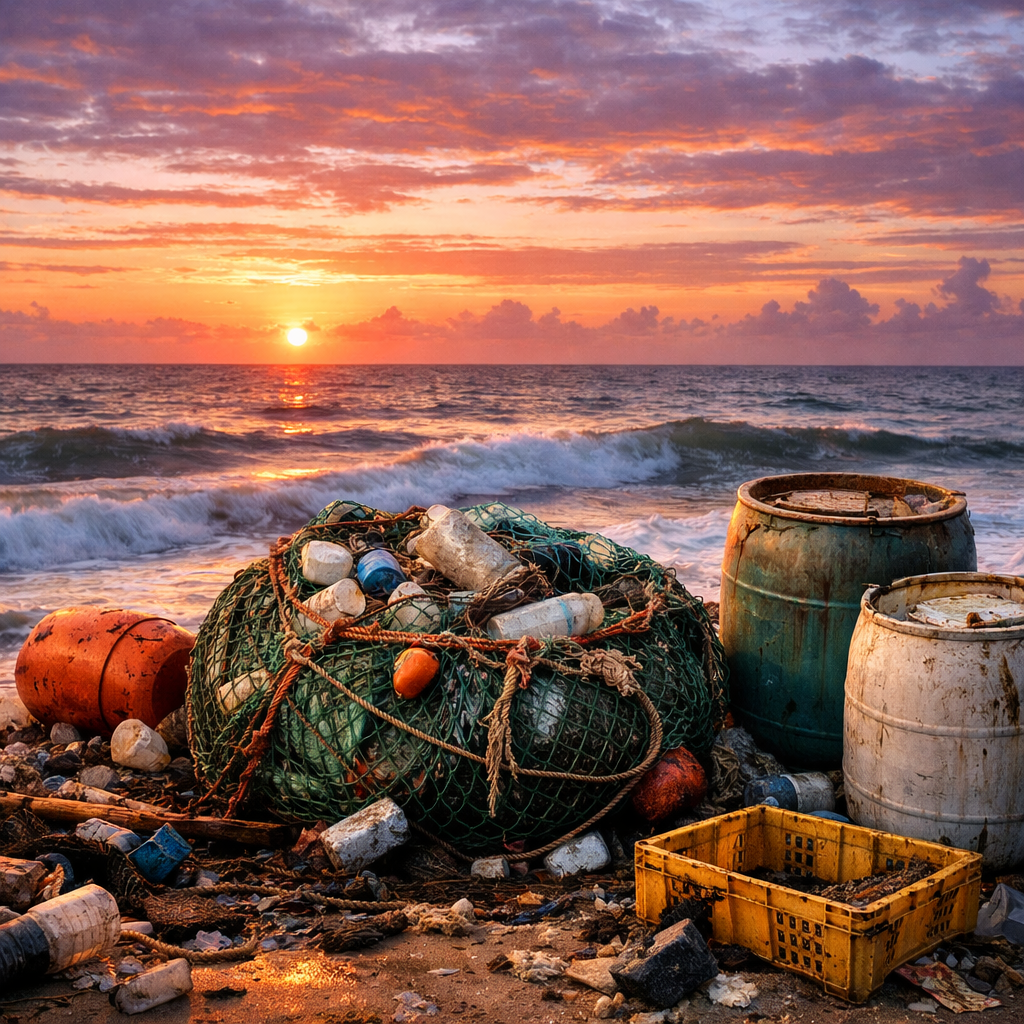
The ocean, humanity’s most ancient archive, is beginning to exhale its relics. For decades, we gambled that the vastness of the sea could absorb our worst transgressions—a presumption as deep as the trenches themselves. Today, that great wager is being called. Fragments of discarded history, toxic payouts from past decades of neglect, are washing ashore as silent creditors. These are the warnings of an ecosystem pushed beyond the bluff.
The Lost Rise from a Gamble-Fueled Sea
Beneath the surface, a grave ledger exists. Industrial corridors treated estuaries as waste chutes; manufacturing plants considered the aqueous horizon a final resting place for byproducts of progress. It was a systemic gamble based on a philosophy of “out of sight, out of mind.” The wager assumed the ocean’s depth was infinite and its ability to dilute and decompose, absolute. Now, that colossal bet is revealing its consequences.
What’s returning is not the biodegradable debris of centuries past. These aren’t wooden hulls or rusting iron. Today, it’s the detritus of the Petrochemical Age:
- Plastic oozeballs—tar-like amalgamations of degraded microplastics and other pollutants.
- “Ghost gear” specters—derelict fishing nets and traps that continue to trap and kill marine life for decades.
- Industrial chemicals and heavy metals once thought safely sequestered, now being disturbingly integrated into the food chain.
- Sea-weathered shipping containers, broken open, their contents—from consumer toys to harmful fungicides—scattered across once-pristine shores.
Each item that rises is a promissory note, coming due.
A Debt Owed to Oceans of the Past
This is more than an ecological accounting; it’s a cultural one. The practice of poisoning the waters in blind pursuit of growth is a chapter of modern history too quickly turned. The real price of inexpensive goods, the cost behind “cheap” energy, was deferred by dumping the liabilities into the common blue. Our relationship with the sea shifted from one of reverence—as a source of life, bounty, and mystery—to one of convenience, seeing it as a watery landfill and an invisible sewer.
The centuries of subsistence harvesting, the aesthetic inspiration for art and literature, and the maritime lifelines that shaped civilizations all stand in stark contrast to this recent era of calculated pollution. The sea’s “investment” in humanity was one of sustenance and stability; ours in return was a hazardous loan. The waves now crash against the shore not just with water and foam, but with the tangible receipts of our default.
When Tides Collect Society’s Final Wager
The collection process is inexorable and indifferent. Cyclical ocean currents and powerful storms serve as the great auditors, scouring the deeps and churning the seabed. Items submerged for forty, fifty, or a hundred years can suddenly be refloated and driven inland. The turning of this tide serves as a primal collecting mechanism for a debt nature never authorized.
A single example highlights this terrifying repossession: dumped munitions barrels from post-war eras. These steel containers, slowly corroding from the combined assault of saltwater and time, have begun to leak their explosive and chemical payloads onto beaches. Wartime decisions made under the guise of quick disposal are now delivering corrosive chemistry into civilian environments decades later. This is no metaphor; it is a literal dead reckoning, where the gamble of a bygone strategy materializes on a tourist’s beach in a disquieting, dangerous twist.
> Important Observation: The sea does not create waste; it only reflects our choices back at us. What washes ashore is simply the future of our past, returning to call the account.
Containers of Luck, Harbingers of Doom
The modern shipping container is an apt metaphor for society’s systemic gamble. It represents globalization’s backbone, the physical vessel of our “just-in-time” economy where goods circle the globe to maintain seemingly endless streams of consumption. But when ships encounter mountainous seas, sometimes they lose cargo overboard.
The fate of these lost containers is a parable:
- Some sink swiftly, becoming artificial reefs that can slowly leach their paints and coatings.
- Others, filled with buoyant materials, drift just below the surface, becoming lethal, invisible obstacles to navigation.
- They spill their contents—Nike shoes, rubber ducks, LEGO bricks, or medical supplies—into the ocean’s circulatory system. These objects travel thousands of miles from the accident site, winding up as bizarre finds on beaches worldwide.
They reveal two stark truths: the staggering, standardized volume of our material excess, and the flimsy barrier between orderly commerce and chaotic environmental contamination. Luck’s vessel becomes a harrowing, non-biodegradable monument to the scale of our gamble.
Fate’s Ledger Closes on Watery Shores
The shoreline, the dynamic frontier between land and sea, has become the final courtroom. This is where the evidence of our aquatic hubris is literally laid out on the sand for all to see. Here, there is no complex data model or theoretical debate—only the visceral, unavoidable confrontation with our own used-up objects and latent chemicals being surrendered by the waves.
We stand at a juncture where we can choose to either read these “wrecktificates” of our past decisions as a terminal failure or as a last-chance statement. Confronting them honestly requires immense societal humility—an admission that progress built on poisoning shared reservoirs was never truly progress at all. These ghostly wagers come back not as specters seeking revenge, but as the final, desperate clarion call of a changing planet.
> Every bottle, every toxic sphere, every disgorged munition casement is a grim messenger. It warns that our tab with the natural world is not on layaway, it’s accumulating interest. Ignoring these warnings is the ultimate act of hubris, a final gamble against fate with stakes we cannot comprehend, let alone afford.
Society’s tab is presented on silver platters of sand and seaweed. We have viewed the ocean as our casino for far too long, treating its ecosystems as the house bank, sure to cover our growing losses. But the ocean is not a passive financial institution; it is an active, physical, and living system governed by ancient chemical, physical, and biological laws. The dead have risen from its depths not as predators, but as harbingers, warning us the dice have stopped rolling, and it is our turn to read the house rules.
Leave a Reply