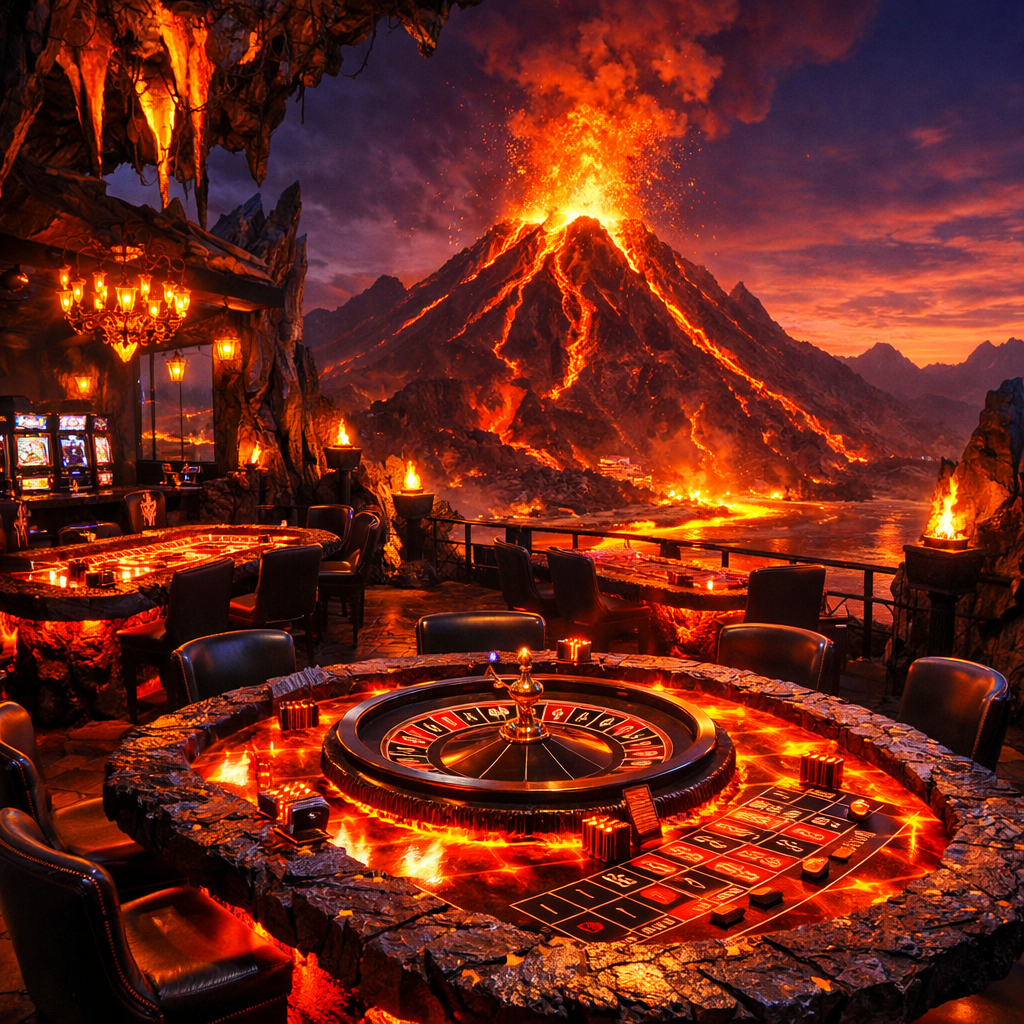
Imagine an island of fire and ice, where continental plates drift apart like a geological slow dance and the Earth’s raw power is a simmering constant. This is Iceland, a land sculpted by volcanic fury. Yet, as eruptions on the Reykjanes Peninsula turn from rare events into recurring headlines, scientists are not simply forecasting doom. Instead, they are speaking a new language: the language of odds. Like gamblers in a subterranean casino, they assess probabilities, wagers, and warnings. This fascinating shift from deterministic prediction to probabilistic forecasting isn’t just about Iceland; it’s a high-stakes game that reveals how we interpret the entire planet’s most fundamental signals.
The Rumbling Casino Beneath the Reykjanes
The Reykjanes Peninsula sits atop the Mid-Atlantic Ridge, where the North American and Eurasian tectonic plates are pulling apart. This provides a direct conduit for magma from the depths to rise toward the surface. For centuries, the peninsula was quiet, with eruptions spaced hundreds of years apart. That changed in 2021. Now, activity is frequent, forming what volcanologists term an “eruptive period.”
Here’s what this volcanic casino looks like:
- The Dealer: Earth’s internal forces and the consistent upwelling of magma along the ridge.
- The Chips: Variables like magma volume, tectonic stress, and the location of old, sealed fissures.
- The Bet: Placing temporary towns, critical infrastructure, and international air travel in the path of potential lava and ash.
- The Pot: The immense human, economic, and geological consequences of guessing right or wrong.
Unlike a game of pure chance, however, volcanologists are counting the cards—analyzing data to tilt the odds in humanity’s favor. The house—Mother Nature—always has the edge, but players are getting better at reading her tells.
When Geothermal Data Speaks in Probabilities
The age of simply waiting and watching is over. Modern monitoring in Iceland is a symphony of technology designed to translate Earth’s rumblings into statistical forecasts. This isn’t prophecy; it’s sophisticated risk assessment.
The data streams feeding these probabilistic models are diverse and voluminous:
- Seismic Symphony: Networks of seismometers detect thousands of tiny earthquakes, mapping the subterranean journey of magma. Their location, depth, and swarm-like behavior are critical clues.
- The Ground’s Breath: GPS stations and satellite radar (InSAR) measure minuscule ground deformation—a hill swelling by millimeters, a valley subsiding—signaling magma buildup.
- Chemical Whisper: Gas emissions, particularly sulfur dioxide (SO2), are sniffed out by sensors and satellites. A sudden spike can indicate fresh, volatile magma is approaching the surface.
> “Probability models don’t tell us what will happen; they tell us what is more likely to happen given the current, incomplete picture. It’s our best bet against uncertainty.”
These data points are fed into complex models. Instead of announcing “Eruption at 3 PM,” the Icelandic Met Office might state there is a “significant likelihood” or a “heightened probability” of an eruption within a given timeframe, often within days or weeks. This nuanced communication acknowledges the inherent uncertainty and prevents the false alarms that erode public trust.
Interpreting Earth’s High-Stakes Warning Signs
Understanding these probabilities requires deciphering a suite of interconnected warnings. A single tremor is just noise; a pattern is a signal. Knowing what to look for is key to interpreting the odds.
- Watch for Unprecedented Signals: A seismic swarm moving in a clear, linear pattern along a known tectonic fissure is a major red flag.
- Trust the “Memory” of the Land: Areas with dormant fissures are more likely to reactivate than entirely new ones popping up. Geology has a long memory.
- Look for the Magma “Chamber Influx”: A “communal hearth” model suggests long-lived magma sources beneath multiple volcanoes (like Þorbjörn or Svartsengi). Magma can migrate sideways to find the easiest path to the surface, creating volatile “ant-filled lava” eruptions.
- Monitor Magma Flows vs. Gases: Using chemical sampling, scientists distinguish between older, “recycled” magma and new, gas-rich batches from deep sources that are more explosive.
- Connect Staggered Lava Flows: Consecutive eruptions (like 2023’s multi-vent activity) may feed into a massive, connected network of surface lava tubes, accelerating flow rates during new events.
- Heed Site-Specific Watches: Tiny “site specific” warning sites focus on the most vulnerable locales of volcanic sensitivity: a geothermal plant, a runway, a lake.
The Unheeded Oracle in a Plume of Ash and Data
For all our technology, the planet’s warnings are not always heeded. This isn’t just about skeptical locals; it’s a fundamental challenge of translating probabilistic science into decisive action.
A risk-based alert showing a 60% chance of an eruption near Grindavík presents a dilemma: when do you definitively tell thousands to evacuate? Wait too long, and lives are at risk. Evacuate too soon or too often, and the “cry wolf” effect sets in, leading to complacency and economic strain. The interplay between human lives, tangible consequences, and statistical abstracts becomes the real battleground.
Furthermore, Earth’s signals can be fickle. A de-escalation in seismic activity can provide a false sense of security, lulling authorities into lowering alert levels just before a sudden, final surge of magma breaches the surface. Managing these warnings is as much about human psychology and communication as it is about geophysics.
Our Planetary Wager is Tipped by Lava
In Iceland, the gamble is visceral and urgent, but it echoes a global challenge. Around the world, communities built on volcanic slopes, earthquake faults, and floodplains make a daily wager with the planet. Iceland’s embrace of probabilistic forecasting offers a blueprint: it humbly accepts uncertainty while empowering society with the best possible information to manage risk.
> “This isn’t fate; it’s weighted odds. And by reading them, we tip the scales, however slightly, in our favor.”
The Reykjanes lava flows are more than natural spectacle; they are a tangible, costly consequence that validates the models and sharpens the science. Every eruption, while destructive, becomes a data point, refining future odds. The gamble will never go away—the Earth will always hold the final card. But through painstaking observation, advanced technology, and clear communication of probabilities, we are no longer playing blind. We are learning to read the table, making our collective planetary wager a more informed one. The Earth’s gambit will always be laid, but how we choose to bet is, increasingly, up to us.
Leave a Reply