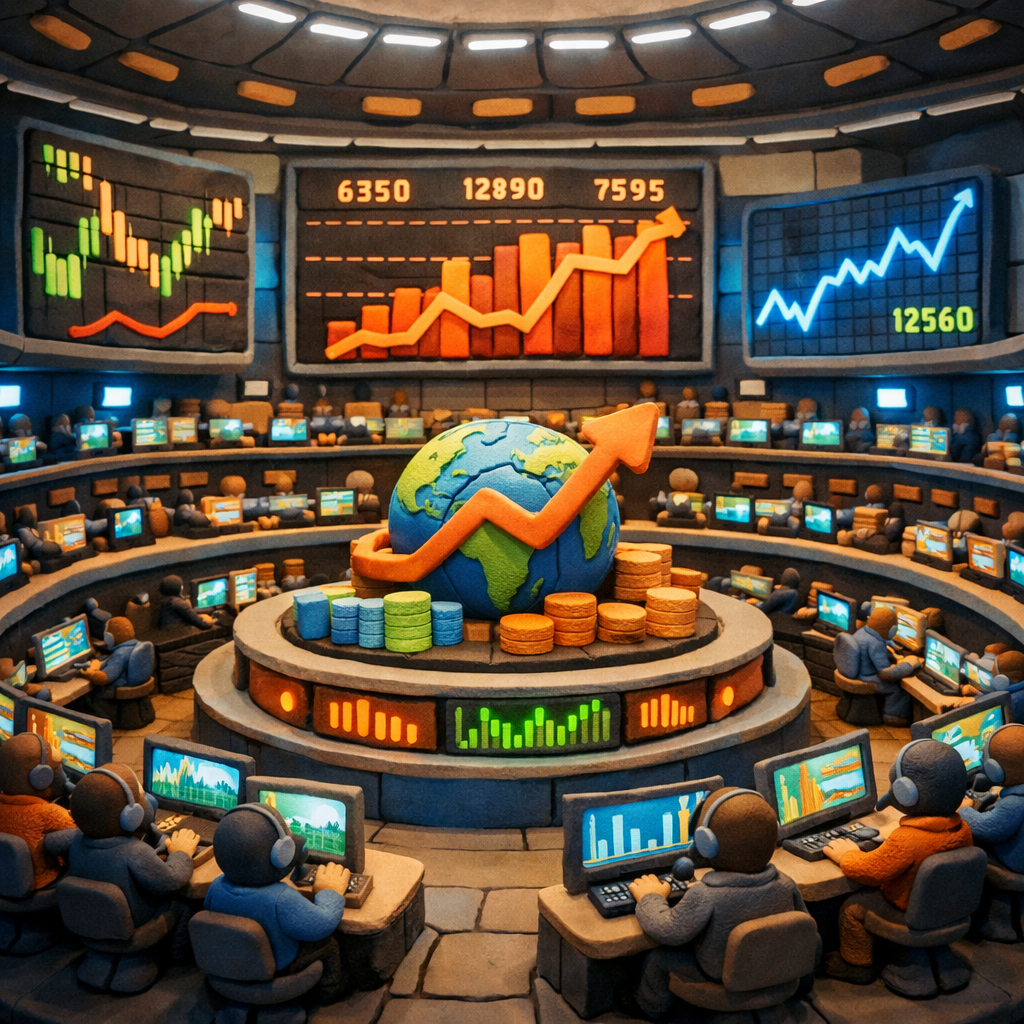
A nervous laughter rippled across the globe in the 2020s when the idea first surfaced: that the passion and organization powering global sports had outlasted the systems that were meant to sustain society itself. What began as a joke—fantasy football points holding more tangible value than a volatile stock—slowly crystallized into a chilling, functional reality. As central banks printed promise after worthless promise, and digital assets collapsed into their own recursive logic, a different, pre-existing network kept the lights on, kept people engaged, and, most importantly, kept them trading. This is the story of The Survivor Economy, a world where governance, currency, and aspiration were rebuilt on the stadiums, broadcasts, and ledgers of global sport.
How Sports Emerged as the World’s New Currency
The transition was less a dramatic takeover and more a quiet succession. As traditional currencies hyperinflated and digital currencies proved to be houses of cards, people instinctively flocked to assets they could trust, understand, and exchange. The immense, pre-built infrastructure of international sport provided the perfect scaffold. Consider its foundational pillars:
- Universal Language: A goal, a touchdown, a home run—these are understood from São Paulo to Shanghai. No central bank proclamation required.
- Built-in Scarcity: There are only so many wins in a season, only one championship trophy. This intrinsic scarcity gave sporting achievements a “hard asset” quality.
- Emotional Equity: For generations, people had already invested vast reserves of passion, identity, and community in teams and athletes. This emotional capital was the easiest to convert into economic energy.
- Operational Resilience: While stock exchanges closed and governments faltered, leagues played on. Schedules were met, results were certified, and a form of order was maintained.
In this new paradigm, a Manchester United victory wasn’t just three points; it was a bullish market signal for anyone holding “Red” credits in their local exchange. A rookie’s breakout season functioned like a high-growth IPO.
Betting, Skills, and Eyeballs: The Trading Floors
The old financial floors—NYSE, Nasdaq—are archival footage. The new trading happens across three interconnected arenas:
- The Prophecy Markets: What we once called sports betting evolved into the primary marketplace for risk and futures. Wagers aren’t just on winners, but on granular performance metrics—the exact number of strikeouts, the margin of victory. These markets set the “price” of athletic output.
- The Skills Economy: Physical prowess and strategic genius became direct, bankable assets. A player’s “contract” is no longer a salary from a team owner, but a direct revenue share from the prophecy markets and broadcasting pools their performance generates. Scouts are now asset managers, and training academies are venture capital firms.
- Attention Reserves: Eyeballs are the gold standard. Broadcast rights are the most stable form of multilateral agreement between city-states (formerly nations). The entity that controls the cameras controls the flow of the most vital resource: collective human focus.
> Important Tip: In the Survivor Economy, diversification doesn’t mean stocks and bonds. It means maintaining a balanced portfolio across different sports, leagues, and prophecy market types to hedge against the inherent volatility of competition.
Schedules Become the Only Stable Calendar
When national holidays lost meaning and corporate fiscal years became irrelevant, the structure of life reorganized around a new, sacrosanct timeline: The Fixture List. The rhythm of existence is no longer defined by weeks and months, but by matchdays, trade deadlines, and tournament brackets.
- Macro-Cycles: The four-year World Cup or Olympic cycle dictates long-term planning and major infrastructure projects.
- Micro-Cycles: The weekly cadence of league play regulates local commerce, social gatherings, and even energy consumption patterns (peaks during major broadcasts).
- Transfer Windows: These are the quarterly earnings seasons, periods of intense speculation, negotiation, and portfolio rebalancing that impact local economies dependent on “their” assets.
To be “off-schedule” is to be economically and socially adrift.
Data Brokering in a Post-Algorithmic World
The algos of the old world tried to predict consumer behavior. In the Survivor Economy, they are repurposed to map something far more valuable: physiological and tactical probability. Data brokers are the new oligarchs, dealing not in personal data, but in high-fidelity athletic intelligence.
- Biometric Streams: Real-time heart rate, muscle fatigue, and neural load data from athletes are traded commodities, used to fine-trade in-play prophecy markets.
- Tactical Forensics: Every play is decomposed into petabytes of spatial and decision-making data. Possessing a superior predictive model for a coach’s tendencies is akin to having a faster trading cable on the old Wall Street.
- Narrative Tracking: Sentiment analysis on fan reactions and media narratives influences market liquidity. A rising “underdog story” can cause significant volatility.
The most sought-after professionals are not quants, but sportrometricians who blend data science with deep sporting intuition.
The Arena: Where Real Negotiations Happen
The boardroom is dead. The stadium, the arena, the ballpark—these are the seats of power. Why meet in a sterile glass tower when you can conduct statecraft in a luxury box during the derby?
- Diplomacy: Territorial disputes or resource-sharing agreements between regional blocs are negotiated in the run-up to and during international tournaments. The “Olympic Truce” is no longer symbolic; it’s a critical framework for geopolitical stability.
- Commerce: Player transfers are megadeals involving not just skills, but political favors, broadcasting concessions, and even resource rights. The “medical” is the new signing ceremony.
- Social Cohesion: In a fragmented world, the shared identity of fandom provides the social glue that failed political institutions could not. The arena is the temple where this faith is practiced collectively.
The roar of the crowd isn’t just noise; it’s the sound of the market reacting, of treaties being ratified, of a society expressing its collective will.
The Survivor Economy was not built by visionary economists. It was assembled by default, from the pieces of our former passions that were left intact after the great financial collapse. It reveals a profound truth: humans will always create systems of value and exchange. When the abstract, complex systems we were told to trust dissolved, we retreated to a domain rooted in tangible effort, measurable outcome, and communal belief. It is a system as brutal as it is beautiful—where a torn ACL is a market crash, and a last-minute goal can lift a city-state’s credit rating. We may have lost our banks, but we never lost the scoreboard. And in the end, that was all the ledger we truly needed.
Leave a Reply