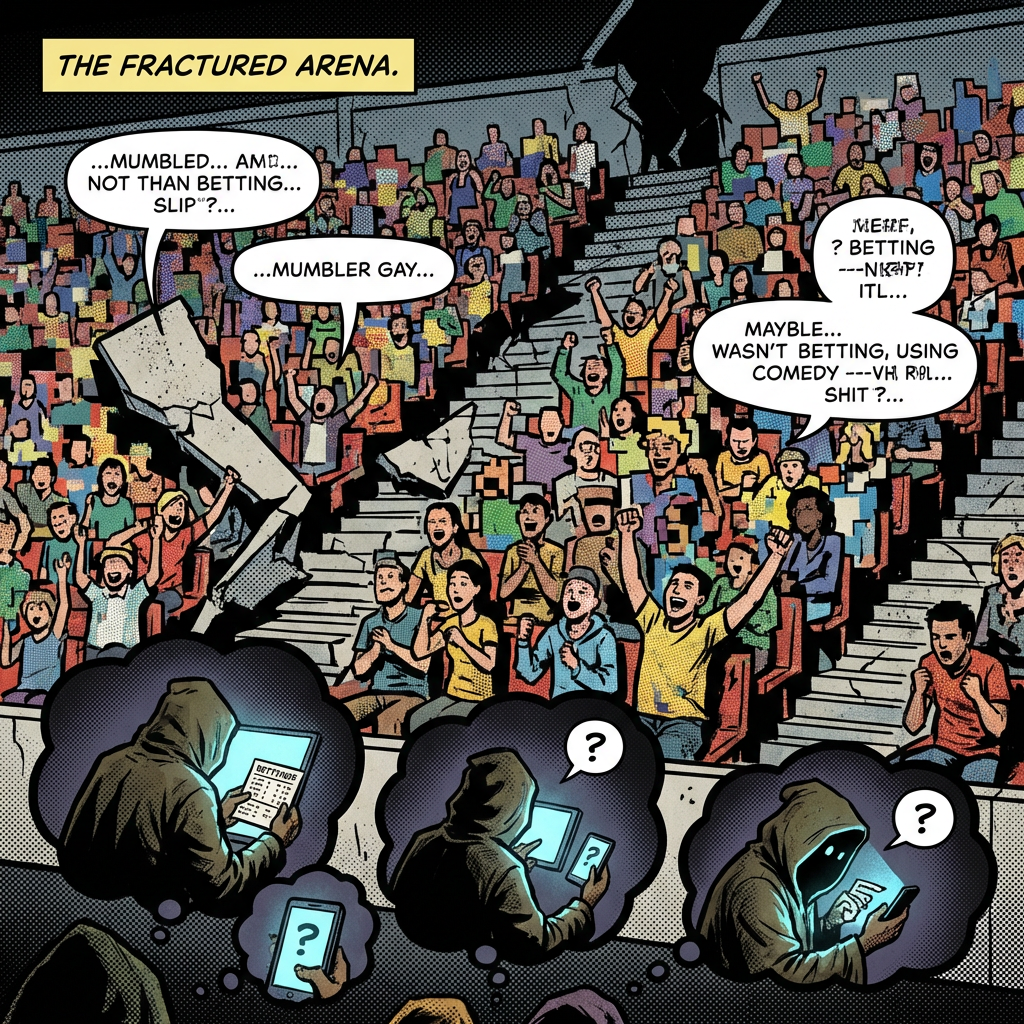
Remember the feeling? Packed into a friend’s living room, wearing your team’s colors, sharing one bowl of chips, erupting in a single roar when the impossible shot sinks at the buzzer. That shared thrill, that moment of collective belonging, is the true heart of sports. But for many, a dangerous price tag has been attached. The rise of sports gambling is creating a creeping, often invisible, erosion of the community ties that make being a fan so meaningful.
From Shared Thrills To Isolated Payout Chases
What was once a common passion is increasingly viewed through the lens of a private transaction. The cultural shift is subtle but profound.
- The Focus Shifts: Conversation moves from “Did you see that play?” to “Did you cover the spread?” The shared narrative of the game—the comeback, the rookie’s debut, the veteran’s last stand—gets drowned out by the solitary narrative of individual gain or loss.
- A Fractured Viewing Experience: When you have money on the line, you’re no longer just rooting for a team; you might be rooting against a player getting one more rebound, or for a game to go into overtime for a prop bet. This creates a silent, internal conflict that separates you from the friends around you who are celebrating a simple victory.
- The Isolation of Loss: A true fan’s loss is communal—a shared misery that bonds. A gambler’s loss is a private financial error, often shrouded in shame or frustration that walls them off from others. The joy becomes personal profit; the pain becomes a hidden debt.
The stadium and the living room cease to be communal spaces and transform into personal trading floors.
Eroding Trust When Every Game Has a Price
Sports have always been a bedrock of social trust. We trust in the integrity of the game, the effort of the athletes, and the shared ethics of fandom. Widespread gambling applies relentless pressure to each layer of that trust.
When financial gain is on the line, skepticism becomes the default setting, and every missed shot or questionable call is viewed through a lens of potential corruption.
Consider the damage:
- Suspicion Replaces Camaraderie: A friend’s passionate defense of a controversial call can suddenly be questioned: “Of course you’d say that, you’ve got money on them.” The seed of doubt is planted, corroding the foundation of honest debate.
- Exploiting Relationships: That friendly fantasy league or weekly pick ’em pool can morph. The person asking for your “lock” of the week isn’t just seeking fan insight; they’re seeking a financial edge, turning your knowledge into their commodity.
- The “Insider” Mentality: Gambling fosters a culture of supposed “inside info” and secrets, pushing people to hoard knowledge rather than share it. This directly opposes the open, passionate exchange of opinions that defines healthy sports communities.
Trust is fragile. When every interaction in the fan community carries a potential hidden financial motive, the walls go up, and the community fractures.
How Gambling Replaces Generosity With Greed
At its best, sports fandom is surprisingly generous. We buy rounds when our team wins, share our best watching spots, and wear our hearts on our sleeves in a gift of shared emotion. Gambling systematically replaces this spirit of generosity with a calculus of greed.
- Zero-Sum Mindset: In gambling, for me to win, you (or the book, or another bettor) must lose. This transforms fellow fans from allies into potential adversaries in a hidden financial game.
- Withholding Joy: The immediate reaction to a stunning play becomes checking your betting slip, not high-fiving the person next to you. The emotional energy is internalized and monetized, not shared and amplified.
- Resource Drain: The money lost on a bad beat or a parlay bust isn’t just gone. It’s money that won’t be spent on group tickets, a community league jersey, or pitchers of beer while celebrating together. It extracts wealth from the communal economy of fandom and sends it into a corporate void.
The communal potluck becomes a private transaction. The generous shout becomes a silent calculation of net profit.
Reclaiming the Game
This isn’t a call to outlaw a bet. It’s a plea for awareness. Every time you place a wager, ask yourself a simple question: Am I investing in the experience, or extracting from it?
The cost of a bet is often tallied only in dollars lost. But the true price is paid in eroded trust, stolen joy, and fragmented community ties. The most valuable payout sports ever offered was never found in a bank account. It was found in the collective gasp of a crowd, the unbreakable bond with fellow fans, and the pure, shared thrill of the game—unpriced, uncomplicated, and utterly irreplaceable.
Let’s not gamble that away.
Leave a Reply