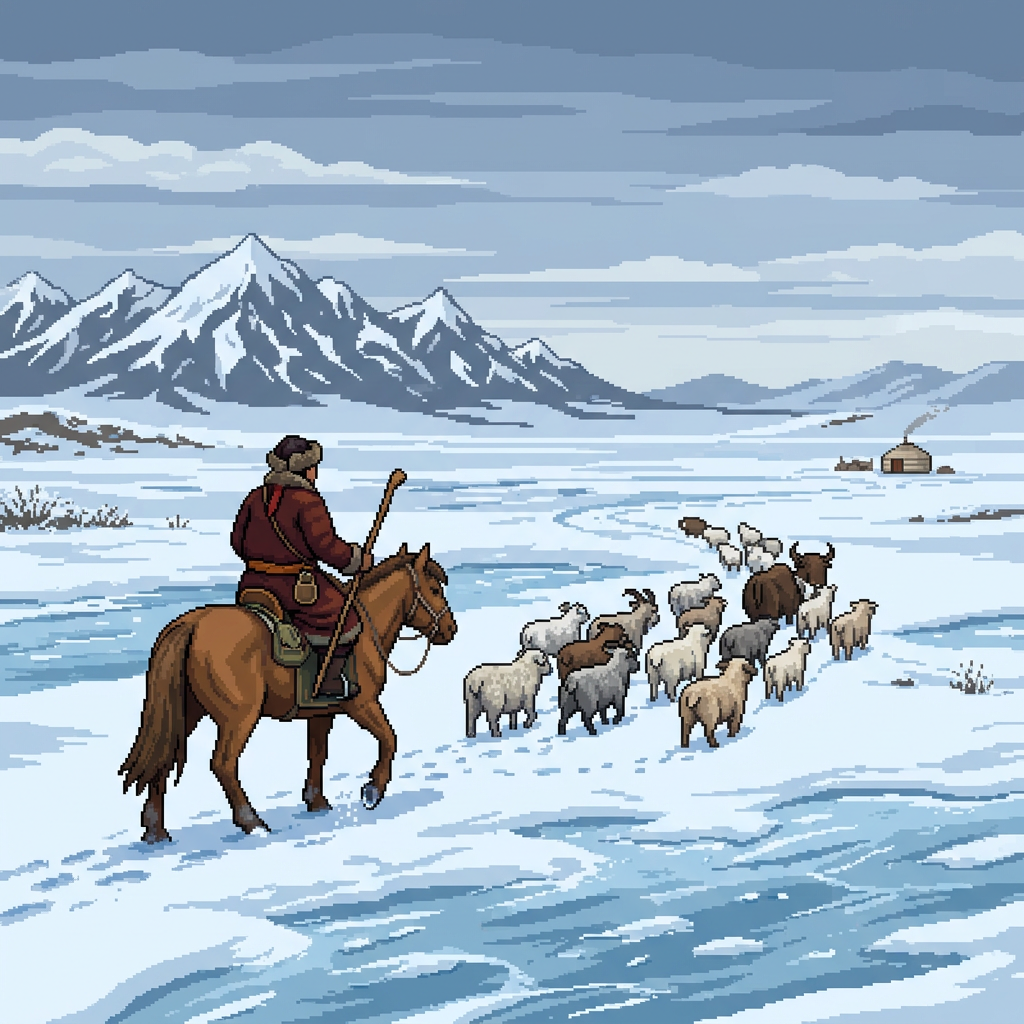
At first glance, the windswept steppes of Mongolia and the gleaming, hyper-capitalist arenas of global sports finance seem worlds apart. One is a landscape of ancient rhythms, of nomadic herders and enduring traditions; the other, a domain of volatile markets, superstar contracts, and billion-dollar broadcast deals. Yet, from this very contrast emerges a compelling vision. It is a perspective born not from spreadsheets, but from a profound understanding of cycles, patience, and communal survival. This is the story of how a Mongolian herder’s worldview could reframe the chaotic world of sports investing, transforming it from a speculative gamble into a sustainable lifeline for communities on the economic periphery.
The Warning in the Sky: A Stadium’s Shadow
For a herder, the sky is the first page of the daily news. The gathering of clouds, the direction of the wind, the behavior of birds—all are proximate indicators of a coming storm. They don’t predict the exact moment a blizzard will hit, but they signal the necessity for preparation: bringing the herd closer to the khot ail (encampment), securing the felt covers of the ger, and storing extra fodder.
> “A lone vulture circling is just a bird. A cluster of them, silent and patient, speaks of a weakness in the herd you have not yet seen. The market, too, sends such signals before it falls.”
Modern stadiums, with their dazzling lights and roaring crowds, cast a long shadow—one of debt, gentrification, and often, broken municipal promises. The herder sees this not as inevitable progress, but as a clear sky-sign. The frantic public financing, the inflated economic projections, the displacement of local communities: these are the clustering vultures. True sports investing, through this lens, begins not with the pursuit of a jackpot, but with the vigilant reading of these socio-economic indicators to avoid catastrophic loss before it strikes.
Sports Investing: More Than Bets and Chance
To the outsider, “investing in sports” conjures images of high-stakes betting or buying shares in a publicly traded football club. The herder’s concept is more granular and fundamentally patient. It is about nurturing capital in living systems. Consider the herder’s approach to a horse:
- It is never a single transaction. The value is in the foal’s lineage, its training over years, its health, and its potential to produce future generations or win in Naadam festivals.
- Diversification is innate. A healthy family herd consists of sheep, goats, cattle, horses, and camels—each with different gestation periods, market values, and resilience to disease or drought.
- Value accrues in cycles, not linearly. There are lean winters and abundant summers. The smart herder invests the surplus from a good year into the security of the herd for the inevitable bad one.
Applied to sports, this philosophy moves beyond merely backing winners. It means:
- Investing in sports education infrastructure in overlooked regions.
- Funding women’s and para-sports leagues that represent untapped growth.
- Supporting local athletic apparel makers using sustainable materials.
- Viewing a promising athlete as a long-term ecosystem (their health, coaching, brand, post-career life), not just a vehicle for a quick sponsorship return.
Ancient Ground Trembles Against The Message
Here lies the central tension. The modern global sports complex is the antithesis of nomadic patience. It is built on:
- Immediate ROI: The demand for quarterly profits and instant championship success.
- Extractive Models: Mining a local fanbase for higher ticket and merchandise prices, then relocating franchises when the resource is depleted.
- Hyper-Speculation: Treating player transfer fees and media rights as volatile commodities to be flipped.
The herder, whose culture is defined by movement within limits and reciprocity with the land, feels the ground tremble with this approach. It is unsustainable. It consumes its own future. The message from the steppe is that this system, for all its glitter, is more fragile than a ger in a zud (harsh winter). Its lack of true resilience is its greatest vulnerability.
A Herder’s Guide to Global Economic Pastures
So, what would a herder’s guide to ethical, resilient sports investing look like? It would be a manifesto built on principles older than Wall Street.
- Know Every Animal in Your Herd: Don’t invest in a club, league, or sport you don’t fundamentally understand. Know its community, its history, its real value drivers beyond the hype.
- Prepare for the Zud: Always maintain a “winter reserve” of capital. Never over-leverage on a single outcome, no matter how certain it seems. The market blizzard can arrive suddenly.
- Move with the Seasons: Be fluid. Have the courage to exit grazing grounds (investments) that are becoming barren and identify new, fertile ones before the crowd arrives.
- Invest in the Grass, Not Just the Horse: The most profound returns come from enriching the environment that produces value. Funding grassroots programs, community facilities, and fair labor practices in sports manufacturing ensures the whole system thrives.
- Respect the Circle: Understand that you are a temporary steward of capital, not an owner. Your investments should aim to leave the “pasture”—the sport, the community, the market—healthier than you found it.
> “A short rope ties a weak knot. Your investment horizon must be long enough to tie the community, the asset, and your capital into a single, strong bond.”
From Frozen Horses to a Financial Lifeline
The ultimate vision is one of transformation. Can the vast, often predatory, capital flows of global sports be redirected? Can they be turned into a financial lifeline that reaches the world’s most remote economic pastures?
Imagine:
- A sports impact bond that funds ice rinks in Mongolia, creating a new pipeline for speed skaters and a winter tourism economy.
- An investment fund that identifies and partners with indigenous sporting traditions—from Maasai jumping to Bolivian skateboarding—helping them build sustainable economic models.
- Fan-owned consortiums, modeled on the communal decision-making of a herder community, acquiring stakes in teams to ensure they remain cultural assets, not financial pawns.
This is not a rejection of profit, but a redefinition of it. The herder’s wealth is not just livestock count; it is the health of the land, the strength of the family, and the security of the future. In a world of speculative bubbles and rampant inequality, this ancient wisdom offers a startlingly modern blueprint. By viewing sports not as a casino but as a global commons, and investing in it with the patience, respect, and cyclical wisdom of a herder, we might just save the industry from itself—and in the process, channel its colossal energy toward building a more resilient and equitable world. The vision is clear; we need only the will to see the stadium not as a fortress, but as a new kind of ger, its door open to the future.
Leave a Reply