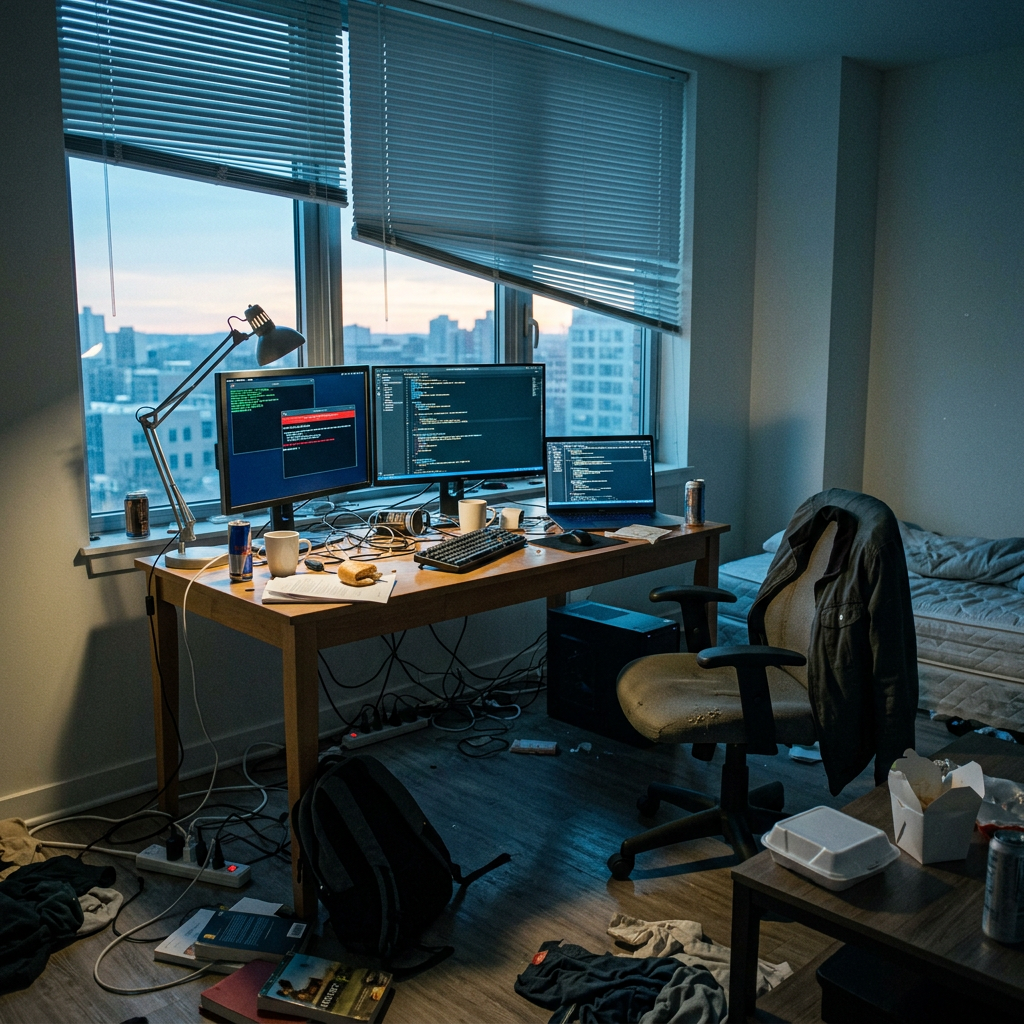
The life of a developer often oscillates between the tranquility of focused work and the sudden chaos of unforeseen catastrophe. It’s a world where a single line of code can be the source of profound satisfaction or deep crisis. This is a story from that world, a personal account set in the vibrant, neon-lit district of Hongdae, Seoul—a place better known for indie music and youthful energy than for midnight debugging sessions and high-stakes corporate intrigue. It is the story of an accusation, a raid, and the startling clarity that can follow in the five minutes after fear.
The Quiet Debugger in a Hongdae Studio
In a small, dimly-lit studio apartment overlooking Hongdae’s bustling streets, the only light came from a pair of monitors. The hour was late, well past midnight, the perfect time for deep work free from distractions. My focus was absolute, locked on a persistent bug within a data visualization module. This wasn’t just any project; it was a complex system designed to analyze and present transactional datasets in a clean, insightful dashboard. The work involved:
- Parsing vast streams of anonymized user data.
- Identifying patterns and anomalies through custom algorithms.
- Ensuring all representations were accurate and non-deceptive.
The process was meticulous, a dance of logic and patience. I was in what coders call “the zone,” a state of flow where time dissolves. Outside, the sounds of the last revelers faded, leaving only the quiet hum of the computer and the rhythmic tapping of keys. This solitary, concentrated effort was the calm before an unexpected and tumultuous storm.
Accusation Landed: “Unauthorized Data Manipulation”
The first sign of trouble was an email. It arrived not from a colleague, but from a generic corporate compliance address. The subject line was cold and accusatory: “URGENT: Inquiry Regarding Project Data Integrity.” The body was worse. It alleged, in carefully vague legal terminology, “potential unauthorized manipulation and export of proprietary data streams.”
The core of the accusation was twofold:
- That my debugging activities constituted an attempt to extract and reconfigure sensitive data.
- That my access patterns, working odd hours on a remote server, were “consistent with exfiltration behavior.”
> Important Tip: In any technical role, especially when handling data, meticulously document your work. Commit logs, time-stamped notes, and clear ticket references are not just for productivity; they are your first line of defense.
The claims were absurd from my perspective. I was fixing a display bug, not touching the raw data pipeline. But the language was designed to sound serious and threatening, casting the innocent, complex work of debugging in a sinister light.
A Pretext to Protect the Gambling Status Quo
As the shock of the email subsided, a pattern emerged. The project I was working on was indirectly related to analyzing financial flows. My dashboard, had it been completed, would have made certain transactional anomalies—small, recurring, patterned payments to obscure shell entities—far more visible and easier to audit.
The accusation wasn’t really about data security. It was a smokescreen. I began to piece together that my work was threatening an unseen, lucrative status quo. Perhaps my debugging was getting too close to revealing:
- Embedded commission structures hidden within legitimate-looking transactions.
- Financial loops that benefited certain parties who preferred opacity.
- A delicate ecosystem where clarity was the enemy of profit.
The “unauthorized manipulation” charge was a convenient tool to halt my work, discredit my efforts, and protect systems that thrived in the shadows of complex data.
The Dawn Raid That Targeted Our Confidence
Two days after the email, the theoretical became violently real. At dawn, just as the first light touched Hongdae’s streets, there was a loud, insistent knock on my studio door. Outside stood two stern-faced men in suits, flanked by a building manager. They presented badges from the company’s internal security, demanding immediate access to “secure company assets”—my work laptops and external drives.
The dawn raid is a tactic designed for maximum psychological impact. It’s not just about seizing equipment; it’s about seizing your sense of safety and control. In my own space, my sanctuary for creation, I was suddenly the suspect. They imaged my drives, scrolled through my code repositories with a dismissive air, and took silent notes. The message was clear: your expertise is subordinate to our narrative, and your environment is not your own.
Five Minutes of Fear Before Resolve Returned
After they left with cloned drives, a profound silence filled the studio. For exactly five minutes, fear took hold. It was a physical sensation—cold, heavy, and isolating. Questions raced: My career is over. Who will believe me? What legal nightmare is this?
But then, as abruptly as it came, the fear burned away, replaced by a cold, sharp resolve. The sheer clumsiness of their intimidation was its own evidence. They went after a debugger at dawn over a visualization bug. Their overreach revealed their panic.
I took a deep breath and began my counter-process, methodically:
- Gathered all evidence: Automated commit histories, time-stamped Slack messages about the bug, pull request reviews.
- Secured independent backups: Of clean code, sent to a trusted, neutral third party.
- Composed a factual timeline: A clear, unemotional document linking every action to a specific, legitimate task ticket.
I didn’t just feel like a developer anymore; I felt like a debugger of a much larger, more corrupt system. The bug wasn’t in my code. The bug was in their willingness to corrupt the truth to protect their game. And unlike their fragile system, my logic was sound, my steps were traceable, and my work would speak for itself.
That night in Hongdae, I learned that the most critical systems we debug are not always made of code. Sometimes, they are made of power, pretext, and fear. And sometimes, the most important variable you protect isn’t data—it’s your own integrity and the resolve to see the process through.
Leave a Reply