The robotics were meant to be a revolution, a clean, silent ascent into a gleaming future. The robots were not the museum piece; we were. They didn’t just automate tasks; they supplanted souls, and left an entire community marooned on an island of memory. This is life after the robots in Museum Town, a place where the past is perpetually on display, and the future is a daily negotiation of impossible odds.
A Museum Town Where Humanity Is the Exhibit
Nestled in a river valley, our town was built on industry. The narrative sold to visitors was quaint: a preserved relic of 20th-century manufacturing, a “living museum” dedicated to the Craft of Making Things. We played our parts well—a man in overalls pretending to work a decommissioned drill press, a woman demonstrating a loom that hadn’t produced commercial cloth in decades. But the real museum was us. The community, once a thriving engine of local commerce and identity, was re-cast as a static exhibit. Our present became a performance, our traditions a tourist attraction.
Every brick in the old town square was meticulously maintained, while the homes just streets away crumbled. The polished facades of the gift shops and cafes on Main Street created a picturesque facade, a diorama of prosperity that ended at the edge of the museum district. We were the living artifacts, expected to perform nostalgic labor for the cameras while the actual, vital work of sustaining a life had long been outsourced or made obsolete.
> The glossy brochures proclaimed we were “keepers of a forgotten craft.” They never mentioned the craft of surviving.
When the Factory’s Heartbeat Was Silenced
The Watson-McLeod Automata Foundry was the last to fall. It was the anchor, a facility of startling modernism that somehow felt older than the soot-blackened brick mills. Its arrival was heralded as a renaissance—a merger of our historical identity with cutting-edge technology. They built autonomous systems: nimble robotic arms for delicate assembly, logistical brains for global supply chains. For a time, it worked. The high salaries fed the local economy. Then, the pivot toward full automation began.
The Foundry became its own best customer. It began to manufacture the robots that would eventually displace its own line workers, then its engineers. The layoffs came not as a sudden collapse, but as a slow, meticulous bleeding. Maintenance crews were halved, then quarters. Today, the Foundry is a sealed box of polished concrete and glass, humming with climate control for a skeleton crew of technicians who maintain the fleet of self-replicating, self-optimizing machinery within. The factory’s heartbeat—the shift change whistle, the lunchtime chatter, the grumble of machinery directly operated by human hands—is gone. What remains is the low, Om-like hum of perfectly efficient machines in a city built to memorialize human toil.
The Hollow Gamble for Daily Survival
In the vacuum left by purposeful work, survival strategies turned desperate and small-scale. The economy of Museum Town now runs on an unstable mixture of seasonal tourism, under-the-table services, and, most insidiously, speculation. With stable jobs a memory of a bygone era, many turned to the deceptive ecstasy of rapid trades—cryptocurrency, day-trading fractional shares, and NFT flips—chasing the digital phantom of quick wealth on platforms they only half-understood.
- The idea was seductive: a smartphone and a Wi-Fi connection could be the new factory, the new tool of liberation from the museum diorama.
- But without capital, proper knowledge, or emotional cushion, these gambles were catastrophic. Wealth generated on a Monday could be a portfolio of worthless pixels by Friday, leading to debt that no “digital gold rush” could wash away.
> The cruel irony was inescapable: having been replaced by algorithms, people now tried to pit their human desperation against the cold logic of financial algorithms designed to win.
This hollow gamble created an environment of profound anxiety. Trust frayed. Every whispered tip or “sure thing” was shadowed by the specter of total loss.
Betting on Sports as a Rational Refuge
Against the dizzying chaos of digital assets, many found an unexpected, grimly rational refuge: sports betting. Unlike the opaque alchemy of cryptocurrencies, it felt fathomable. They were gambling on carbon-based systems: men of flesh, bone, and erratic judgment, operating under known rules, with data you could track. A basketball player’s ankle sprain, a pitcher’s tired arm, a team’s historical performance—this was human-centric data in a world that had discarded humanity. Here, in a wager, some deep, scrambled need to be “right”—to correctly analyze, to predict the outcome of a chaotic, physical contest—was unearthed.
A surprising intellectual subculture emerged around it. People once trained to read lathes and blueprints now parsed advanced analytics, win probabilities, and player tracking data. The energy once directed toward building a product was now funneled into predicting a spread. It was a pathetic pivot, yet one where skill, study, and intuition could yield a tangible, immediate return—groceries, a rent check, a fleeting sense of agency. It was not a life; it was a thin, desperate calculation for staying afloat one more day.
Searching for Flickers Beyond the Algorithm
The central conflict in Museum Town is now a struggle to locate value that the automated systems cannot quantify. People are trying, hesitantly, to plant seeds in infertile ground. There are murmurings, small acts of cultural reclamation that pulse with a trace of anti-automated resistance.
- A man started a workshop to build acoustic instruments by hand, rejecting the CNC-routed perfection of modern manufacturing for the slow, tactile, imperfect sounds of wood shaped by human tools.
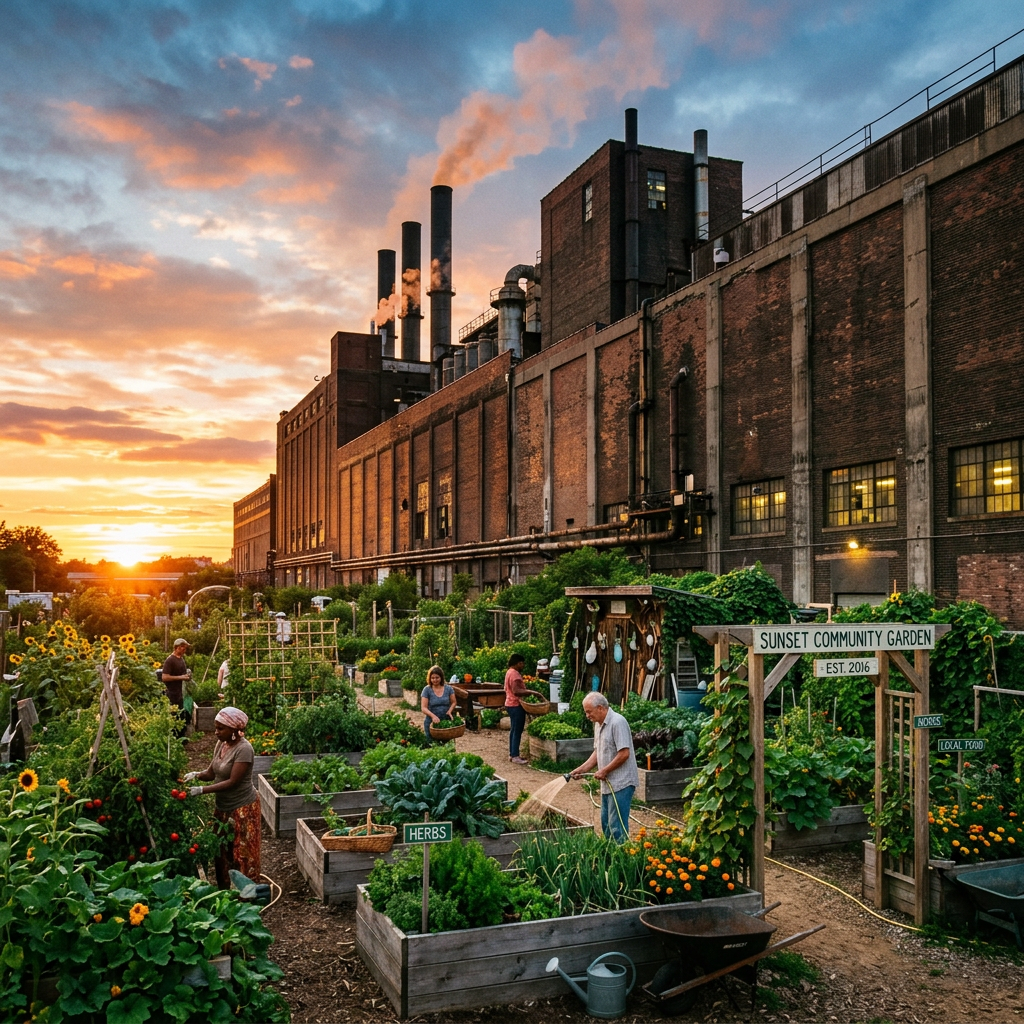
- A community garden collective sprang up on the vacant lot of a demolished tenement, its members sharing heirloom seeds and knowledge of the soil in a conspiracy to feed each other, not the tourism market.
- A late-night poet’s circle meets in a shuttered bookstore, sharing work that is deliberately handwritten, messy, and algorithmically un-optimized.
These are fragile alternatives to speculation, small rebellions against a system that sees us as either an inefficient bio-mechanical unit or a data point to be mined for predictive models. They whisper that perhaps our worth lies not in what we can predict or extract, but in what we can create and grow, slowly and messily, outside the museum walls. The future of Museum Town is no longer about being a historical exhibit; it’s about discovering if humanity, post-automation, can still invent a craft worth living.
Leave a Reply