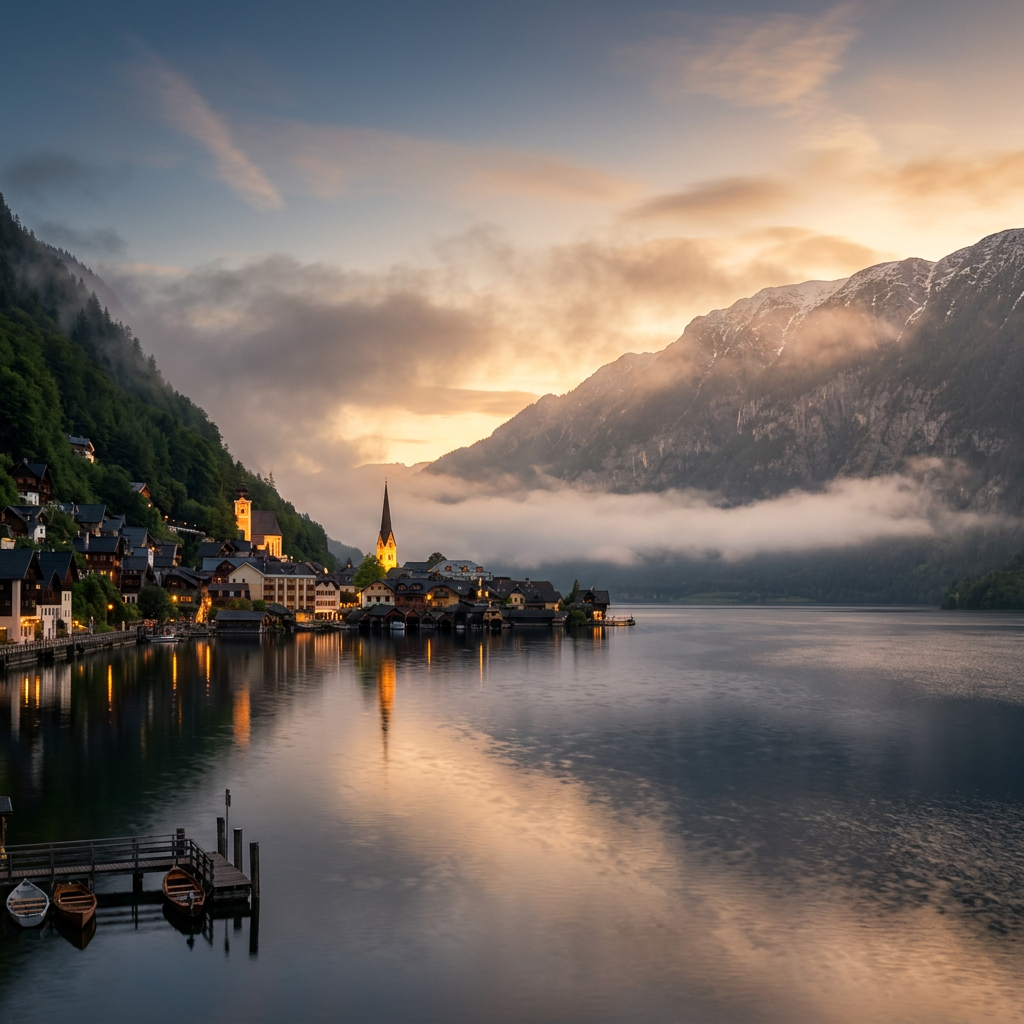
Tucked away in the Austrian Alps, the village of Hallstatt has a history spanning over 7,000 years. Yet, in the digital age, it has achieved a new, unexpected fame. This story isn’t just about a beautiful place; it’s about how its hyper-stylized, algorithmically promoted digital doppelgänger has, in many ways, eclipsed the physical reality. It’s the tale of an obsession with a pixel-perfect fantasy, and the quiet, complex reality waiting just beyond the frame.
Hallstatt: From Alpine Jewel to Digital Muse
For centuries, Hallstatt was known for its salt mines, its UNESCO World Heritage status, and its breathtaking setting between a pristine lake and towering mountains. It was a destination for nature lovers and cultural pilgrims. The shift began with a photograph—a perfectly composed image capturing the village’s iconic clock tower mirrored in the still lake at sunrise, often with a romantic mist hanging in the air. This image became a global archetype for fairy-tale European charm.
- It was perfectly algorithm-friendly: symmetrical, colorful, emotionally evocative.
- It became a bucket-list benchmark for social media travelers.
- It triggered a chain reaction of replication, from copycat posts to literal replicas of the village being built in China.
The physical Hallstatt became secondary; the idealized digital icon took center stage, establishing a “standard” for beauty that the actual location was now expected to live up to.
The Algorithm’s Picture-Perfect Dream
The viral image of Hallstatt is more than a photo; it’s a curated product of digital desire. It represents the kind of content that feeds engagement algorithms on platforms like Instagram and TikTok. These platforms prioritize content that:
- Generates high dwell time (the dreamy scene makes you pause).
- Encourages saves and shares (the “goal” for future travel).
- Creates community trends (using specific hashtags, participating in a challenge).
> The landscape is no longer just a place; it’s a graphic design asset optimized for the feed.
The AI and algorithms that power these platforms don’t value serenity, history, or the smell of the alpine air. They value visual uniformity and the predictable emotional response that leads to a click. Hallstatt’s digital avatar is the perfect algorithm’s dream: consistently beautiful, endlessly replicable, and completely divorced from the messy variables of weather, crowds, or real-life experience.
Our Reality, Quiet and Overlooked
While digital feeds overflow with identical shots of the lakefront, the actual experience has become something else. The pursuit of the shot has led to crowds that strain the village’s infrastructure, disturb residents, and transform a moment of awe into a competitive photo shoot.
- The Overlooked Corners: Just steps away from the famous viewpoint, quiet lanes, local gardens, and the museum telling the story of ancient salt miners see only a fraction of the visitors.
- The Ephemeral Truth: An overcast day, a choppy lake that won’t mirror, or the quiet of the off-season—these real, authentic states of being are often framed as disappointments because they don’t match the digital standard.
- Resident Fatigue: The town’s 800 residents navigate a daily reality of tour buses and camera lenses, a life far removed from the serene fantasy they inadvertently host.
The tragedy is not the popularity, but the narrowing of perspective. The real lake offers sounds, smells, temperatures, and a deep historical presence. The AI image offers only a silent, static, flawless postcard.
Tourists Now Follow a Virtual Compass
Modern tourism is increasingly guided by a virtual compass. People arrive with a checklist of pre-vetted, algorithm-approved angles and shots. The trip’s success is subtly measured against the digital ideal, not personal enrichment.
> The goal shifts from being there to proving you were there in the most recognizable way.
This creates a performative loop:
- Tourists seek the exact composition they’ve seen online.
- They capture their version, adding to the massive digital corpus.
- The algorithm pushes this corpus to new users, reinforcing the singular ideal and restarting the cycle.
The organic discovery of a place—getting lost, chatting with a local, finding your own unique vantage point—is diminished in favor of replicating a pre-defined, crowdsourced “perfect” experience.
The Search for Unreplicable Thrills
In reaction to this homogenization, a new travel ethos is emerging. It’s a pushback against the tyranny of the iconic shot. Travelers are beginning to seek what an AI cannot easily capture or a crowd cannot easily overwhelm—the unreplicable thrill.
- Embracing Imperfection: Finding beauty in the fog that obscures the famous view, or the vibrancy of a local market day.
- Seeking Context, Not Just Content: Visiting the ancient salt mines above Hallstatt, feeling the chill of the underground, and learning the history that shaped the village.
- Valuing Sensation: Prioritizing the taste of local food, the sound of church bells echoing off the mountains, or the physical effort of a hike to a less-photographed spot.
The ultimate value of a place like Hallstatt may now lie in what exists outside the frame of its most popular image. It’s in the parts of the experience that refuse to be flattened into pixels, that require presence, patience, and a willingness to let go of the digital script.
In the end, the lake remains, changing with the light and the weather. The digital image, frozen in algorithmic perfection, is a seductive but limited copy. The real challenge—and the real adventure—is to put down the phone, look beyond the famous viewpoint, and let the complex, living, imperfect reality of a place be the true destination.
Leave a Reply