As Floodwaters Rose, Our Digital Lives Faded
The rain began unceremoniously, a steady drumbeat on rooftops that soon accelerated into a furious roar. In our Manila neighborhood, built on a complex dialogue with water, we knew the signs. But this downpour had a different tenor. Within hours, the familiar streets dissolved into a murky, swift-moving brown. Power flickered, died, and with it, the constant hum of our digital world fell silent. Smartphones became inert bricks as towers faltered. Laptops and tablets, our windows to global connection, were now just dark screens. In that sudden quiet, punctuated only by the rain and the rising water’s whisper against our doors, a profound isolation set in. We were, each in our waterlogged homes, truly alone—cut off from the streaming services, social media feeds, and instant messages that normally filled our silences.
A Crackling Radio, A Shared Basketball Game
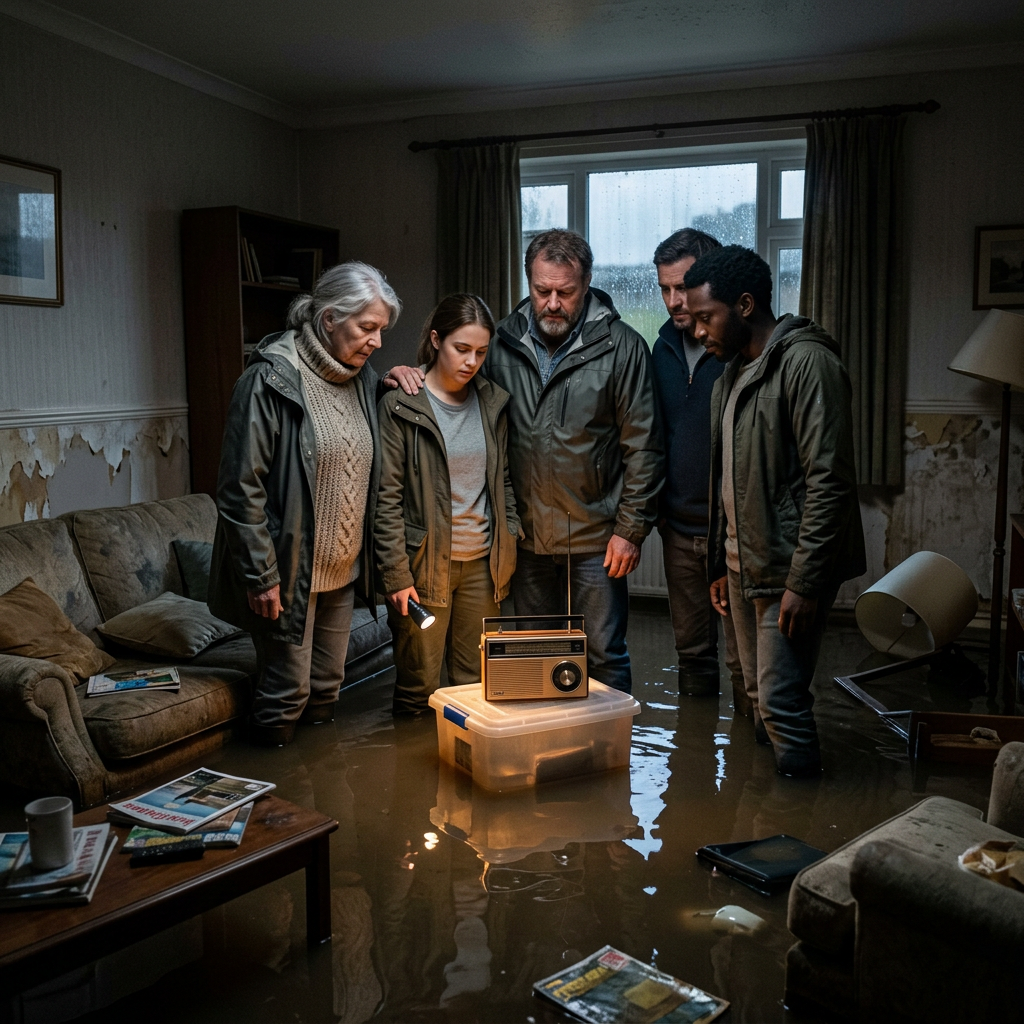
As the flood settled at knee-level, trapping us indoors, the initial novelty of the disconnect wore thin. Boredom and a low-grade anxiety began to seep in. Then, from a neighbor’s house, a sound cut through the gloom: the static-crackled voice of a portable radio. It was a relic, powered by old batteries, pulling a signal from the ether when all else failed. The broadcast was a local station, and the program was a live PBA game—the Barangay Ginebra San Miguel facing off against a rival team.
The game became our lifeline. My neighbor, Tito Ben, placed his radio on a windowsill and turned the volume up. One by one, voices called out from nearby windows.
> “Can you hear it clearly?”
> “What’s the score?”
> “Make sure the batteries don’t die!”
Our isolated boxes became connected rooms in a larger, auditory house. The play-by-play commentary, the roar of a distant crowd we couldn’t see, the excited shouts of the announcers—it created a shared narrative we could all cling to.
A Neighborhood United in a Darkened Room
By the second quarter, an unspoken decision was made. Tito Ben’s ground floor was slightly higher; the water was only ankle-deep there. He invited everyone within shouting distance. Armed with flashlights and wading carefully, a dozen of us—neighbors I often only exchanged nods with—crowded into his dim living room. The radio took center stage on a table. We sat on chairs, stools, and the floor, a hushed audience. The dynamic was instantly transformative:
- The shared experience replaced individual scrolling.
- Real-time reactions—groans at a missed free throw, collective cheers for a three-pointer—bonded us.
- Conversations sparked not from online posts, but from the unfolding drama of the game and our immediate, physical reality.
The room, lit by a few emergency lamps, felt sacred in its simplicity. We were no longer just residents of the same street; we were a crew riding out the storm together, invested in the same fleeting goal: a victory.
Betting on Scores Gave Way to Shared Hope
To deepen our engagement, someone suggested small, friendly bets—not for money, but for chores or future snacks. “I bet the next basket is a jumpshot,” one would say. “Loser helps clear debris from the sidewalk tomorrow.” This playful collective gambling heightened every possession. But as the game entered its final minutes, the tone shifted. The bets faded into the background. We weren’t just cheering for a team anymore; we were willing a symbol of resilience to win. Ginebra, known as the “Never-Say-Die” squad, was battling from behind. Their struggle mirrored our own. Each defensive stop felt like holding the floodwaters at bay. Each scored point felt like a promise that the waters would recede. Our hope became intertwined with theirs.
Finding Divine Connection Amidst the Deluge
The game was tied with seconds left. The room was utterly still, save for the announcer’s frantic voice and the static of the radio. A last-second shot was launched. As it arced through the air in our collective imagination, time seemed to suspend. In that shared, breathless silence, something unexpected happened. I saw Mrs. Santos, our elderly neighbor, silently clasp her hands. Another made the sign of the cross. It wasn’t a prayer for a basketball to go through a hoop; it was a moment of collective vulnerability and hope made manifest. When the shot swished through the net, the eruption in that dark room was pure, unadulterated joy—a catharsis. In that celebration, huddled together in a dim room surrounded by floodwater, we found a connection that felt deeper than the internet, stronger than the storm. It was a raw, human, and strangely divine communion.
The floodwaters took days to fully retreat. The power eventually returned, and with it, the digital noise of our lives. But something had changed. The nods became waves, then conversations. We had a shared story now, anchored not in disaster, but in a crackling radio broadcast and a game-winning shot. We learned that when the virtual world is washed away, what remains is the fundamental human need for shared narrative and community. Sometimes, it takes a flood to remind us that the most powerful signal we can receive is the one we create together, in a darkened room, listening to a game.
Leave a Reply