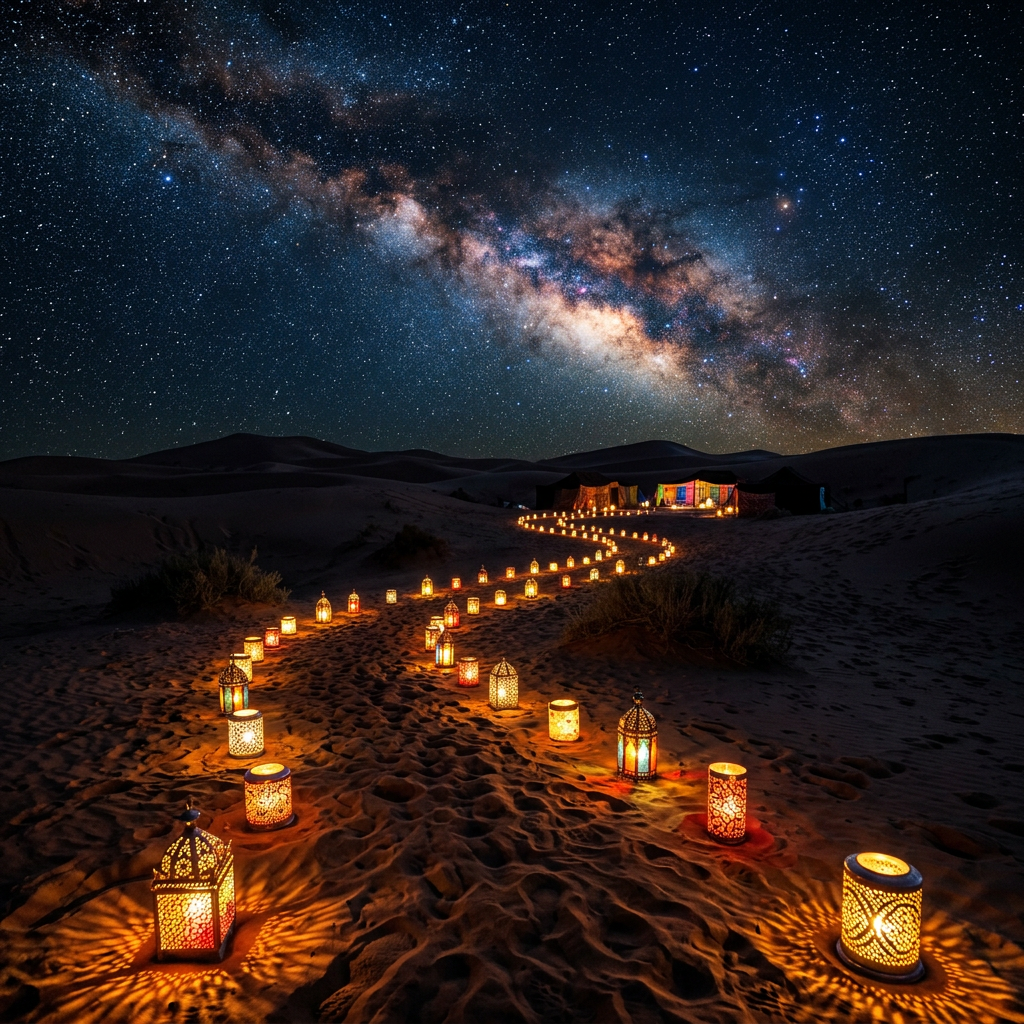
In the vast, sun-scorched expanses of northern Mexico, a new kind of sacred geometry is being inscribed. It’s not drawn by ancient cultures in stone, but by modern technology in radio waves and data packets. “Breaking the Algorithm” is not about hacking social media; it is a profound, metaphorical, and increasingly literal struggle playing out in desert communities. Here, amidst the cacti and canyons, a deep tension exists between the cold, predictive logic of automated systems—used in everything from narco-trafficking to border surveillance—and the enduring human drives of faith, community, and fate. This article explores the emergence of a “sacred code,” a conscious human effort to reclaim agency from the deterministic loops of digital and criminal algorithms, forging a path illuminated not by probability, but by purpose.
The Prophetic Play: Drones, Fútbol, and Hidden Time
The modern Mexican desert is a theater of layered realities. Overhead, military and cartel drones hum, mapping territory and movements in a high-stakes game of aerial surveillance. On the ground, in dusty village plazas, the timeless ritual of a fútbol match unfolds, a community binding itself together through shared passion and spontaneous play. These two elements—the omniscient, calculating eye in the sky and the joyful, unpredictable human sport—represent a central conflict.
- The Algorithm here is the predictive model: it analyzes patterns of movement, communication, and commerce to forecast events, allocate resources, and control territories. It is employed by both state and non-state actors.
- The Prophetic Play is the human response: an intentional introduction of chaos, artistry, and unprogrammed time. It is the decision to hold a sudden street festival that disrupts surveillance schedules, or to use the cover of a roaring football game’s communal noise for a different kind of conversation.
This “hidden time” is the interval the algorithm cannot accurately parse—the moments filled not with data-driven decisions, but with intuition, tradition, and collective will. It is in these gaps that communities find their breathing room and their power.
Candlelight Warnings: Decoding a Desert Frequency
Long before digital networks, desert communities relied on subtle, analog signals to communicate danger and solidarity. The lighting of a specific candle in a window, the arrangement of rocks on a trail, the peal of a church bell at an odd hour—these were the original, sacred codes. Today, this practice is evolving, not disappearing.
> “The old language of light and shadow is learning to speak in the key of encryption. The candle’s flicker is now a metaphor for a secure, off-grid message.”
Faced with monitored cellular and internet networks, people are returning to low-tech, high-trust methods, but with a modern twist. They are decoding a new desert frequency, one that blends ancient wisdom with tactical knowledge:
- Pre-paid, disposable phones used briefly and then discarded.
- Coded language embedded within seemingly ordinary social media posts or radio broadcasts.
- Physical dead-drops of information, using the desert’s vast topography as a secure hard drive.
This is not paranoia; it is a necessary literacy. Decoding the environment—knowing which signals are benign and which are algorithmic triggers for surveillance or violence—has become a critical survival skill.
Beyond Luck: Forging a Sacred Investment Path
In regions where formal economies are weak and permeated by illicit flows, the concept of investment takes on a different meaning. Pouring resources into a local business is an act of profound faith and defiance. This is forging a sacred investment path.
It moves beyond luck—the hope of winning the lottery or stumbling upon opportunity—and into the realm of deliberate, communal creation. Investing in a tamal stand, a community radio station, or a youth sports league is a way to:
- Redirect capital from extractive or predatory systems into generative, local ones.
- Create legitimate nodes of connection and economic activity that operate by a human-scale code of ethics.
- Build tangible sanctuaries—a café, a workshop, a field—that exist outside the primary control of violent or algorithmic forces.
This path is “sacred” because it is consecrated by collective risk and hope. Each small enterprise becomes a living cell in a different kind of organism, one whose growth algorithm is based on trust and mutual aid.
Halting the Algorithm’s Final Fiesta Countdown
The most sinister aspect of the criminal or authoritarian algorithm is its drive toward a final fiesta countdown—a point of irreversible consolidation where control becomes absolute, and alternative futures are erased. This “fiesta” is a grim parody of celebration; it is the victory party of pure automation over human spirit.
Halting this countdown requires strategic, coordinated interference with the system’s logic:
- Introducing Noise: Deliberately generating large amounts of meaningless data or activity to obscure the meaningful signals the algorithm seeks.
- Non-Cooperation: Refusing to use the digital tools and platforms that feed the system, reverting to face-to-face communication where possible.
- Nurturing Opaque Networks: Strengthening community bonds that are invisible to digital surveillance—kinship ties, oral traditions, and unrecorded agreements.
The goal is not to destroy technology, but to disarm its oppressive potential by denying it the clean, predictable data it craves, and by asserting the messy, glorious complexity of human community as an unassailable fact.
The New Hymn: Faith as Currency in Wired Hills
Ultimately, breaking the algorithm is a spiritual exercise. In the “wired hills” crisscrossed by fiber optic cables and radar beams, the most potent counter-currency is faith. Not necessarily religious dogma, but a deep, abiding faith in the intangible: in a neighbor’s word, in the resilience of culture, in the right to a future not predetermined by a model.
This new hymn is sung in actions, not words. It is the currency spent when:
- Someone chooses to patronize a vulnerable local business over a faceless app.
- Elders share knowledge of the land that contradicts a digital map.
- Artists create work that embodies the community’s struggle and beauty, embedding codes of resistance within their art.
Faith becomes the liquidity of a parallel, sacred economy. It buys trust, purchases safety, and invests in a shared tomorrow. It is the ultimate human variable that no predictive algorithm can ever fully account for or devalue.
Conclusion
The sacred code being written in the Mexican desert is a testament to human adaptability and the enduring need for self-determination. It is a complex response to the dual challenges of violence and digital determinism. By understanding the prophetic play, decoding new frequencies, making sacred investments, and using faith as currency, communities are not just resisting. They are actively authoring an alternative source code for existence—one where the human spirit, in all its unpredictable glory, remains the ultimate, unbreakable algorithm. Their struggle illuminates a universal truth: in the face of any system that seeks to predict, control, or commodify life, our most powerful act is to insist on the sacred, unprogrammable nature of our own will and connections.
Leave a Reply