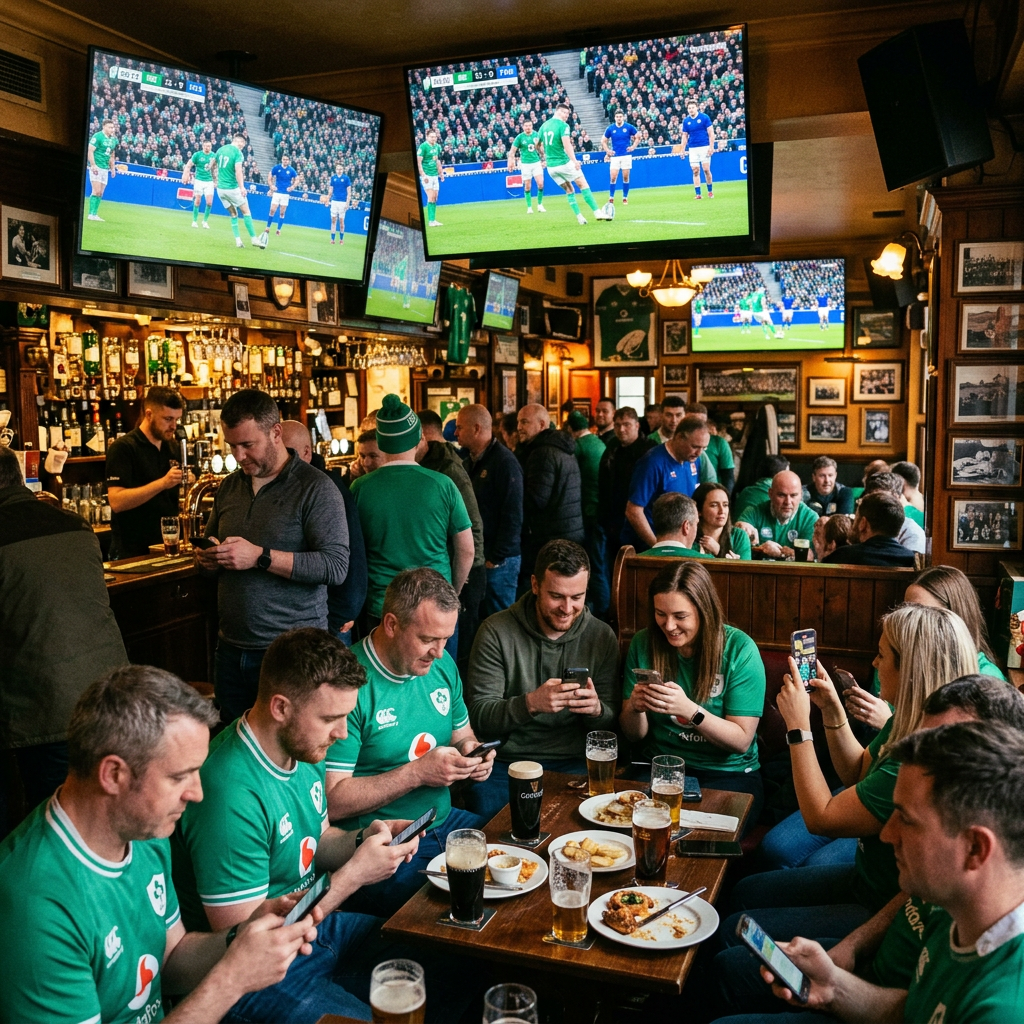
The small pub in County Cork had been my family’s pride for three generations. For decades, “Foley’s” was synonymous with community, craic, and, above all, rugby. The wooden beams, scarred by celebrating flags, told stories of Grand Slams and heartbreaks. The roar that shook the windows when Ireland scored was pure, communal joy. But in the last few years, a quiet revolution took place. Unnoticed at first, a profound shift occurred, not in the game on the pitch, but in the hearts of the people watching it. The communal soul of our rugby tradition was slowly, inexorably, traded for the silent, solo glow of a smartphone screen.
From Cheers to Checks: The First Odds Arrived
It began subtly. Around five years ago, you’d hear the odd whispered question not about a player’s form, but about the spread. A commercial for a betting app would flash on the TV during a break in play. Then, the promotions arrived.
- “Free Bet” sign-up posters appeared beside the framed jersey.
- Regulars began checking live odds on their phones during lulls in play.
- Conversations fragmented; instead of debating a tactical substitution, two mates would compare in-play market options.
The ritual changed. The pre-match build-up was no longer just about predicting the winner with your heart, but about quantifying it with your wallet. The friendly, hypothetical “What if…” was monetized into a “You could win…”. The pub was still full, but a new, silent layer of engagement—personal, financial, digital—had been superimposed over the old, roaring one.
A Nation’s Pastime Reduced to Algorithms
Rugby, especially in Ireland, is a game of narrative. It’s about towns, families, and historic rivalries. The betting frameworks stripped this away, reducing the beautiful complexity of the sport to cold, calculable variables.
> “When your first thought on seeing a player limp off isn’t concern for the team, but the impact on your ‘first try-scorer’ bet, you know something fundamental has changed.”
The talk at the bar shifted from passion to probability:
- Discussion of a prop’s powerful scrummaging was replaced by analysis of his “Anytime Tryscorer” odds.
- A pinpoint cross-field kick was appreciated not just for its brilliance, but for whether it secured someone’s “winning margin” accumulator.
- The sport became a spreadsheet, with players reduced to data points in a personal betting slip.
Silent Sundays: When Payouts Replaced Passion
The most heartbreaking transformation was the atmosphere. “Silent Sundays” became a thing. Not literally silent, but punctuated by strange, individualistic eruptions.
- A man in the corner would leap up with a muted fist-pump—not because Ireland had turned over crucial ball, but because a last-minute penalty had secured his over/under bet.
- Groans of despair for a knock-on were sometimes not for the lost opportunity, but for a voided “next scoring play” wager.
- The shared, collective emotional journey of the match fractured into dozens of isolated, financial outcomes.
The communal sigh, the unified roar, the shared groan of injustice—these were the pillars of our pub’s rugby heart. Now, they competed with private notifications and the quiet, anxious scrolling of a live bet tracker.
The Dark Whisper of the Digital Bookie
The convenience was the trap. The “digital bookie” was always present, in your pocket, offering a “quick flutter” that felt harmless.
- Push notifications for “Special Offers!” buzzed during team announcements, pulling focus from the national anthem.
- The ease of in-play betting meant attention was perpetually divided between the live action and the fluctuating odds.
- What began as a bit of fun for some regulars showed signs of becoming a problematic dependency, with conversations growing hushed and anxious around settlement time.
The pub, once a sanctuary from life’s pressures, was now one of its potential gateways. The dark whisper wasn’t a shout; it was the constant, seductive ping of an app reframing a national passion as a perpetual gambling opportunity.
Reclaiming the Game from the Grip of Machines
Realization dawned slowly, but it dawned. We saw that we were losing the very thing that made the pub special. We decided to fight back, not with bans, but with a conscious revival of authentic connection.
Our initiatives included:
- “Phone-Free First Half” promotions, with a free pint for those who locked their devices away until halftime.
- Hosting former player Q&A sessions before big matches, reminding everyone of the human stories behind the jerseys.
- Replacing betting app posters with large, detailed team stat sheets focused on careers and records, not odds.
- Making a point to loudly celebrate the pure sport—the incredible try, the heroic tackle—and fostering that collective reaction once more.
The goal isn’t to vilify individuals, but to rebuild the context. To remind everyone that the value of a moment isn’t measured in potential payout, but in the shared memory you create with the people beside you.
The hum of the fridge now competes with the roar of the crowd once again on big match days—not perfectly, but more honestly. The betting apps are still there, in pockets, but they’ve been pushed back from the centre of our experience. We learned that the heart of our Irish pub wasn’t just about watching rugby; it was about feeling it together. And that’s a stake worth protecting, far more valuable than any algorithm can ever calculate. The journey back from silence to cheers is long, but every unified shout for a well-won lineout feels like a victory in itself.
Leave a Reply