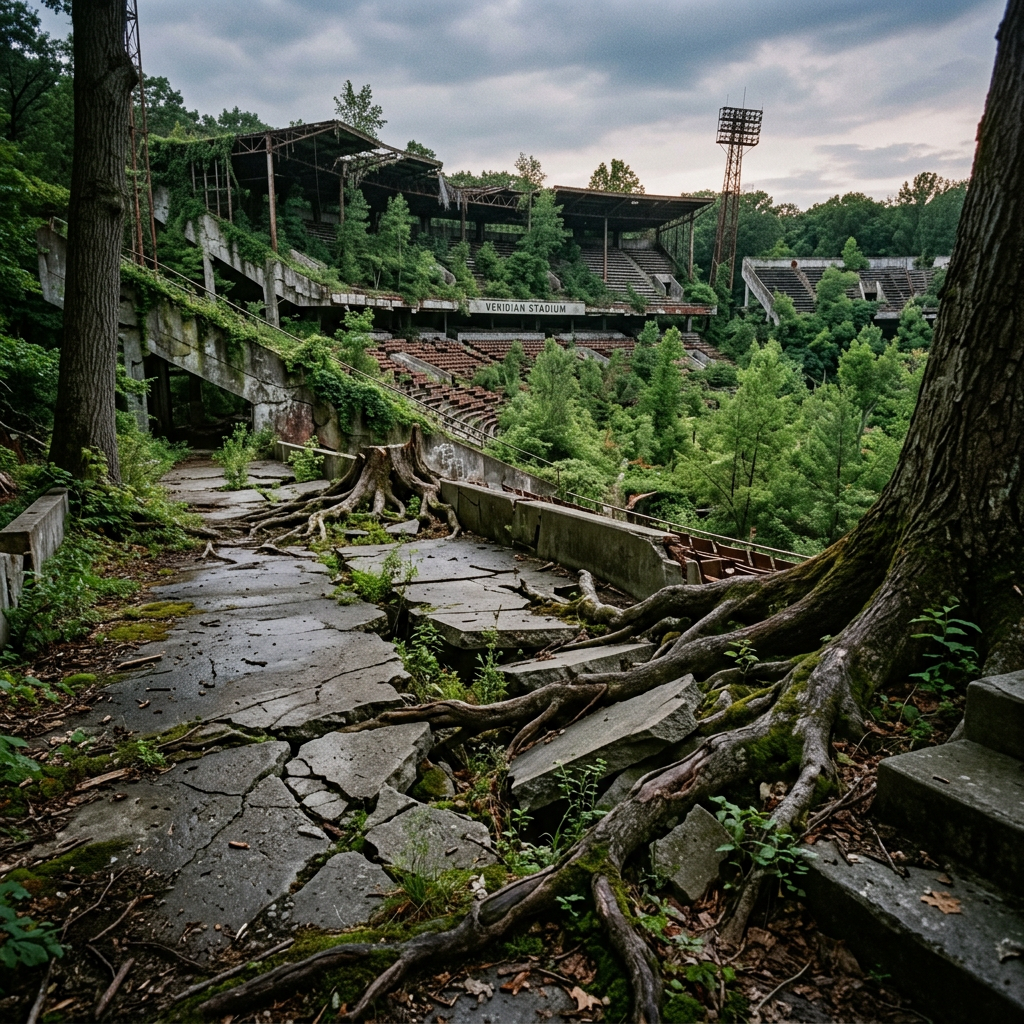
Imagine a time of silent connection, when humanity’s rhythms were tuned to the subtle vibrations of the living world. Today, our own frantic patterns—obsessions, compulsions, and digital noise—drown out that frequency. But what if the natural world isn’t just a passive victim of our habits, but an active, sensing witness? Emerging science and ancient intuition suggest that our deepest societal behaviors, from collective anxiety to the pulse of national pastimes, might be registering in the most unexpected of places: the quiet, subterranean networks of a forest. The roots, it seems, are whispering.
The Soil’s Electrical Pulse in a Betting Nation
In nations where betting is not just a hobby but a cultural cornerstone, the air feels charged with a particular energy—a cocktail of hope, risk, and fleeting reward. This energy manifests in crowded pubs, glowing smartphone screens, and the tense silence of a last-minute goal. But could this societal fervor have a physical echo beyond the human sphere?
Recent studies into plant bioelectrical signals reveal that trees and mycorrhizal fungi communicate through complex electrical pulses in the soil, a “green internet” responding to stress, resource availability, and even nearby damage. Consider the parallel: a nation collectively holding its breath during a major sporting event creates a massive, synchronized surge of human emotional and physiological electricity—adrenaline, cortisol, and focused neural activity. While not directly causing trees to wilt, this pervasive atmosphere of speculative tension—a cultural baseline of risk and immediate gratification—mirrors the disconnected, short-term thinking that leads to environmental exploitation. The forest’s steady, long-term growth strategy becomes a silent rebuke to our gamble-driven tempo. The soil’s natural pulse is one of communal support and slow exchange; our introduced rhythm is one of boom and bust.
When Tree Roots Thrash Against Sports Madness
The fanatical devotion to sports franchises creates a unique modern ecology. Think of the physical footprint:
- Resource Tsunamis: The staggering water and energy use of stadiums, the waste from concessions, and the carbon cost of mass travel for events.
- The Fabric Fallout: Mountains of disposable merchandise—jerseys, flags, memorabilia—made from synthetic materials that will outlast the team’s championship hopes by centuries, leaching microplastics into watersheds that feed ancient groves.
- Cyclical Abandonment: The pattern of building new arenas with public funds, often in ecologically sensitive urban zones, while older structures are left as concrete ghosts, disrupting soil and hydrological systems for generations.
This “sports madness” is a habit of intense, fleeting loyalty and consumption. The roots beneath our cities, those of surviving park trees or hardy street-side oaks, literally contend with the altered hydrology, compacted soil, and heat island effects this culture engineers. They don’t just suffer passively; their stunted growth and premature decay are a form of thrashing—a biological protest against an environment made hostile by our seasonal spectacles.
Decoding the Forest’s Distress Broadcast
The forest is not silent in its decline. It broadcasts its distress in a language we are finally learning to interpret. The warnings are clear for those who choose to listen:
> “A canopy thinning is a slow-motion shout. A silenced dawn chorus is a screaming alarm.”
We can decode this broadcast by observing key signs:
- Phonological Shifts: Trees budding earlier or losing leaves later signal a climate system unraveling, driven by our carbon-heavy habits.
- Bioacoustic Silence: The absence of insects, birds, and amphibians indicates a collapsing food web, a direct result of pesticide use and habitat fragmentation.
- The Mycorrhizal Mute: Compacted and polluted soil severs the fungal networks that connect trees, starving them of communal nutrients and warning signals—a literal silencing of the wood-wide web.
- Uniformity Danger: Monoculture plantations, planted for quick resource extraction, lack the genetic and species diversity to weather disease or drought, whispering a warning about the fragility of our own simplified, efficiency-obsessed systems.
These are not mere aesthetic losses. They are vital signs flickering on a planetary monitor.
Our Compulsions, Felt Through Forest Boots
To understand the direct link, we must walk the talk—or rather, feel it through our boots. Our daily compulsions translate into tangible forest trauma:
- The Scroll & The Saw: Our compulsion for endless digital newness fuels the demand for rare earth minerals and server farms, whose extraction and energy consumption drive deforestation for mining and power.
- Fast Fashion, Slow Death: The habit of buying cheap, disposable clothing drives unsustainable cotton farming and polyester production, polluting rivers that flow through woodland ecosystems.
- Convenience Consumption: The plastic wrapping, single-use coffee pods, and overnight delivery create waste and carbon emissions that alter the very atmosphere and acidity of the rain that falls on the forest.
> Tip: To literally feel the connection, walk in a healthy forest and then in a degraded one. The difference in the air, the sound, and the feeling underfoot is the physical manifestation of our collective habits.
Each stressed tree root system is a proxy sensor for a human impulse left unchecked. The compaction of soil from urban sprawl mirrors our cluttered mental spaces. The toxic runoff in woodland streams reflects our chemical-dependent lifestyles.
From Ancient Woods, A Modern Urgent Whisper
The ancient woods hold memory in their rings: eras of balance and periods of blight. Their enduring presence offers not a nostalgic retreat, but a profound, urgent lesson in interdependence, resilience, and long-term thinking. They whisper a modern parable: a network survives where an isolated individual falls.
Their warning is clear: habits forged in disconnection from natural cycles will inevitably destroy those cycles, and in doing so, undermine the very foundations of our own society. The flutter of a single leaf is connected to the global wind pattern, just as a single bet placed on a screen is connected to the economic forces that clear a mangrove forest for development.
The path forward requires us to listen to this whisper and change our tune. It means cultivating habits of enoughness, circularity, and reverence for the networks that sustain all life. It means seeing the forest not as a resource to be tapped, but as a barometer to be read—a living, breathing gauge of the health of our own human nature.
For in the end, the forest’s roots are whispering the most direct warning of all: what we do to the web of life, we ultimately do to ourselves. The choice is whether we heed the murmur before it becomes a dying roar.
Leave a Reply