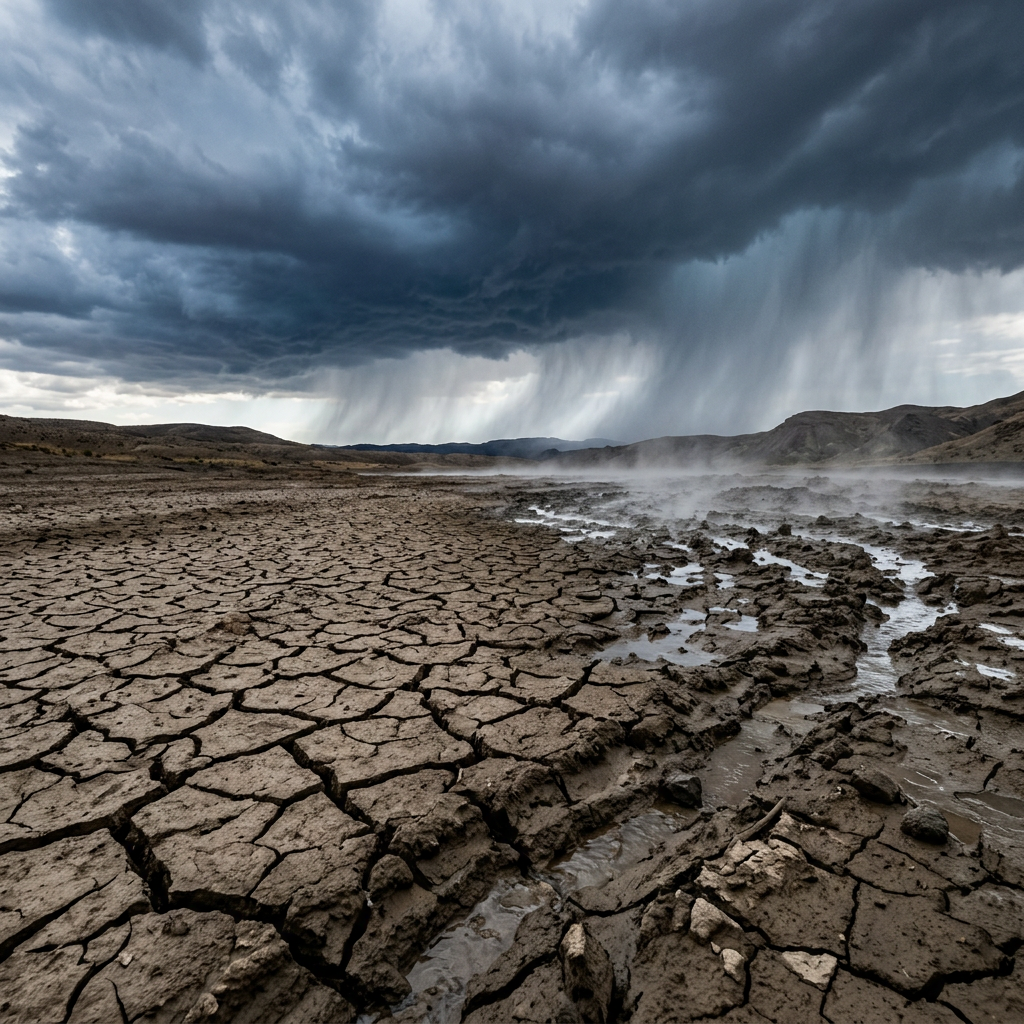
The soft drumming of rain on temple roofs used to be a chorus of renewal, a rhythmic promise from nature itself. For generations, across cultures nourished by the seasonal deluge, the monsoon was not merely weather; it was a divine gift, a clock for the earth’s heartbeat, and a mirror to communal faith. But the air is different now. The monks who have watched the skies turn the seasons with a quiet reverence now sense a profound shift. In an age of climatic and social upheaval, an ancient, haunting realization is forming in the monasteries: The rain that once blessed us is now judging us. This article traces the quiet but seismic journey of an elder monk’s introspection as he perceives the transformed monsoon—no longer a blessing but a stern arbiter of human morality.
The Elder’s Echo: Rain, Once a Seasonal Gift
In a mountain monastery, a venerable elder recalls his youth through the timeless memories of rain. He describes the monsoon not as an event, but as a benevolent presence:
- It was the teacher of patience, arriving with a faithful if unpredictable, rhythm.
- It was the great equalizer, watering the fields of prince and pauper alike.
- Its scent on parched earth was the very fragrance of hope.
- The community’s rituals of welcome—simple songs, cleaned water tanks, shared labor—were acts of gratitude, not fear.
This was the foundation: rain as a reciprocal covenant. Good, mindful living was believed to harmonize with a generous sky. But the elder notes a hollow echo in that memory now, as if the rains remember their old purpose but can no longer enact it.
First Doubt: A Sky That Punishes and Rewards
The shift did not come in a single storm, but through a gradual awakening. The elder began observing not just the rainfall, but its conduct and its victims. The volatility of grace became undeniable.
> “We prayed for a timely monsoon,” the elder reflects, “but we did not specify how it should arrive. Now it arrives with a question, not an answer.”
What he witnessed planted the seed of a more severe interpretation:
- Deluge over Drought: Where parched villages once prayed, now cities drown under days of relentless, unprecedented downpour.
- Scattered Justice: Floods would devastate one valley, while a neighboring region, no more or less virtuous, would suffer a rainless sky, creating a new mystery of selective fortune.
- Broken Rhythm: The ancient calendars, aligned with the stars and rains, grew useless. The predictable cycle of planting and harvest collapsed into a gamble.
The question formed quietly: If not chance, what logic drives this new, erratic bestowal of nature’s greatest gift?
Monsoon as Moral Arbiter: The Scorching Omen
This doubt crystallized not during a storm, but in a preceding silence—a deep, prolonged heat. The elder describes the months of punishing heat before the rains as a “Scorching Omen.” This was no ordinary summer, but a global fever. In the sun-baked courtyards, he saw a reflection of humanity’s inner state:
- The fever of desire, mirroring in corporate greed and endless consumption.
- The dryness of empathy, seeing the indifference to the suffering of the poor and the natural world.
- The poisoned air, a tangible manifestation of collective pollution of body and spirit.
The land, cracked and gasping, felt like a consequence. When the rains finally broke, their violence felt like a reckoning, not a rescue. The monsoon was not falling on innocent ground, but on a world that had tipped the scales.
Decoding the Downpour: Weaving a Rule of Rain
Driven by this conviction, the elder began to speak to his disciples of a “Rule of Rain.” This is not an ancient text, but a living, moral interpretation being written by the clouds themselves. He decodes its principles:
- Conservation as Reverence: Wasting a single vessel of water is an affront when the rains are uncertain.
- Moderation as Duty: Excessive consumption directly robs the sustenance of others, and the rains see this imbalance.
- Compassion as Offering: In a harsher climate, caring for the vulnerable is the most potent human prayer.
- Mindfulness as Petition: Every mindful act, from recycling to peaceful speech, is a gesture of alignment with the natural order the monsoon seeks to restore.
He offers a stark guide for this new understanding:
> To welcome the monsoon now, you must first stand under its imagined gaze. Ask of your actions: Does this honor the gift? Does this heed the warning? If not, the floods you fear are a conversation you refused to have.
The Temple Path: Humility Before a Judging Sky
In the face of this daunting new paradigm, the elder’s conclusion is not one of despair, but of clarified purpose. The role of the temple, the monk, and the spiritual seeker, he argues, has never been more critical. This new monsoon requires a deep, collective practice of ethical humility.
- The temple becomes a true sanctuary, not from the rain, but from the mindset of extraction and indifference that provoked the judgment.
- The rituals of old are reframed as active reparations—tree planting, community aid, advocating for the earth.
- The practice of meditation becomes a grounding force to truly listen to what the changing world is saying.
The monastic life was always about attunement—to self, to the divine, to the universe. Now, that attunement must extend to the atmospheric indicators of planetary health and karma. It is a profound listening, interpreting each untimely storm and each drought not as divine caprice, but as a desperate form of communication.
The message, finally, is not about placating an angry sky. The path forward lies in ethical restoration. The monsoon no longer simply tests our fields; it tests our character. It judges our stewardship, our unity, and our foresight. For the monk and his community, the call is to become an example of a sustainable, compassionate way of life that might, over time, persuade the heavens to return as a nourishing friend, rather than remain as a fearsome and just critic. The covenant has not been broken; its terms have simply become tragically, urgently clear.
Leave a Reply