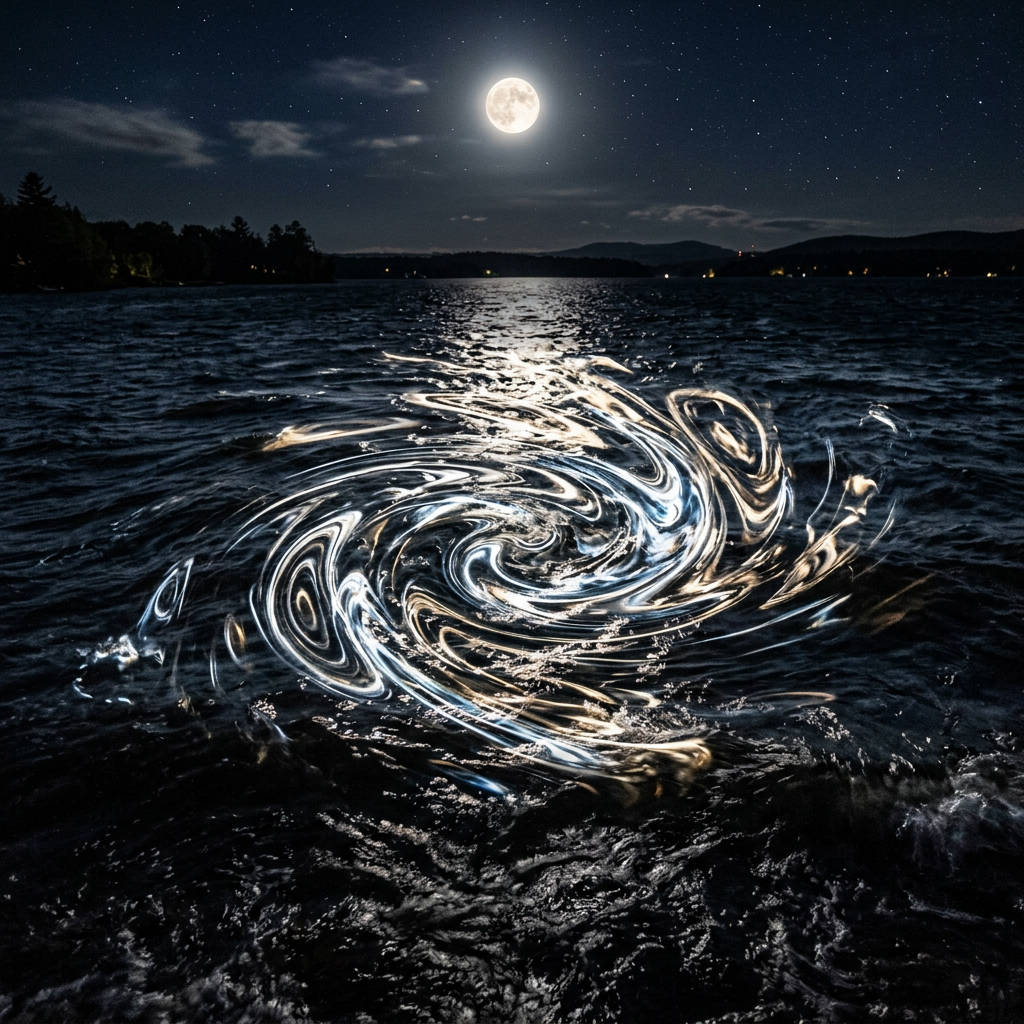
In countless tales and traditions, water acts as more than a mere element; it is a primal screen, a surface upon which our deepest selves are projected. While often a symbol of clarity and calm, it holds a darker, more revealing potential. It can reflect not peace, but panic—the frantic, ceaseless churn of a human soul caught in the modern torrent. This concept moves beyond metaphor into a visceral experience, one captured in the story of the Night Watcher of Bali, a tale where tranquil paddy fields became mirrors to humanity’s unraveling psyche.
The Night Watcher of Bali’s Unquiet Waters
In the serene highlands of Bali, far from the tourist beaches, the ancient subak system of cooperative water management has flourished for centuries. The terraced rice paddies are a testament to harmony, both with nature and among people. Each village appointed a pecalang toya—a night watcher of the waters. His duty was simple: under the moonlight, he would walk the narrow mud paths between the flooded fields, ensuring the precious water flowed justly to every farmer’s plot.
For generations, this was a silent, meditative vigil. The watcher communed with the rhythms of the earth. The water at night was a black glass, perfectly capturing the crescent moon and the pinpricks of stars, creating a second, inverted sky below. The only sound was the gentle, gurgling flow through bamboo pipes—a lullaby for the growing rice. The watcher’s fear, if any existed, was of practical failures: a broken dam, a stolen share of water. The soul of the place was stillness.
Reading the Moon’s Ripple Code in Paddies
The watcher’s wisdom lay in his ability to read the water. He didn’t just see reflections; he interpreted them. He understood the moon’s ripple code.
- A clean, steady lunar reflection meant the water was balanced, deep, and calm. All was well.
- Jagged, broken shards of moonlight signaled a disturbance—perhaps a fish, a fallen leaf, or an illicit tampering with the flow.
- A complete absence of the moon’s face, replaced by a chaotic, directionless churn, was the most potent sign. It spoke of something thrashing beneath, something large and troubled disturbing the very foundation of the field.
This code was his map. The water’s surface was his primary text, and its disruption was a sentence telling a story of interference. His work was one of gentle restoration, of smoothing the surface until the celestial order was re-established below.
When the Water Mirrored Humanity’s Frenzy
The change was gradual but unmistakable. With the arrival of new roads and new ideas came a different kind of energy. The village, once insulated, began to buzz with the faster pace of the outside world. Anxiety about money, status, and opportunity seeped into the communal spirit. The watcher began to notice a new pattern in the water.
It wasn’t just the moon that was reflected now. As he passed the village edge where the main road ran, the headlights of late-night scooters would slash across the paddies. The calm, black mirrors suddenly erupted with frantic streaks of artificial light, mimicking the hurried, disjointed thoughts he saw in people’s eyes by day. The water no longer just held the steady moon; it now caught the jittery, ephemeral glare of human impatience.
> The watcher’s philosophy shifted: “The paddy does not discriminate. It mirrors whatever passes by—be it the patient moon or the frantic soul.”
The very substance of his vigil was changing. The water felt different—not in its chemistry, but in its essence. It seemed to vibrate with a new, anxious frequency.
The Gambling Rush and the Still Prediction
The climax arrived with a clandestine gambling ring that took root in a forgotten barn overlooking the widest terrace. Night after night, men from the village and beyond would gather. The air grew thick with the shouts of victory, the groans of loss, the scent of clove cigarettes and desperation.
From his post, the watcher observed the effect on his domain. The lights from the barn windows spilled yellow pools onto the water. But more tellingly, as gamblers stepped outside in agitated states—pacing, arguing, celebrating wildly—their frantic shadows and movements were cast onto the watery canvas. The paddies became a chaotic animation of human emotion: a jagged shadow-arms raised in triumph here, a hunched, despairing silhouette there.
One night, during a particularly tense game, the watcher looked down. The moon was full, but its reflection was impossible to see. The entire surface of the large paddy was a fractured, trembling mess of reflected lamplight and human shapes. It was no longer a mirror to the cosmos, but a mirror to the gambling rush. In that moment, a cold certainty settled in him. He uttered a silent, still prediction to the unquiet water: “This frenzy cannot be sustained. What shatters in here,” he thought, looking at the barn, “will shatter out there.”
A Deep Fear: The Moon’s Face May Shatter
This birthed the watcher’s profound and existential fear. It was no longer about stolen water or broken dams. His deepest terror became the possibility that the human frenzy had grown so powerful, so all-consuming, that it could permanently damage the natural order.
- He feared the reflective pact was breaking. What if the water, constantly forced to mirror chaos, forgot how to hold the peaceful image of the moon?
- He feared the ripple code would become permanent noise, rendering his ancient wisdom useless.
- Ultimately, he feared that the moon’s perfect, silent face in the water—the very symbol of cyclical time, tranquility, and celestial guidance—would shatter and not reform.
This was a fear for his soul and for the soul of his community. If the water could only reflect a frantic humanity, then that frenzy was all that was left to define them. The calming, centering counterpart—the moon—would be lost, leaving only their own agitated image staring back, a closed loop of anxiety with no escape.
The tale of the watcher is a parable for our age. We live surrounded by reflective surfaces—screens, windows, the eyes of others—that constantly bounce back our own hurried existence. The watcher’s fear invites us to ask: What are we projecting onto the world’s waters? Are we leaving any space for the moon, for stillness, for a reflection that is not of our own making? To calm the frantic soul, perhaps we must first seek out the waters that still remember how to hold the light of something older, slower, and infinitely more steady than ourselves.
Leave a Reply