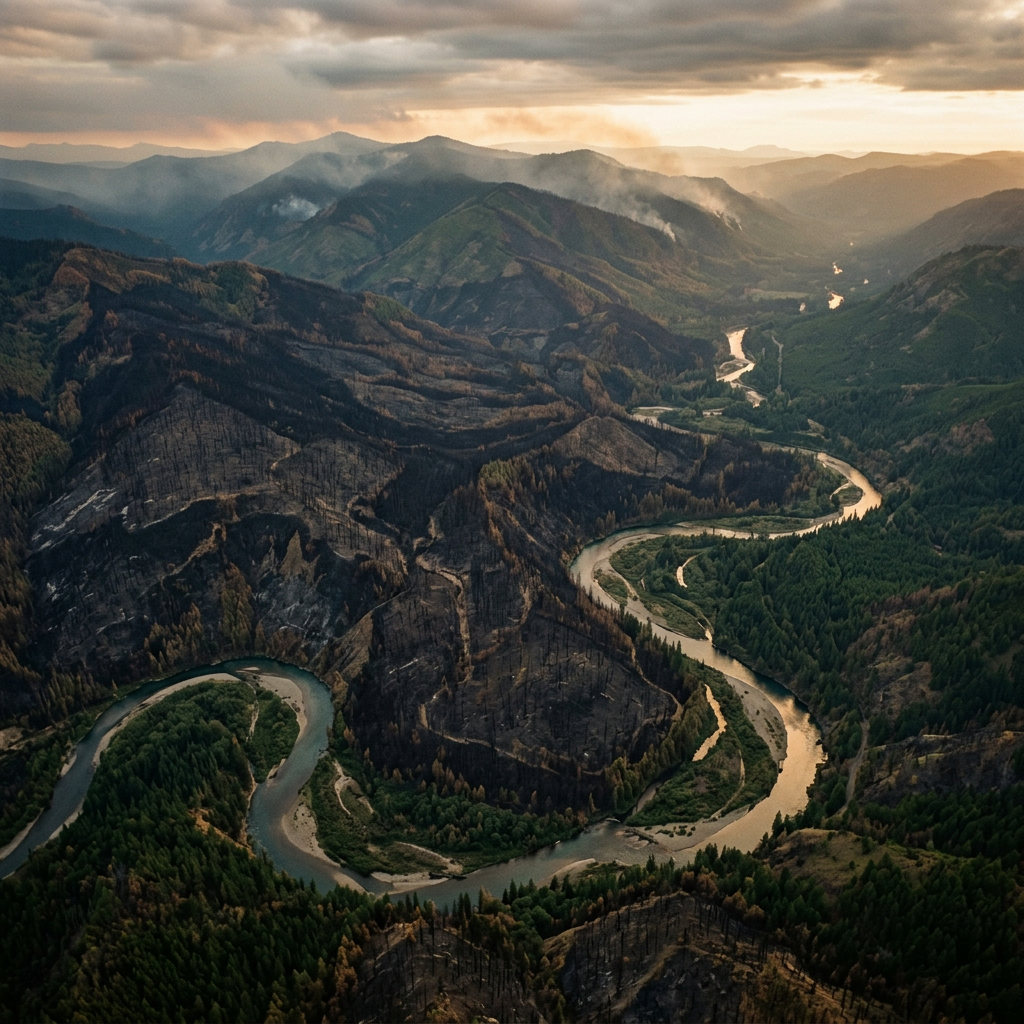
There is an old memory held in a forest long before the first seedling pushes skyward. It’s written in mineral cycles and root networks, in the tilt of soil and the composition of leaves. But we have forgotten the language. Today, as the fires grow larger and more frequent, a growing group of ecologists, indigenous knowledge-keepers, and frontline land stewards speak of learning to read not just the burn, but its aftermath. They call it the Ash Whisper Theory: the practice of interpreting the patterns and substances left by wildfire not merely as devastation, but as the ecosystem’s most urgent and instructive text. It’s a way of listening to what the planet, under the most extreme duress, is trying to say.
Ashes on the River: A Canoe Builder’s Portent
The theory is perhaps best understood through an anecdote. For a Haida canoe builder on the Pacific Northwest coast, understanding a tree is a decades-long dialogue. They don’t just look at a cedar; they listen to the wind in its branches, feel the give of its bark, and observe its relationship to the riverbank. One such builder, visiting a fire-scarred region hundreds of miles inland, saw a peculiar sight after a major burn: a consistent black grit, a specific type of ash, washing into the headwaters of a vital salmon river. Where forestry services saw regeneration timelines, the canoe builder saw a portent. This wasn’t generic debris; the composition, color, and location of the ash told him that the fire had burned “too clean.” It had vaporized not just the understory but the critical, slow-decaying organic matter that regulated water acidity. His conclusion, months before water chemistry reports would be filed, was simple and prophetic: “The salmon will not return to this river in seven years. The water has lost its memory.”
This intuitive reading exemplifies the Ash Whisper Theory. It’s not superstition; it is pattern recognition honed by generations of deep observation.
Cipher of the Fallen: Reading Burned Patterns
On the ground, the theory is put into practice by reading a series of environmental ciphers left in the landscape post-fire. It turns destruction into a diagnostic chart. Practitioners learn to differentiate:
- The Crown-Fire Cipher: When only the tops of trees are burned, leaving the trunks mostly intact, it whispers of a fast-moving, wind-driven fire. This leaves the root network and nutrient bank in the soil relatively unharmed.
- The Mosaic Burn Cipher: A patchwork of severely burned areas, lightly burned areas, and unburned refuges is the signature of a healthy, low-intensity fire. It’s the ecosystem’s most optimistic statement—complexity and resilience have survived.
- The Grey Ghost Pattern: When a landscape is uniformly reduced to grey, powdered ash with little variation, it “speaks” a language of utter severity. It signals soil sterilization, the complete loss of seed banks, and a high risk of subsequent erosion and mudslides.
- Water-Repellent Layers: If water beads and runs off the soil instead of soaking in, the ash is telling you the fire was intense enough to bake organic compounds into a waxy crust, creating a hydrophobic layer. This is a critical whisper about future flood risk.
> “The shape of the ash tells the story of the fire. The color and chemistry of the ash tell the story of what was lost, and what might now grow,” notes Dr. Anya Vance, a pyrogeochemist. The texture—from feathery carbon flakes to gritty mineral powder—is the forest’s final word on what fuel was consumed.
When Weather and Wagers Tango in Smoke
The Ash Whisper Theory does not exist in a vacuum. Its grammar is dictated by the complex dance between climate and human action. Reading the ash correctly requires understanding the context in which it was written. A mosaic pattern after a prescribed burn in a wet spring is a “good” read. The exact same pattern after a drought-stricken summer and an illegal campfire is a frantic warning—it indicates luck, not resilience, prevented a catastrophe. It’s the forest whispering, “This time was close.”
Key intersections include:
- Drought-Saturated Scorch: Post-drought fires often create water-repellent soils (that hydrophobic layer), as thirsty, resinous plants burn too hot. The ash carries the signature of the preceding dry years.
- The Slash and Smoke Tango: In areas of logging “slash” (discarded branches and debris), the resulting ash is different—often hotter and more alkaline, skewing the chemical message and recovery potential.
- Wind-Written Chapters: Prevailing winds during a fire scatter the ash in specific deposition patterns, literally writing the fire’s narrative across hillsides and into waterways.
Dust on My Palms, a Silent Urgent Text
For land managers and firefighters, the theory moves from observation to tactile duty. It’s the moment you sift the dust between your palms and must translate it into immediate action. This “silent text” creates a direct ecological to-do list:
- If the ash reads as hydrophobic, the priority becomes emergency erosion control—installing straw wattles, log barriers, and seeking to break that seal before the next rain.
- If the ash pattern is a Grey Ghost, active reseeding with native plants might be the only way to restart the ecological clock.
- If the ash shows uneven burn severity (the mosaic), the plan might be simple monitoring, allowing the ecosystem’s own insurance policies, held in unburned patches, to guide recovery.
> Urgent Tip: The first post-fire rain is a critical translation event. What the ash has whispered, the runoff will now shout. Monitoring where and how that water moves is the first test of your reading.
From Ash to Action: Translating the Planet
Ultimately, the Ash Whisper Theory is a framework for humility and response. It posits that in an era of climate-driven megafires, our primary task is not just to fight the blaze, but to become fluent in the aftermath. It argues for integrating this deep, place-based literacy into our land management strategies. Instead of seeing a blackened landscape as a blank slate for human-driven restoration, we can begin to see it as a living document, with specific instructions for its own healing. Are we planting a monoculture of fast-growing trees for timber, or are we reading the residual ash chemistry to see what native understory the soil is now primed for?
The canoe builder who read the river’s fate in a handful of silt remembered a language we are all learning anew. The ashes are not an ending. They are the planet’s shorthand, a stark and beautiful glyph written in charcoal and sediment. Our survival, and the survival of countless interconnected species, may depend on how quickly we learn to read them.
Leave a Reply