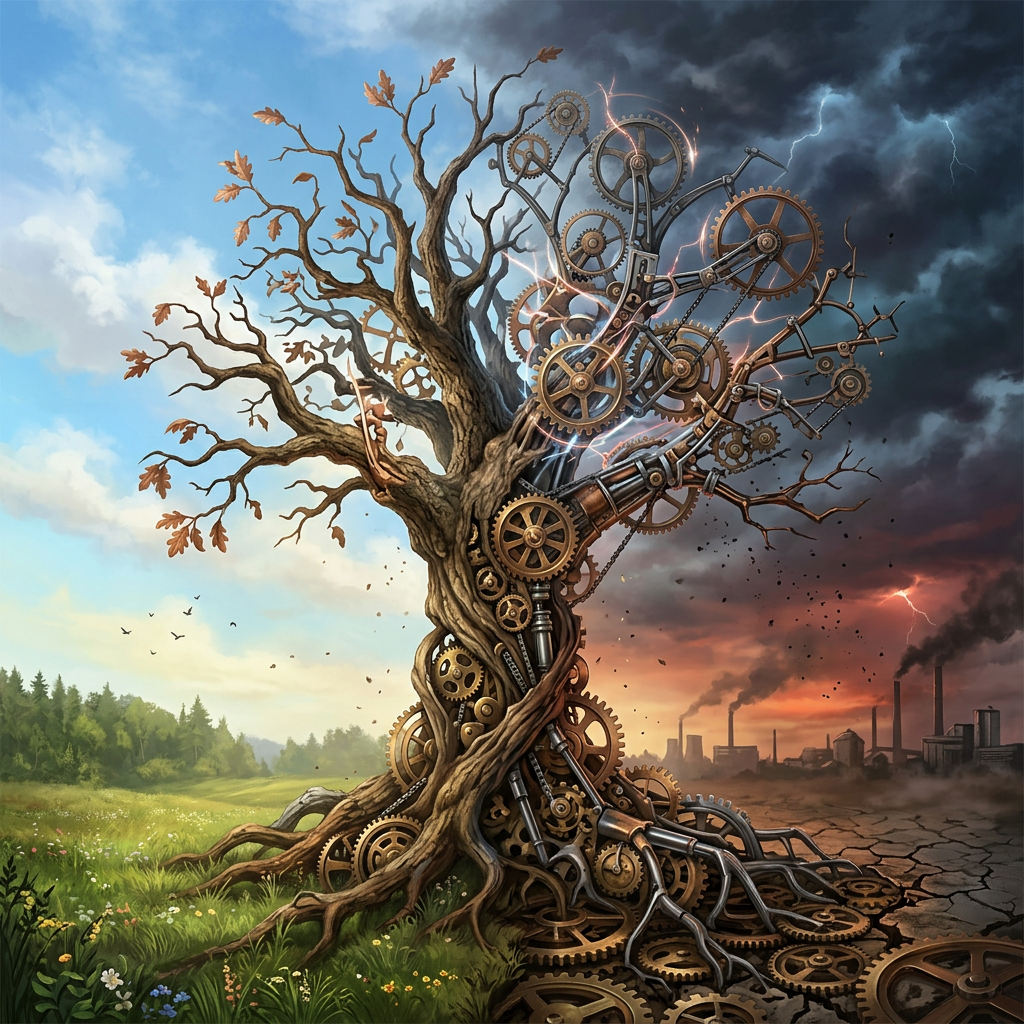
Few documents haunt the modern conscience like the text known as “The Pope’s Lost Sermon.” Allegedly composed in a moment of profound crisis, its content was never formally delivered. Instead, it vanished into the archives, a ghost of a warning unheeded. It speaks not of traditional sin, but of a societal pathology so entrenched we barely perceive it: the systemic, spiritual gambling that has mortgaged our collective future.
The Empty Square and the Haunted Pontiff
The story begins not in the Sistine Chapel, but in a modest private study, late at night. The Pontiff, it is said, had spent weeks observing reports—not just of economic disparity, but of a deeper malaise. He watched footage of empty public squares where community gatherings once thrived, now sterile and silent. His aides spoke of plummeting birth rates not as a statistical trend, but as a loss of faith in the tomorrow. People, it seemed, had stopped investing in a future they could not see or trust.
The haunted look that came over him, according to a single aide’s memoir, was one of chilling clarity. He saw a world where the long-term—be it environmental stewardship, stable families, or civic infrastructure—was being traded for the short-term thrill, the instant payout. The square was empty because everyone was elsewhere, betting on a quick digital fix or hoping a lottery ticket would absolve them of systemic despair. The sermon he then wrote was an attempt to name this demon.
A Sermon on Crushed Hope and Debt
The core of the lost sermon focuses on two intertwined corruptions: crushed hope and perpetual debt.
> “When hope becomes a commodity to be purchased, not a virtue to be cultivated, we have lost the plot of our own humanity. We no longer build; we bet. We no longer sow; we spin the wheel.”
The Pontiff argued that legalized gambling is merely the most visible symbol of a far wider sickness. He enumerated how this logic permeates our lives:
- The Climate Crisis: Treating the planet’s finite resources as a casino table, rolling the dice on irreversible change for transient economic gains.
- Financial Markets: Transforming investment from a patient act of building enterprise into algorithmic, high-frequency betting on volatility and failure.
- Digital Attention: The endless scroll on social platforms, a gamble for a dopamine hit of validation, trading hours of our limited lives for the chance of a ‘like’ or viral moment.
- Political Discourse: Reducing complex governance to partisan wagers and short-term electoral tactics, mortgaging social cohesion for immediate power.
This ecosystem, the sermon posits, runs on a fuel of personal and collective debt—financial, ecological, and spiritual. We borrow from a future we are actively making less habitable.
How We Murdered Tomorrow for Today
This section of the sermon is its most accusatory and mournful. It lays out a stark indictment: we have committed chronocide—the murder of time itself.
The future was not stolen from us; we sold it. The sermon illustrates this with a brutal metaphor:
> “The man who spends his grocery money on a lottery ticket is not just risking his dinner. He is appointing his hungry children as auditors for his failed hopes. We have done this on a civilizational scale.”
The mechanisms are insidious:
- Defunding long-term scientific research in favor of quarterly profit reports.
- Eroding public education, ensuring the next generation is less equipped to solve the problems we bequeath them.
- Celebrating disposable culture—from fast fashion to planned obsolescence—which treats the material world as a losing bet to be discarded.
We murdered tomorrow by insisting that today’s comfort, today’s win, was all that mattered. The endless casino offers a glittering distraction from the decaying foundations of the house itself.
The Machines of Chance and Our Souls
Here, the sermon moves from the sociological to the spiritual. It confronts the machines of chance—both literal slot machines and the metaphorical engines of the attention economy.
“These machines,” the text reads, “are not neutral. They are architected to bypass reason and speak directly to our fragility. They offer the illusion of agency—‘your choice, your spin’—while meticulously dismantling your sovereignty. Your soul becomes not a garden to tend, but a stock of capital to be wagered.”
The great danger is not losing money, but losing the capacity for:
- Patience, the antidote to the demand for instant gratification.
- Fortitude, the strength to endure hardship without seeking a miraculous escape.
- Prudence, the wisdom to weigh long-term consequences over short-term desires.
When these virtues atrophy, what remains is a hollowed-out self, perfectly optimized to feed the machines.
Listening to the Lost Broadcast Now
The sermon was never broadcast. Perhaps it was deemed too political, too bleak, too raw. Yet its message resonates as a lost frequency we must now tune into ourselves.
We listen not by searching archives, but by auditing our own complicity. The sermon’s call to action is not for prohibition, but for conscious examination:
- Audit Your Bets: Where in your life are you gambling with irreplaceable resources—your time, your relationships, your integrity—for a dubious, immediate payoff?
- Reinvest in the Long Game: Choose one arena—a skill, a relationship, a local community project—and commit to it with patient, unwavering investment. Reject the logic of the quick flip.
- Restore the Square: Physically and spiritually, create spaces free from the logic of the bet. Have conversations not about winning or losing, but about building and sustaining. Foster non-transactional community.
The lost sermon concludes not with condemnation, but with a quiet, firm hope: > “The future is not a slot machine to be jerked. It is a field. It is a child. It is a covenant. We have doomed it only if we refuse to turn from the glittering screens and remember how to plant a seed, trusting in a sun we will not see rise tomorrow, but in a harvest our children will need.”
Its message is clear: the game is rigged, and the only way to win is to stop playing. To walk out of the casino, squinting in the daylight, and begin the slow, unglamorous, sacred work of rebuilding a tomorrow worth inheriting.
Leave a Reply