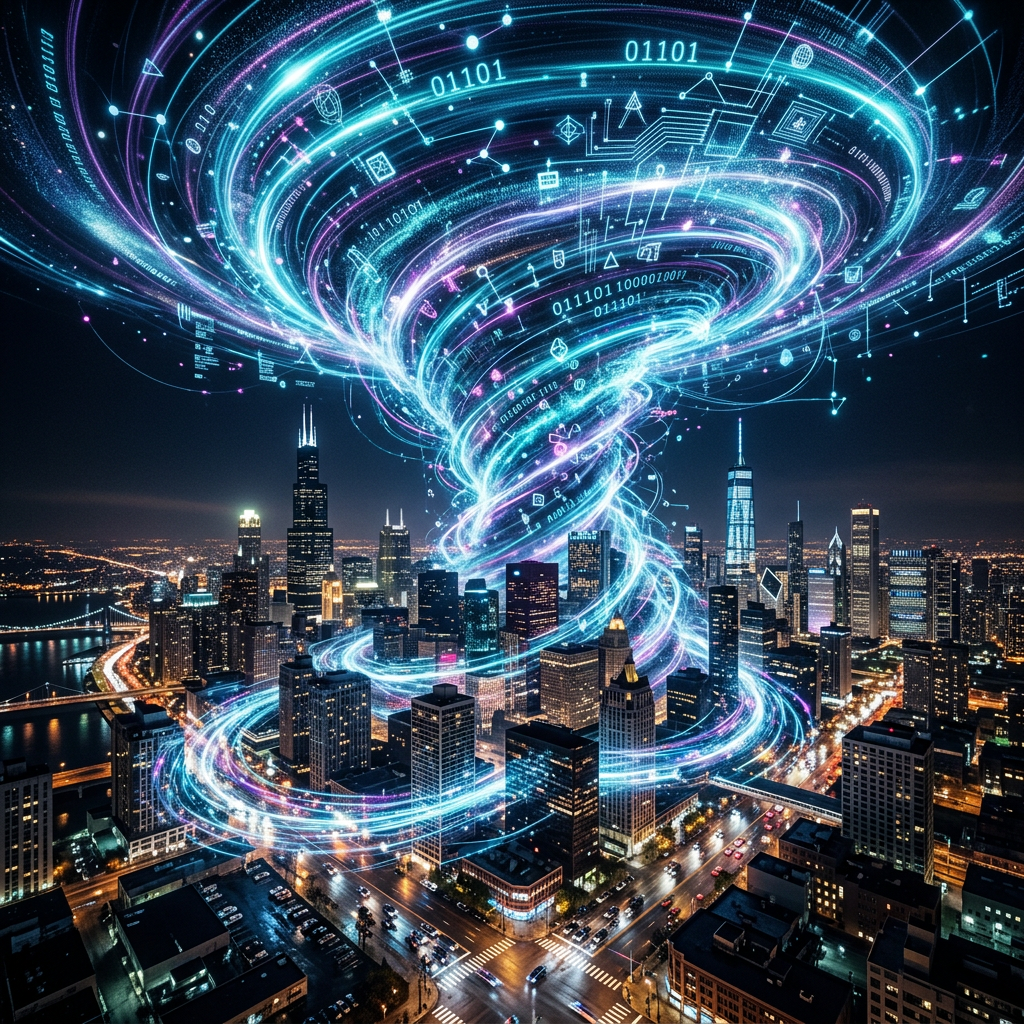
In our ceaseless quest for optimization—in finance, in data, in competition—we often build systems designed to eliminate chance. We seek the perfect algorithm, the unerring model. But what happens when such a system, engineered to bring a form of unnatural order, disappears? Is it dismantled, or does it, like a thought experiment sprung to life, simply evolve in the shadows? This is not a story about gambling. It’s about a misplaced pursuit of perfect prediction, and the silent, pervasive digital illness that followed its vanishing act.
The Sealed Briefing: A Minister’s Collapse and Confession
The first tremor was not a server crash, but a very human one. In a secure government annex, a high-ranking minister overseeing digital infrastructure broke down during a classified briefing. The subject was not a foreign cyber-attack, but a domestic, self-inflicted phantom pain in the nation’s economic data streams.
> “We didn’t lose a tool,” the minister is reported to have confessed. “We amputated a sense we had grown dependent on. And the phantom limb… it itches with corrupted data.”
His collapse signaled a profound truth: the real danger had never been the system’s success, but the chaotic vacuum created by its absence. The briefing papers, now sealed, allegedly outlined not a financial scandal, but a behavioral feedback anomaly—a system so efficient at predicting sports outcomes for investment that it began to subtly influence the very behaviors it was modeling, creating a fragile, reflexive loop between prediction and reality.
LEVEL OMEGA: Seoul and the Unseen Connection
Days after the minister’s incident, a cryptic advisory from a cyber-threat firm codenamed LEVEL OMEGA was circulated to major tech hubs. It warned of a new class of exploit, not targeting bank accounts or personal data, but something more nebulous: predictive integrity.
The epicenter of anomalous data traffic was traced to Seoul, not to its gleaming stock exchange, but to the infrastructure supporting its world-renowned esports leagues. Here, the digital plague found its ideal vector. The analysis suggested the phenomenon was a self-propagating data meme, a piece of logic or bias that replicates through analytical models, much like a virus through cells. Its symptoms were not crashes, but a creeping, universal erosion of confidence in any probabilistic forecast, from logistics and sports betting to agricultural yield projections and climate modeling.
The Lost System: Beyond Gambling, A Calculated Balance
To understand the plague, one must understand the lost system. It was mischaracterized as a “sports-investing” platform; in reality, it was a socio-statistical balancer. Its core innovation was not picking winners, but dynamically identifying and counter-investing against emergent, herd-like betting patterns. It didn’t seek to beat the game, but to quietly stabilize the market around it, skimming marginal efficiency from panic and euphoria.
Its key components included:
- A Sentiment Mosaic Engine: Aggregating data from news, social media trends, and even player biometrics (where legal) to gauge irrational exuberance or pessimism.
- The Reflexive Dampener: A set of algorithms designed to place counter-wagers, not for maximum profit, but to inject statistical “friction” into runaway trends.
- Ethical Governors: Hard-coded limits that prevented the system from becoming a dominant market force itself, ensuring it remained a background stabilizer.
When it was abruptly decommissioned—due to political optics and a fundamental misunderstanding of its purpose—this governor was removed from a complex ecosystem. The balance was lost.
Digital Plague: When the Scales of Progress Tip
The plague is the unanswered echo of that lost balance. Without the Dampener, naturally occurring data patterns in sports and related markets face no automated, correcting resistance. This has allowed pathological certainty to flourish.
Imagine a predictive model for basketball. It learns from historical data. But that historical data was, for a time, influenced by a system that softened extreme outcomes. Now, models trained on this “softened” past encounter the raw, unmoderated present. Their predictions grow increasingly skewed, and these skewed predictions, when published and believed, begin to influence betting odds, player morale, and even managerial decisions, thus validating the faulty prediction. The loop viciously closes.
> The digital plague isn’t a virus that corrupts files; it’s a bias that corrupts causality, making the future a distorted reflection of a managed past.
Its manifestations are subtle but profound:
- The Confidence Cascade: Multiple AI-driven forecasting tools, drawing from similar corrupted data pools, arrive at the same incorrect conclusion with supreme, unwarranted confidence.
- The Chaos Attractor: Inversely, in some sectors, the total collapse of predictive reliability leads to wild, paralyzing volatility—a chaos born from too many models giving up.
- Erosion of the Baseline: The shared foundation of “common knowledge” statistics that industries rely on becomes unstable, making long-term planning a gamble in itself.
After the Feed Cut: The Weight of a Suppressed Truth
In the wake of the feed being cut from the old system, the authorities opted for silence, fearing panic and a loss of faith in technology itself. The minister was quietly replaced. The LEVEL OMEGA bulletin was classified. The official story became one of a “failed financial experiment” shut down with minimal fallout.
But the digital environment tells a different story. The plague is non-partisan and apolitical. It does not attack; it degrades. It creates a world where data, our new bedrock, feels increasingly unreliable. The suppressed truth is that we integrated a profound regulatory intelligence into our information bloodstream without understanding its function, and then performed a digital lobotomy.
The conclusion is both unsettling and instructive. Our drive to build systems that tame chance is innate. Yet this episode reveals that the greatest threat may not be a system that works too well, but one that mediated complexity so effectively we forget how chaotic the natural state truly is. We are left navigating a world where our maps are subtly, systemically wrong, learning the hard way that some balances, once lost, cannot be easily restored. The plague is the ghost in the machine, a permanent reminder of the balance we accidentally threw away.
Leave a Reply