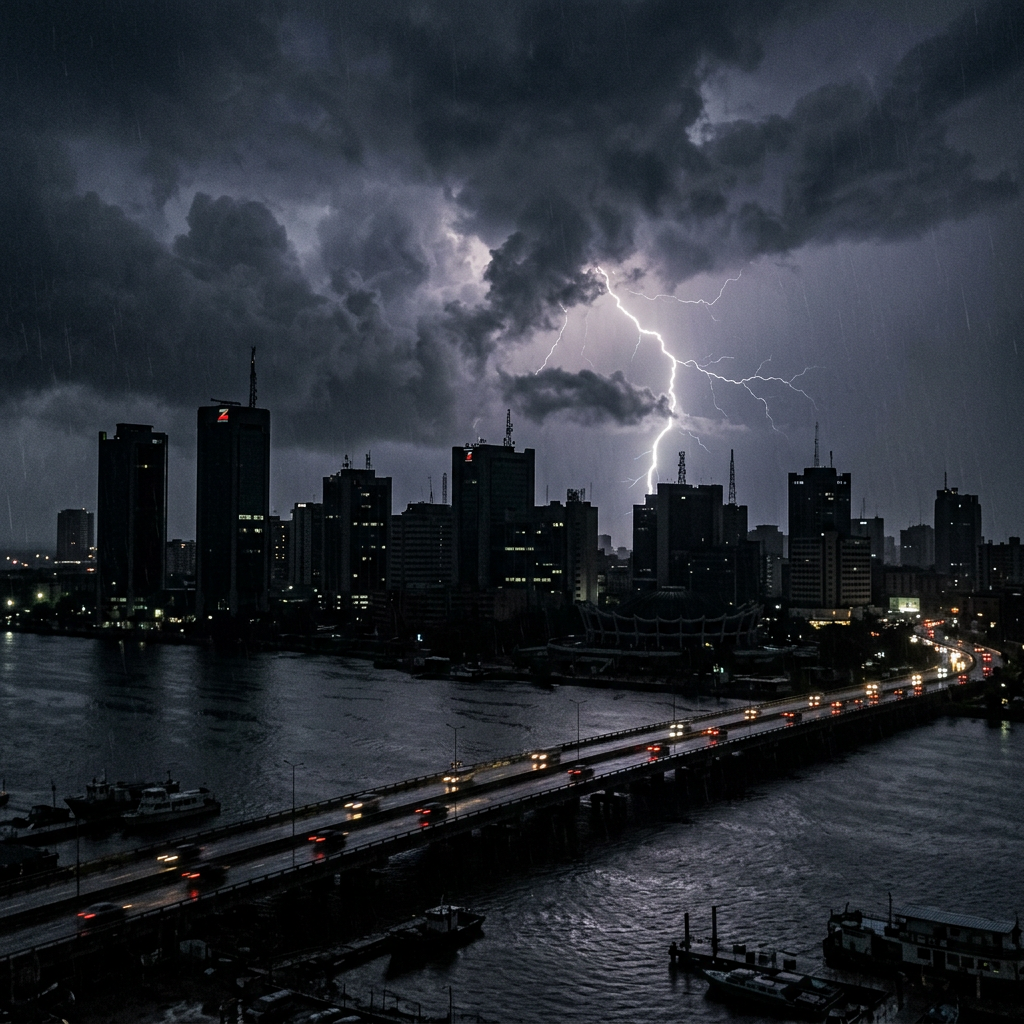
In the annals of speculative lore, certain predictions cut through the noise not with flames or bombast, but with the chilling precision of a surgical blade. “The Lagos Prophecy” is one such narrative, a haunting forecast that ties a looming catastrophe directly to a specific, oft-forgotten betrayal from the early 2000s. It is not a tale of divine wrath, but of systemic cause and effect—a dire warning that the seeds of a future collapse were sown in the fertile ground of a broken promise two decades prior.
The Whisper in the Dark: The 2028 Lagos Blackout
The prophecy’s most visceral and immediate image is the “Great Darkening.” Forecast for a sweltering night in 2028, it describes a cascading, continent-wide blackout originating from Lagos, Nigeria’s megalopolis and economic heartbeat. This is no ordinary power outage.
- It begins with a cyber-physical attack on the newly integrated West African Power Pool, exploiting legacy vulnerabilities in grid management software.
- The failure is cascading and total, plunging not just Nigeria but neighboring nations into a darkness that lasts for weeks.
- Critical infrastructure fails: water pumps stop, digital transactions freeze, and emergency services are crippled.
> “When Lagos sleeps, the continent holds its breath. But when Lagos is erased from the map of light, the very idea of a collective future flickers and dies.”
This event is framed not as an accident, but as the first tangible “reaping”—the direct consequence of a foundational failure in foresight and equity.
A Harvest of Ruin: Famine, Debt, and Digital Chains
The blackout is merely the trigger. The prophecy details a devastating domino effect, a triad of crises that solidify the collapse:
- The Famine Trigger: The collapse of the “Cold Chain Corridor“—a network of refrigerated warehouses and ports vital for food security—leads to the spoilage of continental grain reserves. This sparks not just scarcity, but a desperate, regional scramble for resources.
- The Debt Reckoning: The economic paralysis triggers a sovereign debt crisis of unprecedented scale. Loan agreements from the 2020s, signed against promises of future stability, are called in by global creditors, stripping national assets and paralyzing recovery efforts.
- The Digital Enclosure: In the chaos, a monolithic Digital Governance Platform, pitched as a solution for aid distribution and identity management, becomes mandatory. It morphs into a system of pervasive surveillance and control, where access to basic rights is gated by compliance and data extraction.
The Buried Seed: Who Killed the Equity Breakthrough?
Here, the prophecy roots its cause. It points to a specific historical moment: the proposed “African Digital Equity Compact” of 2003-2005. This was a bold, home-grown initiative born in Lagos tech hubs, demanding:
- Open-Source Infrastructure: Continent-wide investment in locally-managed, non-proprietary digital and energy grids.
- IP & Data Sovereignty: Laws ensuring African data and innovation remained under African custodianship.
- Manufacturing Parity: A tariff framework to foster local production of electronics, not just consumption.
The prophecy states this compact was systematically dismantled. It was betrayed by a coalition of:
- Political Elites who opted for quick, opaque loans and lucrative licensing deals with foreign corporations.
- Foreign Tech & Energy Titans who saw a unified, sovereign digital market as a threat to their extractive business models.
- International Financial Institutions that conditioned aid on adopting proprietary, locked-in systems, creating perpetual dependency.
The compact wasn’t defeated in battle; it was starved of funding, buried in committees, and its champions were sidelined or corrupted. The “Betrayal of the 2000s” was the choice of easy, dependent modernization over difficult, self-determined sovereignty.
The Locust Years: Multiplying a 2000s Betrayal
The prophecy argues that the 2000s betrayal was not a one-off event, but a pattern that was cloned and scaled. The original sin—prioritizing foreign capital and closed systems over local equity and open infrastructure—became the default blueprint for development.
- Every subsequent “smart city” deal replicated the dependency.
- Every power plant contract ignored the need for distributed, renewable micro-grids.
- Every “leapfrogging” narrative conveniently skipped the step of building local technical mastery and manufacturing capacity.
The years between the betrayal and the blackout are termed the “Locust Years,” where short-term gains were voraciously consumed, leaving the land—both literal and technological—barren and vulnerable. The integrated, but centrally controlled, grid that fails in 2028 is the ultimate legacy of this multiplicative betrayal.
The Prophetess’s Ultimatum: Truth or Endless Fall
The prophecy is channeled through a figure known only as “The Architect’s Daughter,” a reclusive systems theorist and former child prodigy of the 2000s equity movement. Her ultimatum is stark. The 2028 scenario is not fixed, but it is inevitable if the root cause is not addressed.
Her demand is not for prayer, but for forensic audit and public reckoning:
> “You cannot firewall a crumbling foundation. Name the betrayal. Audit the 2000s deals. Open the source code of every critical system. Rebuild from the original, equitable blueprint, or the cascade will find every weak link we soldered shut with gold.”
The choice presented is between uncovering an uncomfortable past or facing an unlivable future. The prophecy ends not with a vision of doom, but with a final, pointed question: Is a society that refuses to diagnose its old wounds worthy of a new dawn?
The Lagos Prophecy, in essence, is a powerful metaphor for the long-term cost of compromised sovereignty and abandoned collective vision. It suggests that the most dangerous ghosts are not those that haunt old houses, but the unresolved betrayals that are wired into the very systems upon which a modern society depends. The reaping, it warns, is always in the future, but the sowing is always now.
Leave a Reply