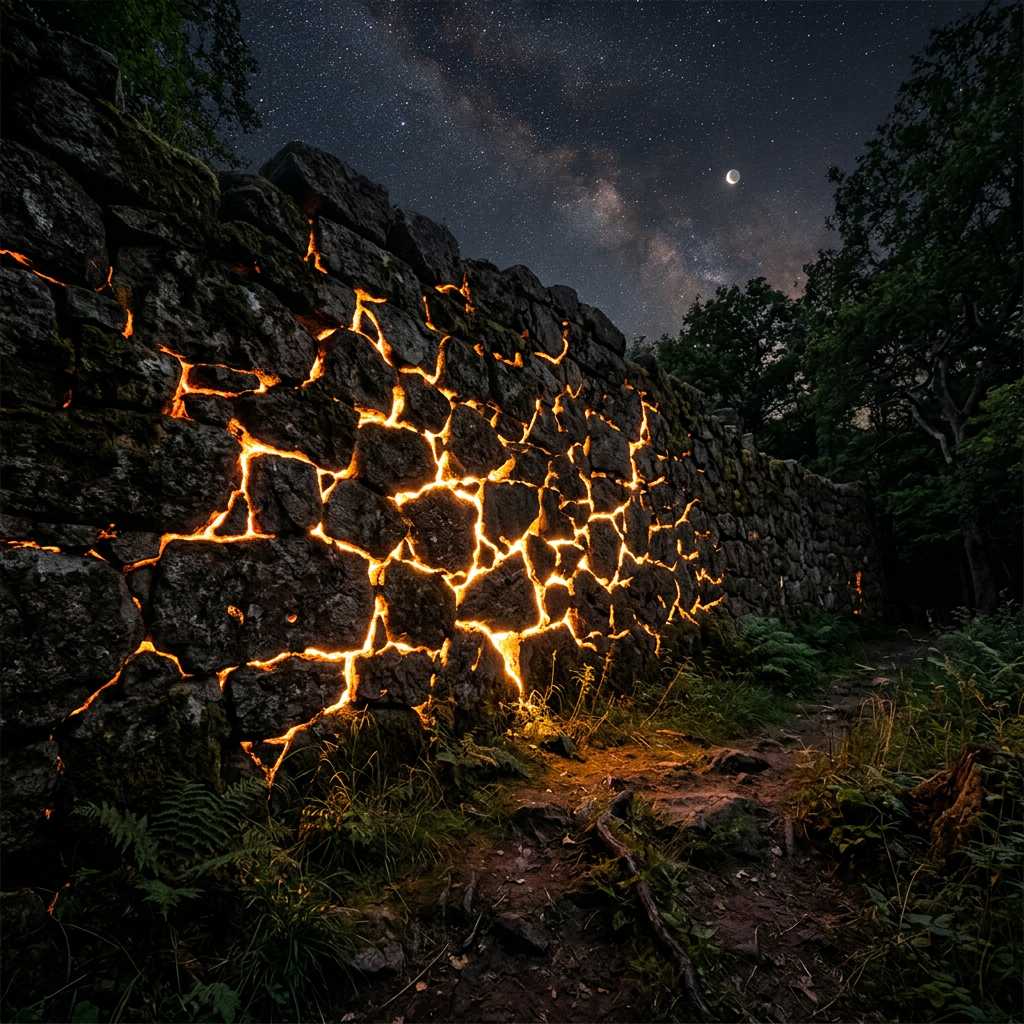
Few legends can chill the bones like that of Eliab’s Vigil, a tale where history and prophecy become one, told not by tongues of flesh but by the groaning of stone. At its core lies a question: what happens when the boundaries we build to protect us—physical walls, social barriers, laws of civility—begin to lament their own decay and prophesy our fate? This is not merely a ghost story of whispering ramparts; it is a profound allegory for societies that trade foresight for fortune, and the singular, lonely duty of the watchman who remains at his post.
The Night the Ancient Wall Found Its Voice
Eliab’s Wall was no ordinary fortification. It encircled the city-state of Har-Megiddo, raised not only for defense but as a monument to the founders’ covenant: a promise of shared vigilance and mutual responsibility. The people prospered, and the wall, a silent, benevolent guardian, was all but forgotten. Eliab, the last in a long line of hereditary watchmen, kept his nightly rounds out of tradition more than necessity, his trumpet gathering dust. Then, one moonless night, a new sound began. > The First Witnessing: “It began as a low hum, as if the very bedrock beneath the city was sighing. By the next midnight, the stones themselves seemed to murmur, forming incoherent whispers that danced just beyond understanding.”
The initial reaction was disbelief, then mockery. Surely, it was the wind, the stories of an old man, or too much strong drink. But soon, no one could deny it. A single, gargoyle-adorned section of the western bulwark began to speak. Not with a human voice, but with a deep, resonant telling—a report of stress, decay, and warnings unheeded.
Widening Cracks: When Betting Sinks the Land
As Eliab reported the wall’s utterances, the city leaders and merchants dismissed them as omens too vague to act upon. More captivating was a new pursuit sweeping Har-Megiddo: the Great Wager. This was no simple gambling game; it was a complex, city-wide speculation on everything from grain prices to council decisions.
- The economy shifted from production to prophecy-hedging, as citizens bet on future misfortune rather than work to prevent it.
- Public funds intended for infrastructure, like the wall’s upkeep, were diverted into the magistrate’s purse, the central betting pool.
- Fissures did appear in the wall’s foundation, but were seen not as threats, but as data points—fresh variables for the day’s wagers.
The wall’s whispered warnings were cataloged and assigned prophetic odds by the city’s bookmakers. The guardianship of the community was wholly outsourced to chance.
Sealing Stone: The False Hope of Rising Odds
Here, the allegory grows most potent. Instead of heeding the wall’s laments about structural weakness, the city’s “remedy” was a performance of care. They employed tremor-masons, artisans who specialized not in true repair, but in crafting beautiful, decorative facades to plaster over the cracks. The act of sealing became a public spectacle, and citizens would bet on:
- How long the cosmetic seal would hold.
- Which dignitary would apply the ceremonial first trowel of mortar.
- The exact wording of the wall’s next perceived grievance.
The cycle was self-feeding. Each new crack, each more desperate groan from the stones, simply made the betting odds more exciting and the market for superficial fixes more lucrative. The city mistaked busyness for action, and speculation for wisdom.
A Watchman’s Trumpet, Sounding From Stone
In this fever dream of distraction, only Eliab understood. His vigil transformed. He was no longer a man watching a wall, but a translator bearing witness to a testimony. He charted the specific locations of the complaints and correlated them to the hollowed-out foundations beneath the city’s new gambling halls and treasury vaults. While others bet on doom, he documented its blueprint. > Eliab’s Realization: “The wall was not cursing us,” he declared to the empty battlements. “It is giving evidence. It is the only honest witness left.”
His lonely vigil became an act of preservation—not of the stones, which were now terminally compromised, but of the truth. His logbook, ignored by all, was a meticulous record of a prophecy being physically etched into the landscape by collective negligence.
The Final Crack: When Prophecy Demands a Witness
The climax did not arrive with a sudden, silent collapse. It was heralded. For three nights, the entire circumference of Har-Megiddo’s wall hummed in unison—a chorus of stone. On the final night, the western section, the first to speak, fell silent. Then, in a voice as clear as a bell, it spoke a single, undeniable sentence of architectural fact: “The keystone of the western arch fails at dawn.”
This was not a cryptic omen. It was a specific, verifiable engineering report. Yet, the city did not evacuate. They placed their final, feverish bets. The magistrates doubled the odds against collapse, a last, lucrative lure. Only Eliab acted. Taking up his long-unused trumpet, he did not sound an alarm for the city, for they would not hear it. Instead, he climbed to his post, faced the failing wall, and played the ancient, pure call to vigil—a salute to duty performed unto the very end. As the first light of dawn touched the stones, the western wall, having fulfilled its prophetic duty, crumbled in truth. Eliab was not buried in the rubble; he stood amidst it, the sole witness who had listened, and the record-keeper for a people who chose to gamble with their foundations.
In the end, the tale of Eliab’s Vigil teaches that the walls that protect a society are not just physical. They are made of shared truth, communal responsibility, and the courage to listen to unwelcome warnings. When a culture begins to bet on its own decline, to plaster over growing cracks with spectacle and speculation, it silences its own prophets. Yet, the testimony continues—in the strain of institutions, the groan of social fabric, and the quiet, persistent voices of those who, like Eliab, keep watch not for reward, but because someone must bear witness before the final accounting is written in stone and dust.
Leave a Reply