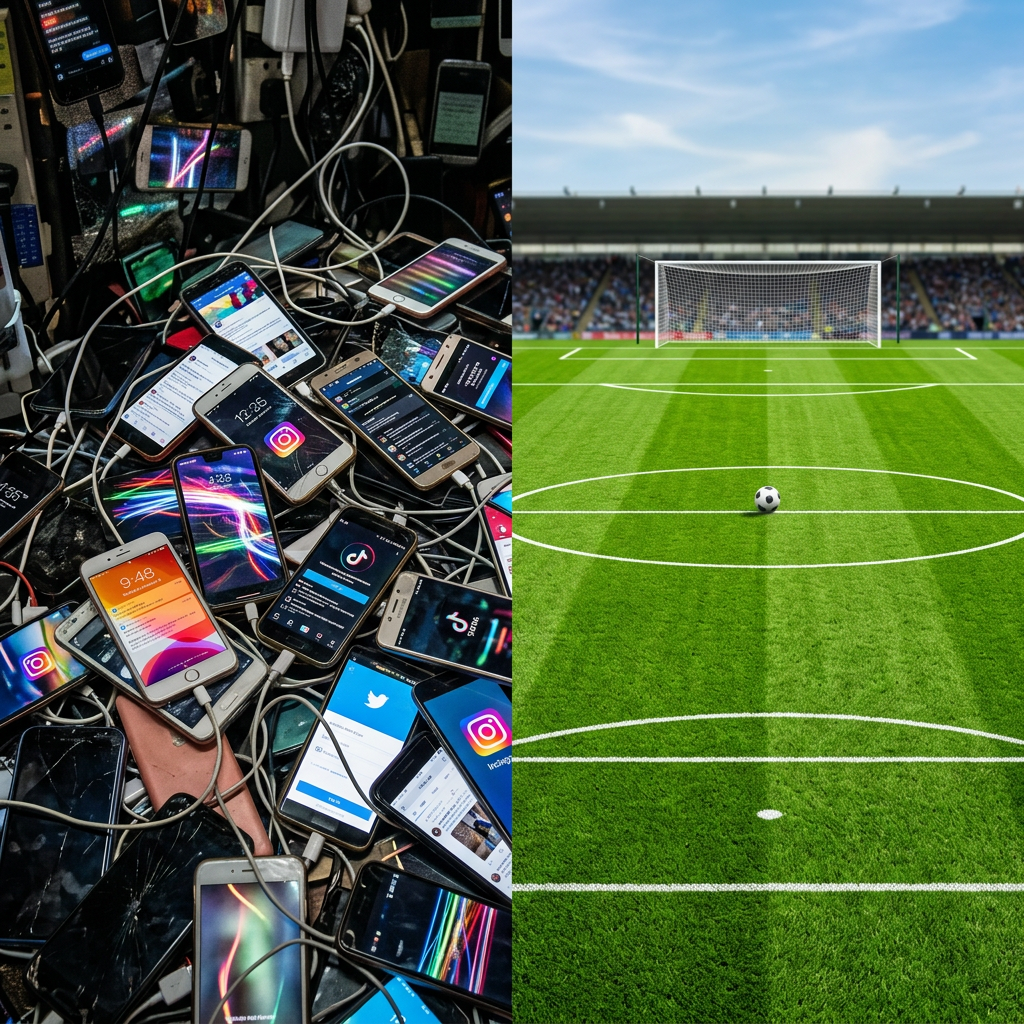
In an era dominated by notifications, non-fungible tokens (NFTs), and pundits shouting predictions into screens, the soul of football is often obscured by a relentless digital din. While engagement metrics and transfer rumors flood our feeds, the core, beating heart of the game—what makes it truly beautiful—exists elsewhere. It thrives in a grassroots pitch’s worn grass, in the collective gasp of a stadium, and in the silent, shared language of a perfectly weighted pass. Its real value is profound, intangible, and, most importantly, beyond the digital noise.
The Static of Screens Versus Sport’s Pure Signal
The modern fan’s experience is often mediated by pixels. We consume the game through digital platforms, participate in fantasy leagues, and debate endlessly in virtual forums. While this connectivity has its merits, it also creates a kind of ambient static—a low hum of distraction that can drown out the sport’s pure signal.
This static includes:
- The relentless focus on financialization, where a player’s worth is reduced to a transfer fee before their skill.
- Reactionary commentary cycles that prize hot takes over nuanced understanding.
- The overwhelming glut of statistical data and predictive algorithms that attempt to quantify the unquantifiable: magic, passion, and human spirit.
As observers, we risk becoming passive consumers of noise rather than active participants in a living, breathing culture. To hear the game’s true signal, one must learn to dial out this frequency.
Real Play, Not Fantasy: Investing In Human Connection
The most significant returns in football are not measured in points on a screen, but in moments of genuine human connection. The game’s core infrastructure is built not of fiber-optic cables, but of community bonds fostered on real pitches.
> To truly invest in the game is to invest in the space where a child first falls in love with it: the local park, the schoolyard, the community club.
This investment manifests in several ways:
- Supporting grassroots coaching that teaches sportsmanship alongside skill.
- Preserving affordable access to playing fields for all ages and abilities.
- Valuing the volunteer—the parent who drives the team, the local business that sponsors kits, the fan who cleans the stands.
Here, the “beautiful game” reveals its simple, foundational truth: it is a conversation, a shared experience that happens between people in a physical space, not between usernames in a comment thread.
More Than Profit: Valuing Joy and Communal Spaces
The marketplace will always attempt to attach a price tag to everything, but football’s most precious commodities are non-fungible in the truest sense. You cannot trade or tokenize the feeling in a stadium when a last-minute goal is scored. The currency here is shared joy, and the banks are the stadiums and pubs where memories are stored.
These communal spaces are under constant threat from a mindset that sees land only as real estate and crowds only as revenue streams. Yet, their value is immeasurable:
- They are crucibles of local identity and civic pride.
- They provide a vital, regular ritual of community gathering.
- They act as neutral territories where social and economic differences are temporarily suspended in support of a common cause.
Protecting these spaces from becoming purely transactional environments is essential to preserving the game’s soul.
The Ball in the Square: A Quiet Rebellion Against Hype
Somewhere in a city square, a group of friends is kicking a ball against a wall. In a vacant lot, kids are using jumpers for goalposts. This is football in its purest, most essential form: a simple game requiring only a ball and imagination. This scene represents a quiet, powerful rebellion against the over-produced, hyper-commercialized spectacle.
It’s a reminder that before the superstars, the sponsors, and the satellite broadcasts, the game was—and still is—this:
- A universal language of play.
- A test of ingenuity and spontaneous creativity.
- An exercise in freedom, unburdened by formations, tactics, or league tables.
This fundamental activity is the quiet, persistent heartbeat that keeps the entire global phenomenon alive. It is a rebuke to the notion that football’s value must be loud, branded, and monetized.
Building Legacies, Not Just Financial Returns
Ultimately, the digital noise focuses on the quarterly report, the current form, the next big thing. The real value of football operates on a much longer timeline. It is about building legacies—of clubs that serve as pillars of their communities, of players remembered for their loyalty and character, and of traditions passed down through generations of families.
This legacy-building requires a different kind of calculus:
- Prioritizing sustainability over short-term, predatory financial gains.
- Celebrating local heroes as fervently as global icons.
- Protecting club heritage and fan ownership models that keep the heart of the game in the right place.
When a club’s success is measured not just in trophies but in its positive impact on its hometown, the beautiful game transcends entertainment and becomes a vital social institution.
Conclusion
Cutting through the digital noise is not a rejection of modernity, but an act of preservation. It is a conscious choice to listen for the game’s pure signal: the thud of a ball, the roar of a genuine crowd, the laughter in a muddy park. By valuing real play over fantasy, communal joy over profit, and quiet legacies over fleeting hype, we do more than just follow a sport. We protect a profound source of human connection, identity, and simple, unadulterated joy—the beautiful game’s real and enduring value.
Leave a Reply