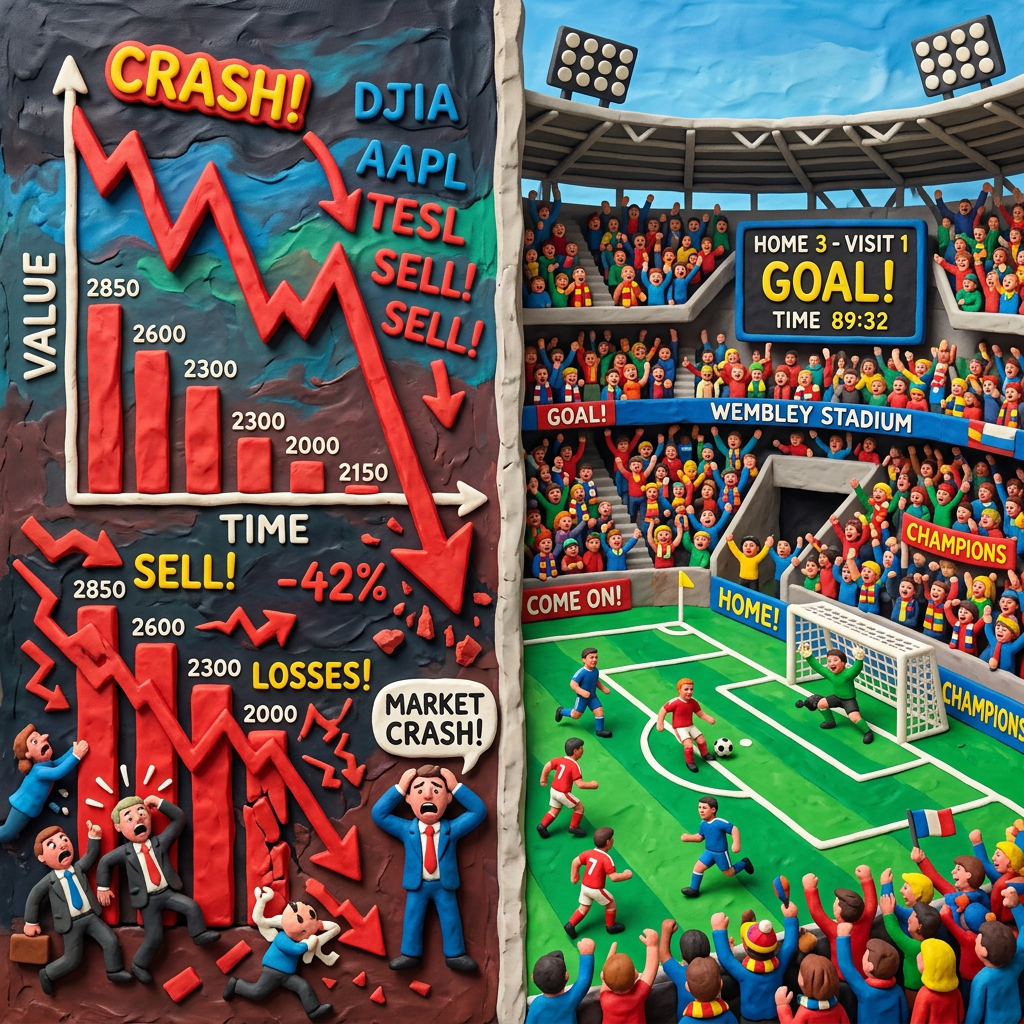
Like millions of others, I spent the last few years watching the traditional financial markets behave like a theme park ride designed by a mad engineer. My carefully balanced portfolio of stocks, ETFs, and a dash of crypto would soar one quarter, only to plummet the next on news of inflation, geopolitical strife, or a single tweet from a billionaire. It was exhausting, nerve-wracking, and, frankly, felt increasingly disconnected from any tangible reality. My finances were at the mercy of these synthetic markets—complex, algorithm-driven systems that seemed to operate on a logic of their own. I needed a counterweight, something rooted in a more predictable form of human competition and outcome. Little did I know that venturing into the world of sports investing would become the anchor that kept my finances from being buried during a true market avalanche.
From Synthetic Markets to Tangible Athletic Bets
My journey began not as a desperate gamble, but as an intellectual pivot. I was disillusioned by market movements that defied fundamentals. A company could post record profits and still see its stock drop because of “future guidance concerns.” It was abstract and frustrating.
In contrast, sports presented a fascinating, tangible alternative. Here was a marketplace with clear, non-negotiable rules and a definitive end point. On Sunday, one team wins, and the other loses. An athlete either breaks a record or they don’t. The variables, while numerous, were knowable: player form, coaching strategies, historical performance in certain conditions, and even human psychology under pressure.
I started small and treated it with the same discipline I applied to stocks:
- Research-Driven Decisions: I stopped betting with my heart and started analyzing data—injury reports, weather conditions, team motivations, and advanced statistics.
- Diversification: Just as you wouldn’t put all your money in one sector, I spread my actionable capital across different sports (football, basketball, tennis) and different types of wagers (moneyline, spreads, player props).
- Risk Management: I established a firm bankroll management rule, never risking more than 1-2% of my designated sports investing capital on any single event.
This wasn’t about getting rich quick on a lucky parlay; it was about applying financial principles to a new, more visceral asset class.
When Finance Crashed, My Sports Edge Held Firm
The “avalanche” hit last year. A perfect storm of banking sector fears, persistent inflation, and hawkish central bank rhetoric sent the S&P 500 into a sustained downward spiral. My traditional portfolio, heavy on tech stocks, was down over 30%. The anxiety was palpable; every market open was a fresh dose of dread.
But something remarkable was happening on the other side of my financial ledger. The sports calendar marched on, utterly indifferent to the Fed’s interest rate decisions. While the stock market was bleeding red, I was able to generate consistent, small gains through my disciplined sports strategy. The uncorrelated asset principle was playing out in real time.
> Important Tip: The key is to view sports investing not as a replacement for traditional assets, but as a legitimate, non-correlated component of a broader personal portfolio strategy. Its value shines brightest when other markets are failing.
During that brutal quarter, a weekend of disciplined MLB prop bets (like strikeout totals for a specific pitcher) or a well-researched soccer match provided not just a financial buffer, but a psychological one. I felt in control of something analyzable, which was a stark contrast to the helplessness I felt watching my retirement account shrink.
The Human Market Proved Real Assets Have Worth
This experience taught me a profound lesson about what we consider an “asset.” The frenzy around meme stocks and NFTs felt like a collective hallucination, valuing things with no intrinsic worth. The sports market, however, is fueled by a real, global, and perpetual human passion. People will always care deeply about competition, excellence, and national pride.
- Tangible Inputs, Tangible Outputs: An athlete’s training, a team’s chemistry, and a coach’s game plan are real inputs. The final score is a real, measurable output.
- Emotional Resilience: Economic cycles cause panic, but the sports cycle—the season, the playoffs, the championship—continues relentlessly, providing constant opportunity.
- Skill Over Luck: While luck is a factor in a single game, over a large sample size, applied knowledge and disciplined strategy are the defining factors for success, much like long-term investing in quality businesses.
I realized I had stopped investing in abstractions and started investing in human performance narratives, which are far more predictable and engaging to analyze.
Practical Steps for Counter‑Cyclical Sports Investing
If you’re looking to explore how sports investing can add balance to your financial life, here is a disciplined approach to get started:
- Separate Your Capital: Never use money earmarked for essentials, retirement, or traditional investments. Create a separate, discretionary bankroll you are 100% comfortable losing.
- Become a Specialist, Not a Generalist: Don’t try to follow every sport. Pick one or two you truly understand and enjoy. Your innate knowledge is an edge.
- Embrace the Grind: The profit isn’t in the 100-to-1 underdog pick. It’s in consistently identifying small value opportunities where the market’s odds are slightly mispriced based on your superior research.
- Keep a Rigorous Log: Document every bet—the rationale, the stake, and the outcome. Analyze your wins and losses monthly to identify your strengths and systematic errors.
- Define Your Exit Strategy: Just like taking profits in a stock, have rules for when you withdraw profits from your sports bankroll to protect them.
> Key Quote: “In a world of digital volatility, the football pitch, the basketball court, and the tennis court became my shelters of tangible cause and effect.”
My foray into sports investing didn’t make me immune to the stock market’s downturn, but it provided a crucial lifeline. It diversified my income streams, kept my analytical skills sharp when traditional analysis felt futile, and most importantly, provided a psychological buffer against the panic of a bear market. In the end, it reinforced a timeless principle: true financial resilience comes not from finding a single perfect asset, but from building a portfolio whose parts don’t all fall at the same time. When the synthetic avalanche came, my stake in the timeless drama of human athletic competition was what helped my finances not just survive, but remain strategically active.
Leave a Reply