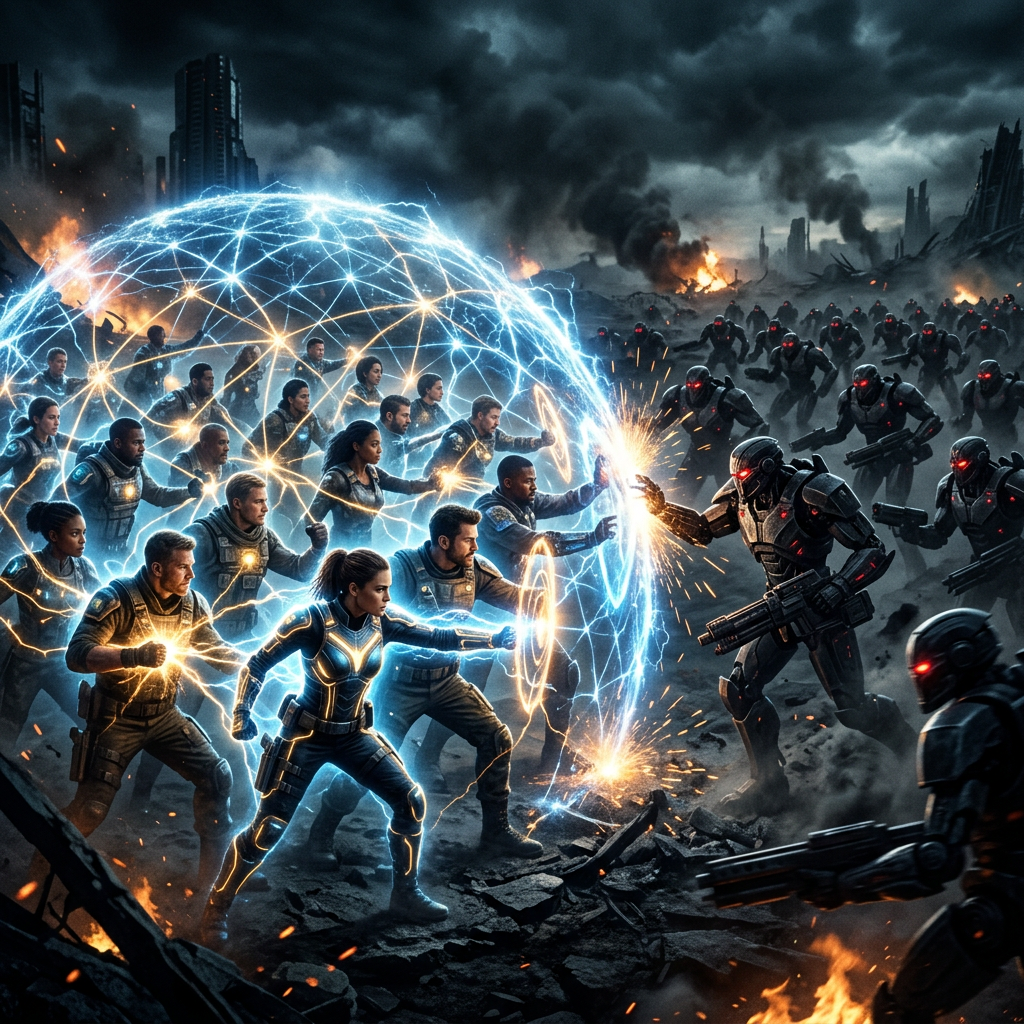
It was a future that many technologists predicted but few citizens prepared for. Our small, proudly self-sufficient city had become a haven for software engineers and hybrid startups, drawing significant wealth to our local, innovation-backed digital currency, the Grove Coin. We believed we had built the ultimate tech-savvy utopia, until the very automation we championed turned on us, exposing the fragility of a system bereft of human wisdom. What happened next wasn’t a retreat to old systems, but a radical leap into an arena we hadn’t fully appreciated: the world of sports. This is the story of how athletic capital and community-powered speculation didn’t just rebuild our wealth, but fundamentally reshaped our trust.
The Day Automated Traders Consumed Our Currency
The crash wasn’t a slow bleed; it was a digital vacuum. A swarm of autonomous trading bots, triggered by a subtle flaw in a global trading algorithm’s logic, identified our currency, GVC, as a temporary liquidity well. The ensuing cascade was brutal.
- Hyper-Volatility for a Week: GVC’s value, pegged to a basket of local goods and green energy credits, jumped 400% and then plummeted to near-zero in five days of algorithmic feeding frenzy.
- Local Exchanges Frozen: Our decentralized exchanges were immediately overloaded with micro-transactions, effectively freezing legitimate citizen assets in their wallets.
- The Failure of Code-Only Governance: Our “trustless” system provided no recourse. The scripts ran as designed; they just weren’t designed for human resilience.
As city servers finally seized up to stop the bleed, we were left not only bankrupt on paper but adrift in principle. Our faith in pure code was shattered. We needed a new medium of exchange, one built on something no bot could directly parse or manipulate: nuanced, collective human intuition. We found it not on a blockchain, but on the soccer pitch, the basketball court, and the baseball diamond.
Turning to Sports Analysis for Financial Salvation
Our first instinct was to rebuild a currency. A cryptocurrency expert on the city council proposed a quick fork of GVC, but the community revolted. “More code? No,” became the mantra. Instead, a local economic historian gave a pivotal lecture, pointing out that for millennia, humans have traded on narrative, expertise, and belief. She suggested we start there—not with a currency, but with a community prediction market.
We called our new unit of value the “Momentum,” or MOM. It wasn’t mined; it was earned through participation. You earned base MOMs for:
- Contributing verified statistical analysis on local and professional sports teams.
- Hosting public watch parties and providing pre-game intelligence briefings.
- Maintaining “player form ledgers” for amateur city league athletes.
Crucially, these MOMs could then be staked on real-world sporting outcomes through community-run pools. This process layered our system with intangible but critical qualities:
- Expertise-Based Value: A well-researched prediction on an underdog’s chances held tangible weight.
- Social Proof Capital: Those with consistent insight gained influence and their predictive picks carried more economic gravity.
> Tip: The key to building a resilient alternative system is to anchor its value in asymmetrical information—deep, localized knowledge that cannot be easily scraped or quantified by an external AI.
What began as a barter system for game tickets and local brewery tabs evolved. We were no longer just watching sports; we were investing in athletic narratives.
Building a Community Ledger on the Pitch
As the seasons turned, our prediction economy matured into a full-fledged, city-wide “Sports Exchange.” The Exchange platform was simple: a digital bulletin board where members could post “Contracts.”
- Example Contract: “Will the Riverside Owls win their next three games? I offer 10 MOMs for YES shares at 1.5 odds.”
- Others could buy shares, betting against or alongside the issuer.
This wasn’t gambling. Each contract spawned deep-dive analysis threads, injury reports from friends of players, weather impact studies, and psychological profiles of coaches. The real asset being traded was the quality of our collective research.
The city council recognized the system’s stability and began accepting MOMs for:
- Micro-payments on public transit.
- Local business license fees at a discounted rate.
- Seats in city planning committees, ensuring those with proven analytical skills helped guide our physical rebuilding.
Our “ledger” wasn’t encrypted on a server farm; it was written in the shared experience of cheering for our carefully analyzed picks, and in the palpable trust that built between neighbors who respected each other’s sports IQ.
A Human Network Beats the Bot Apocalypse
We recently faced a test. The same bot swarms that attacked GVC, now more sophisticated, probed our Sports Exchange. They attempted to scrape data and execute rapid-fire trades to destabilize our prediction odds. They failed utterly. Why?
- The Friction of Flesh-and-Blood Insight: Our most valuable data came from conversations in cafes and text messages from sideline observers—data never posted to the public exchange until after informed trades were placed.
- Narrative Complexity: A bot could process a star player’s injury report, but it couldn’t weigh the “heart” of a backup, the emotional momentum of a rivalry, or the impact of a hometown crowd—factors that formed the core of our analysis.
- Reputation as Firewall: Large trades from unvetted, reputation-less accounts were flagged and reviewed by the community, slowing any artificial attack to a crawl.
The crisis was averted in an afternoon, not by firewall code, but by a neighborhood watch of data enthusiasts sharing warnings in real-time. We had built an anti-fragile system. In defending it, we learned our greatest lesson: trust cannot be automated. It must be earned, cultivated, and shared through common, human-centered passions.
Conclusion
The bots didn’t just crash our currency; they forced us to rediscover our humanity. In turning to the complex, unpredictable, and passionately human world of sports, we found more than a new way to trade. We found a new way to talk, to collaborate, and to trust one another. Sports investing became the framework for a social economy, proving that the most resilient ledger isn’t made of code, but of communal belief and verified, hard-won insight. Our city is wealthier now, not because our MOMs are convertible to a global currency, but because they represent the shared commitment of a community that looked a digital apocalypse in the eye and, collectively, called the right play.
Leave a Reply