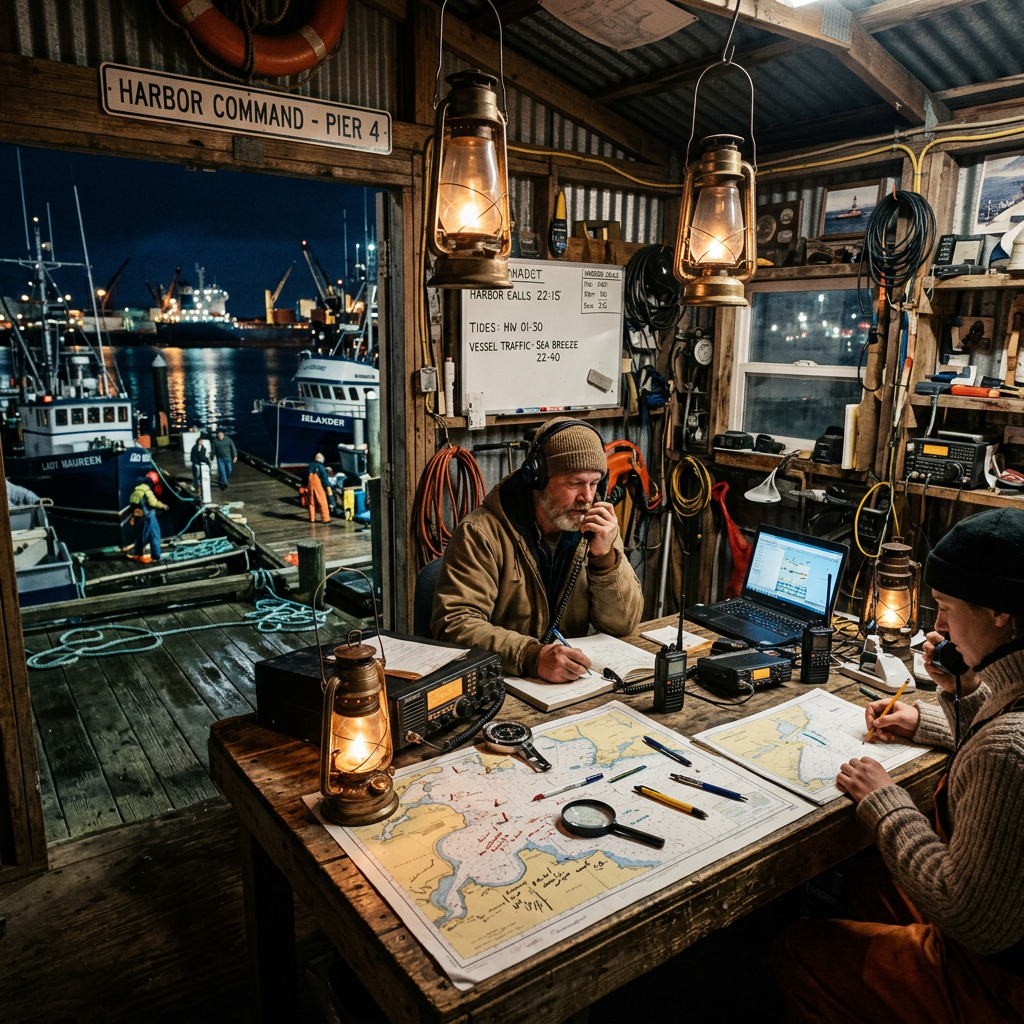
In an age where logistics, communication, and even creative processes are governed by intricate algorithms, our reliance on digital choreography is almost total. We trust these unseen conductors to optimize, predict, and automate. But what happens when the symphony stops—when the system itself experiences a catastrophic failure that logic cannot resolve? This is a chronicle of such a moment: when a cascading global digital failure left the world’s automated port operations in silent, static chaos. With the “algo ship” well and truly sunk, our only lifeline was the very thing automation sought to replace: human intuition, embodied skill, and collective physical motion.
When The Black-Screen Glitch Paralyzed The Port
It began not with a bang, but with a blank screen. Across the Global Logistics Network (GLN), terminals flickered and died. The Integrated Port Management Systems (IPMS), which synchronized everything from crane movements to customs clearance, went dark. The error was unprecedented—a propagated corruption in a core scheduling protocol that didn’t just crash local servers; it rendered the entire algorithmic logic untrustworthy.
- Complete Automation Lockdown: Robotic gantry cranes froze mid-lift. Autonomous guided vehicles (AGVs) parked themselves in safe mode, creating a gridlock of inert metal.
- Data Silence: Real-time inventory databases became inaccessible. Shipping manifests, container IDs, and hazardous material logs were trapped in corrupted data packets.
- A Scaled Crisis: This wasn’t a single port outage. It was a synchronized global “quiet” that halted the flow of physical goods worldwide.
The port, once a ballet of efficient machines, became a graveyard of stalled capital. The metaphorical ship of algorithmic control had not just sprung a leak; it had plunged into the abyss, taking our standard operating procedures with it.
Docking Algorithms Failed; We Downloaded New Data
Standard failure protocols were useless—they were part of the failed system. Rebooting only reintroduced the corruption. The engineering teams, our first responders, quickly realized a hard truth: we could not fix the algorithm in any meaningful timeframe. The system had to be bypassed entirely. Our “download” wasn’t from a server; it was from the collective experience and senses of the human workforce we still employed, though in ever-dwindling numbers.
We assembled veteran crane operators, longshoremen with decades of experience, shunt drivers who knew the yard layouts by heart, and union stewards with encyclopedic knowledge of labor coordination. The “new data” included:
- Physical Memory: Veteran workers recalling manual crane control patterns and load-balancing techniques.
- Tacit Knowledge: The intuitive understanding of wind, weight, and spatial relationships that no lidar system could replicate under these conditions.
- Social Protocols: Pre-digital communication chains using hand signals, runners, and radio chatter on clean, isolated channels.
We created a war room on the dock, using whiteboards and paper maps to manually track container positions—a giant, physical game of chess played with multi-ton pieces.
We Navigated The Crisis on Biofeedback, Not Code
With the digital compass broken, we steered by human biofeedback—the subtle, analog signals of a team working under pressure. This was management by feel, not by dashboard.
> Important Tip: In a systemic digital failure, treat human expertise as your primary sensor network. Their unease, confusion, or confidence is critical data.
Decision-making slowed but became more deliberate. A crane operator, feeling a slight shudder in the controls that a sensor would have flagged as “within tolerance,” would halt operation and call for a visual inspection. Teams developed a rhythm based on shared fatigue and renewed focus, rotating tasks not by an optimized schedule but by observed need. Kinetic consensus—agreement reached through shared physical action and observation—replaced algorithmic instruction. We weren’t executing code; we were reading each other’s movements and intentions, re-learning a language of collaboration that predates the microprocessor.
By Using Human Kinetics, We Charted Survival
The goal shifted from efficiency to survival—keeping critical medical and food supplies moving. We employed human kinetics, the science of movement, but in its most fundamental form: bodies in space, solving problems.
- We formed human chains to verify container numbers and manifests printed on doors, creating a manual optical character recognition (OCR) system.
- Drivers navigated by landmark and dead reckoning, using painted lines on the tarmac that the AGVs had long ignored.
- Cargo was prioritized not by a logistics algorithm, but by group deliberation: “Does this ship carry pharmaceuticals? Let it through.”
The map we charted was messy, slow, and imperfect. But it was resilient. Each successfully moved container was a victory not of processing power, but of coordinated human effort. We discovered that the latent skill architecture of our workforce—the deep knowledge of physical operations that persisted despite years of automation—was our most vital recovery asset.
The glitch was eventually isolated and patched. The screens hummed back to life, and the algorithms gradually resumed their control. But the port was irrevocably changed. We had witnessed the absolute fragility of our digital infrastructure and the profound durability of human capability.
We did not abandon our algorithms—they are too powerful. But we stopped treating them as infallible captains. Now, they are first mates. We conduct mandatory “analog drills,” where systems are shut down intentionally and teams practice manual operations. We actively preserve tacit knowledge through cross-training programs that pair veteran workers with new engineers.
The sinking of the algo ship was a disaster. But in its wake, we found a more balanced and resilient course. We learned that true navigation in an uncertain world requires both the silicon chip and the sensing, moving, adapting human body. We are now moored not to a single point of failure, but to the enduring rhythm of human motion.
Leave a Reply