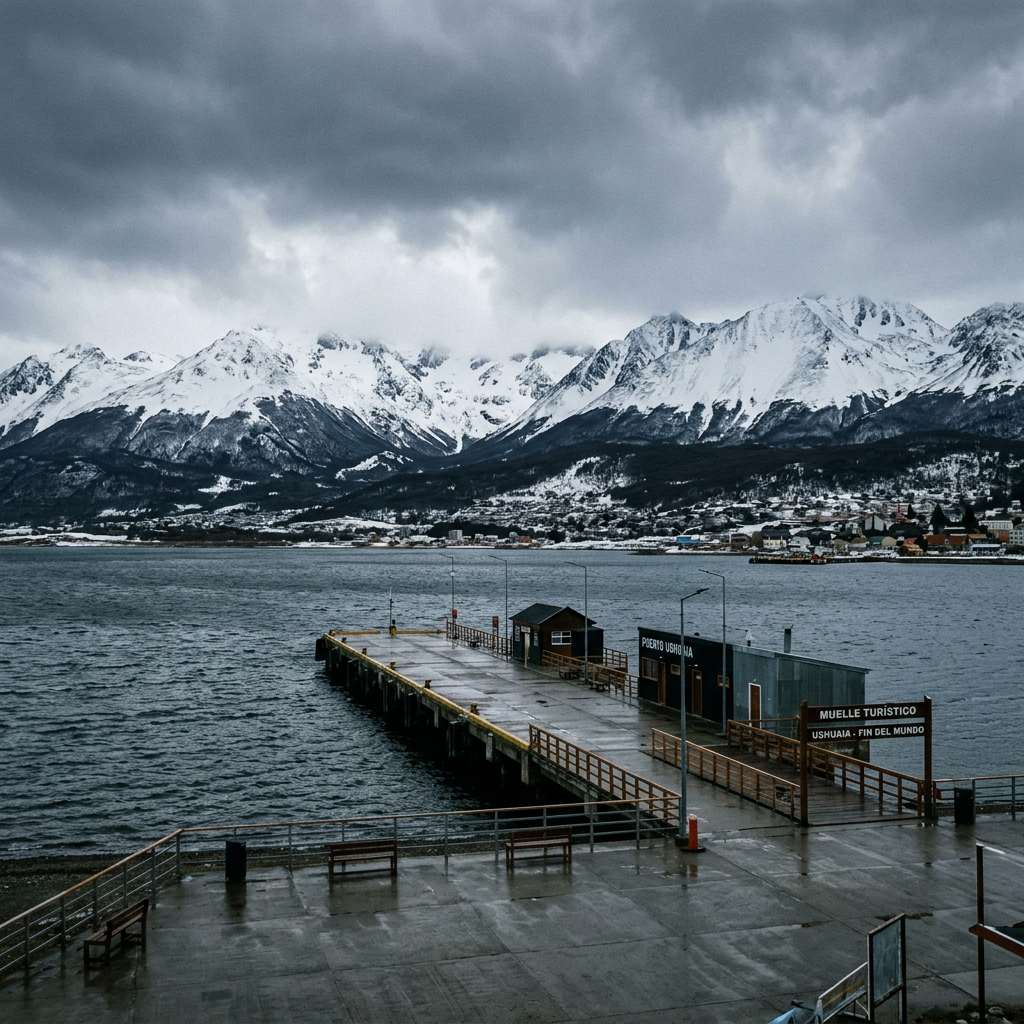
There is a story in the far south, born not from the roaring of a thousand tourists but from a profound and global silence. In the spring of 2020, as borders snapped shut and the gears of international travel ground to a halt, the world seemed to hold its breath. For Ushuaia, Argentina—the self-proclaimed “End of the World” and the bustling gateway to Antarctica—this silence was deafening. Cruise ships, the lifeblood of its economy, vanished from the Beagle Channel. Yet, in the stillness, another rhythm was found, a steady pulse that guided the city’s maritime soul: the beat of a football match. This is the tale of how, when the world stopped, Ushuaia’s ships found a harbor in the beautiful game.
A Frozen Port When Global Clocks Broke
Ushuaia’s identity is tied inextricably to the sea and the wild continent it points toward. Its economy traditionally surges and recedes with the cruise season, a calendar dictated by Antarctic summers and thawing passages. When the pandemic hit, the impact was immediate and brutal.
- The bustling port fell eerily quiet, with vessels stranded or redirected.
- Thousands of tourism workers, from guides to hospitality staff, faced sudden unemployment.
- The usual hum of international languages was replaced by a wind-whipped silence.
The city was frozen in a way that had nothing to do with its subpolar climate. The global clock—the one that scheduled arrivals, departures, and expeditions—had broken. In this vacuum of uncertainty and inactivity, a local, unshakeable schedule remained: the fixture list of the Argentine football league.
> “When the tides don’t bring ships, we look to the next match. It’s the only calendar that never got canceled,” noted a local port worker.
The Unwavering Tide of Match Day Sails
As professional football cautiously resumed behind closed doors, it provided a structure that the wider world lacked. For the maritime community in Ushuaia, match days became the new markers of time, organizing a week that otherwise blurred into monotony.
- Discussion of last weekend’s game filled the lulls at the quiet docks, replacing shop-talk about itineraries and ice conditions.
- Anticipation for the upcoming fixture gave people a shared future event to look forward to, a small beacon of normalcy.
- The games themselves, broadcast on radios and televisions in bars and homes, created pockets of collective energy and escape.
This wasn’t mere fandom; it was a psychological lifeline. The rituals of preparing for a match—gathering with a carefully limited “bubble” of friends, debating tactics, feeling the collective tension—replicated the communal experiences that the pandemic had stripped away. The beautiful game became a crucial framework for sanity and social cohesion.
Charting Survival on a Sportsman’s Calendar
The rhythm of football did more than mark time; it inspired adaptation. Facing a tourism standstill, Ushuaia’s resilient maritime operators began to pivot, using the consistency of the sporting calendar as a stable foundation from which to innovate.
Local boat owners and captains, whose vessels were meant for Antarctic excursions, started to look inward. They began promoting new, hyper-local experiences, scheduling them around the unwavering football fixtures:
- Extended Beagle Channel wildlife tours, focusing on the rich local ecology of sea lions, cormorants, and the iconic Les Eclaireurs lighthouse.
- “End of the World” history sails, delving deeper into the region’s Yamana heritage and penal colony past.
- Weekend fishing trips that would reliably end in time for the Saturday evening clásico.
This strategic pivot ensured that boats, and more importantly, skilled crews, remained active. Planning around match days wasn’t a constraint; it was a familiar structure that enabled creative survival, proving that resilience is often found in the routines we cling to.
Anchors in Panic, Ushuaia’s Steady Beat
In the grand narrative of the global pandemic, Ushuaia’s story is a powerful testament to human ingenuity and the comfort of cultural touchstones. While mega-cruise liners sat idle in ports worldwide, the smaller, nimbler spirit of Ushuaia’s maritime community kept moving—not across oceans, but within the harbor of shared passion.
The football match became an anchor in the storm. It provided:
- A predictable rhythm in a time of chaos.
- A source of unifying hope and emotional release.
- A practical scheduling tool for a community rebuilding its economic model from the waterline up.
This period revealed that the city’s true strength wasn’t just its geographic position as the gateway to Antarctica, but its cultural pulse. The ships may have stopped their long voyages, but they continued to move, however subtly, to a more profound, local beat. It was a reminder that even at the End of the World, the heart finds its meter, and community charts a course through any silence.
Leave a Reply