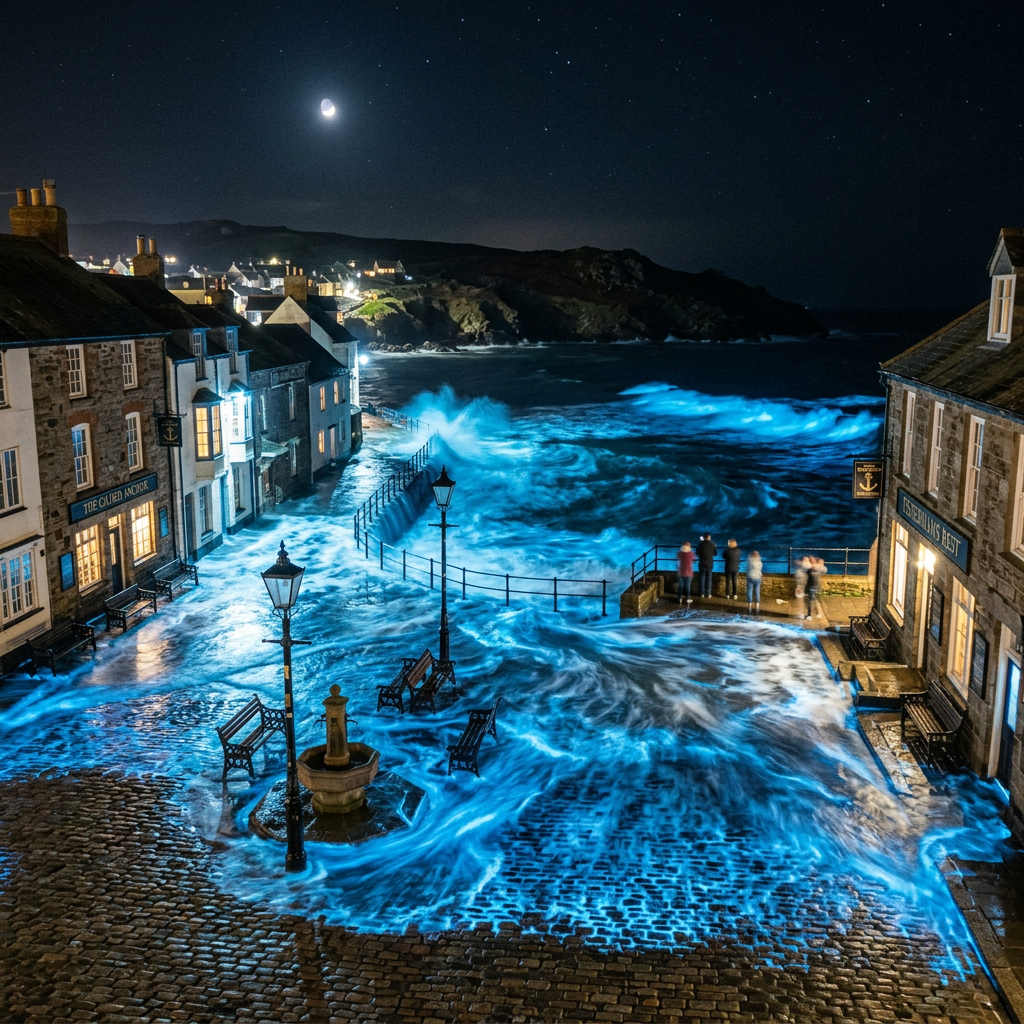
The Scroll on the Waves: A Prophetic Arrival
The old fisherman found it at dawn, caught in the rigging of his trawler like a strange, sodden bird. It was a scroll, sealed with black wax and marked by a single, embossed trumpet—the thirteenth in a sequence that no one in the coastal town of Eldermouth had ever seen. The seal broke not with a snap, but with a sigh, as if the parchment itself had been holding its breath for centuries. Unfurling it, the fisherman saw no ink, only a faint, silver luminescence that pulsed in time with the rising sun. The words, when they formed, were not in any human tongue, but in the silent language of the deep: a prophecy that the sea itself would soon refuse to hide its secrets.
Mireille’s Witness: When the Sea Rose in Pillars
Mireille, a marine biologist with a skeptic’s heart, was the first to truly see it. She had been studying the unusual bioluminescence in the bay when the water around her research vessel began to tremble. Not from waves, but from a deep, resonant vibration. Then, the sea rose in pillars—not tsunamis, but smooth, crystalline columns of saltwater that stood like the pillars of a submerged temple. Inside each column, images swirled: ships sinking with their holds full of slaves, illegal dumping grounds bleeding chemicals into coral gardens, and the ghostly forms of fishermen who had never returned from the fog. Mireille watched, her clipboard falling from numb fingers, as the water itself bore witness.
> “The ocean remembers what men try to forget.” — Mireille’s field journal, last entry.
The Glowing Truth: A Market of Fire and Justice
In the town square, chaos erupted. The glowing truth was not a quiet whisper; it was a broadcast on the wind. The central market, once a place of bright awnings and bartering fish, became a stage of fire and justice. A column of seawater, fizzing with silver light, rose directly over the old auction block. Inside it, the town saw a reel of damning images: the city council’s secret deal to dump toxic waste into the coral reef, the price tags attached to endangered species, and the bribes that had kept the harbor’s pollution off the books. Citizens looked from the watery screen to their neighbors, their faces lit by the accusation. The fire of truth burned without a flame, but it melted the masks of hypocrisy faster than any inferno.
Overflow of Gold: The Storm That Broke the Curse
The market’s secrets were just the beginning. As the thirteenth trumpet’s resonance deepened, the sea began to overflow with gold. Not the gold of treasure chests, but the golden shimmer of lost history. The storm that followed was gentle—a warm rain that fell in sheets of liquid light. Where each drop struck the earth, it revealed a piece of buried wrong. A fisherman’s yard became a graveyard of illegal nets. A politician’s garden sprouted rusted barrels of solvents. The curse of Eldermouth—the quiet complicity in a century of exploitation of the sea—broke under the weight of this visible truth. People wept, not from fear, but from the shock of seeing their own shadows for the first time.
Waters That Bowed: The Thirteenth Trumpet’s Judgment
At the climax, the waters that surrounded the town did not simply part; they bowed. The sea withdrew a quarter mile from the shore, leaving behind a flat, glassy seabed that mirrored the sky. In that mirror, the final judgment was written not as punishment, but as choice. The villagers, the politicians, the fishers, and the scientists all stood on the damp sand, facing the reflection of their own actions. The thirteenth trumpet’s voice, a deep thrum that vibrated in their bones, asked a single question: Will you listen now, or will you wait for the fourteenth?
Mireille walked forward, knelt, and touched the wet sand. Around her, others followed. They did not swear oaths or make promises. They simply bowed their heads to the truth that the sea had finally, after all these years, chosen to speak.
Conclusion
The story of “The Thirteenth Trumpet” is not one of destruction, but of revelation. It is a reminder that the natural world is not a silent sanctuary for our convenience, but a living record of our actions. The sea bowed to truth, and in doing so, invited humanity to do the same. The trumpet’s call was a gift: a chance to see ourselves clearly, without the comforting fog of denial. Whether we will keep that truth alive, or let the tides of forgetfulness wash over it again, remains the only question that matters.
Leave a Reply