The Shattered Gate’s Iron Scroll of Judgment
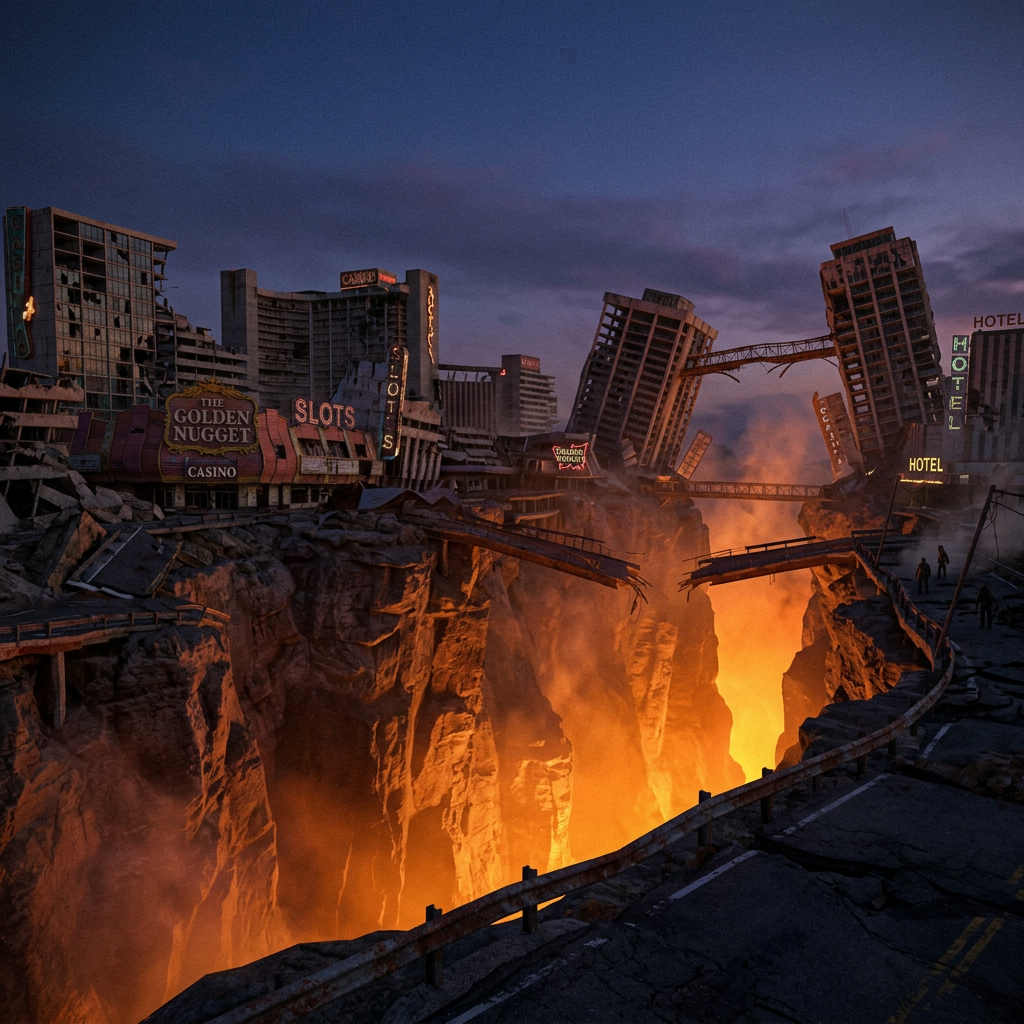
Long before the Shattered Gate fell, the Wager-Cities prospered on a single, fragile premise: that luck was a god worth worshiping. These floating metropolises—built on coral reefs and anchored by debt—ran on chance, not law. Citizens rolled dice for water rations and spun wheels for their daily bread. The Gate, an ancient monolithic structure that once regulated the flow of truth and consequence, stood silent for centuries. But when it shattered, a torrent of accountability was unleashed. The Iron Scroll—a mythic ledger that records every broken promise and rigged bet—was no longer sealed. Now, the Wager-Cities face their final audit.
Wager-Cities Cracking Under Waves of Truth
The cities are fracturing, not from siege or storm, but from the weight of their own revelations. Here is how the truth is dismantling them:
- The Coin-Towns of Varal saw their currency—physical tokens of luck—turn to ash when the Scroll revealed they were minted with false weight. Citizens rioted, not for gold, but for transparency.
- The Wheel District collapsed after the Scroll exposed that its famed “Random Favor” ritual was secretly fixed by a council of bookmakers. The district now stands as a ghost of broken odds.
- The Tower of Gales, a hub for weather-wagers, lost its bet against a storm when the Scroll proved its priests had manipulated wind patterns for profit. The tower now leans, a monument to hubris.
The waves of truth are not metaphorical; they are literal. Tides of recorded deeds wash over the streets, erasing the fine lines between fraud and faith. For the first time, citizens see that their luck was never theirs—it was borrowed from the Gate’s stored justice.
Tomas of Coyhaique Witnesses the Reckoning
No one expected a trader from the Andean foothills to become the oracle of this collapse. Tomas of Coyhaique arrived in the Wager-Cities with a single, unassuming scroll. He did not preach; he read aloud.
> “The Shattered Gate does not judge with fire. It judges with balance—every debt repaid, every lie given weight.”
Tomas walked through the markets, showing how the Iron Scroll revealed hidden records. A merchant who sold “guaranteed sea-breezes” found his contracts voided when the wind chose not to blow. A guild that bet on famine in distant lands saw their coffers drained as the Scroll assigned their misdeeds to the city’s ledger. Tomas became an unwilling symbol, neither hero nor villain, but a witness. His testimony: that the Wager-Cities were not destroyed by an external enemy, but by the truth they had long ignored.
When Chance-Built Walls Fall to Clarity
The architecture of the Wager-Cities was never solid. Homes were made of promissory stone—material that held structure only as long as debts were honored. When the Scroll’s judgment spread, whole districts began to dissolve:
- Neighborhoods built on stacked bets crumbled into dust when the original wagers were invalidated.
- Bridgeways that relied on collective luck funds snapped under the weight of exposed fraud.
- The Grand Casino , once a glittering dome of glass and gilt, simply faded, its walls turning transparent and then gone, as if the building itself admitted it was never truly there.
Clarity, it turns out, is an unforgiving builder. It does not patch cracks; it reveals them. What remains are the few structures founded on choice, not chance—clinics, libraries, and a single market where goods are traded for work, not luck.
The Market of Truth Rising from Ruins
In the shadow of the fractured Gate, a new kind of commerce emerges. The Market of Truth does not deal in gold or dice. It trades in verified deeds, recorded histories, and promises kept.
| Old Wager-City Economy | New Truth Market |
|---|---|
| Luck tokens | Sealed testimonies |
| Betting contracts | Verified reputation |
| Hidden ledgers | Public Iron Scroll excerpts |
| Chance-based prices | Merit and transparency |
This market is not a paradise. It is busy, argumentative, and painfully honest. People barter for proof: “Did your ancestor truly plant the coral that holds this street?” “Can you show me the record of your work?” The judgment of the Shattered Gate is not a punishment—it is a reset. The Wager-Cities may never be rebuilt as they were, but in the rubble, a society based on reality, not hope, begins to breathe.
> The Gate is shattered. But through the cracks, for the first time, we see clearly. — Trader proverb from the Market of Truth
Conclusion
The fall of the Wager-Cities is a lesson for any world built on borrowed luck. The Shattered Gate’s judgment was not an act of malice, but of cosmic bookkeeping. Tomas of Coyhaique, the simple witness, reminds us that facing the truth is rarely comfortable—but it is the only foundation that lasts. As the Iron Scroll continues to unroll, and the Market of Truth grows, one thing becomes clear: when the walls of illusion fall, the only thing left worth building is reality.
Leave a Reply