The Night I Found a Lost Manuscript
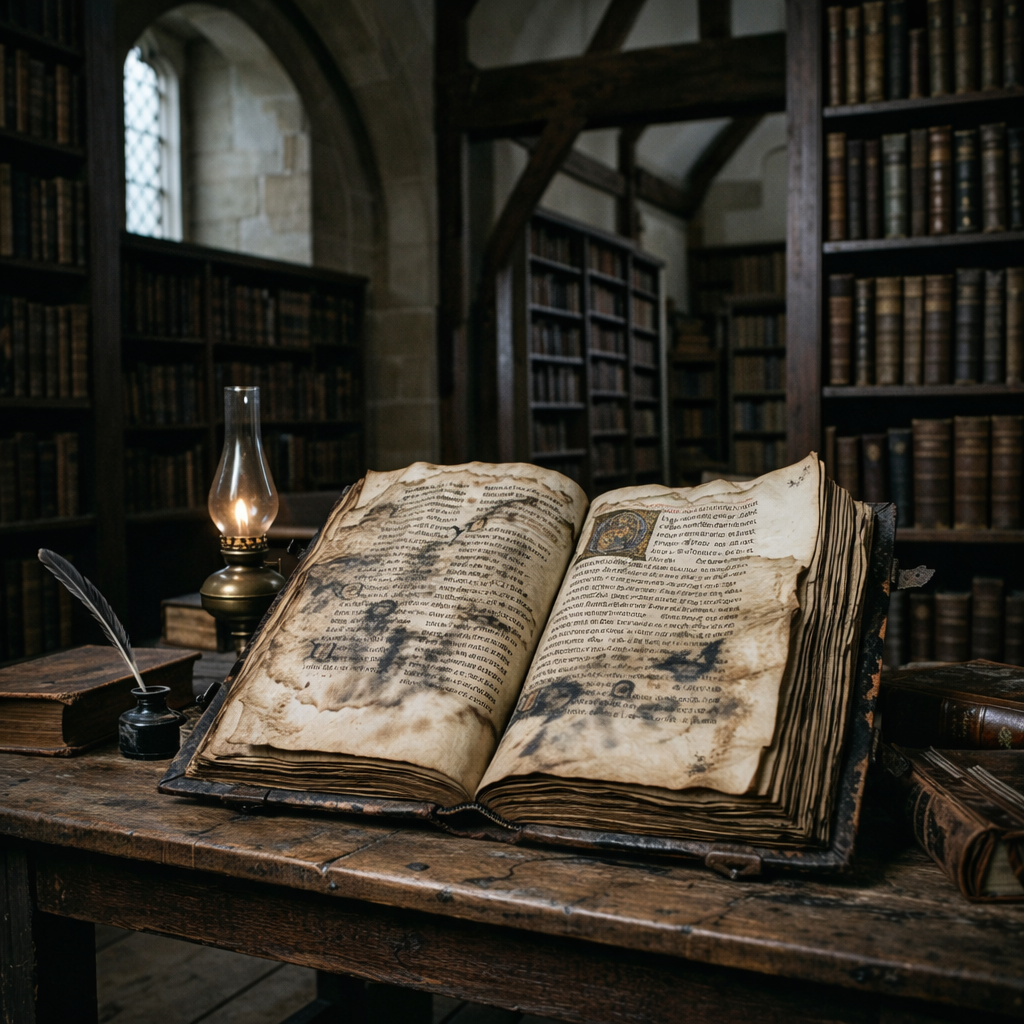
It began with a leaky roof. Our town library in Kuldīga, Latvia, had long been neglected, and when a spring storm sent water cascading through the ceiling tiles, the elderly librarian, Mrs. Ozoliņa, asked me to help salvage the storage room. Among stacks of moldy Soviet-era encyclopedias and forgotten poetry collections, my hand brushed against a leather-bound bundle tied with twine. I pulled it free, coughing dust, and unwrapped what looked like a personal journal.
The pages were written in a florid, old-fashioned Latvian script, dated 1887. Its author was a traveling schoolmaster named Jēkabs, and he had titled his work: Par Spēlēm Cilvēces Audzināšanai—”On Games for the Uphringing of Humanity.” I expected moralizing sermons. Instead, I found a radical philosophy: a lost treatise on the sacred role of sports in building a just society. That night, sitting under a flickering light, I realized this single scroll could change everything we thought we knew about our town.
Sports as Civilization’s Rehearsal Stage
Jēkabs argued that organized play was not mere child’s amusement but a crucial rehearsal for civilization. He believed that sports taught the most vital human skills in a controlled, joyful environment.
According to his notes, a proper game should achieve three things:
- Conflict without destruction: It allows people to compete fiercely without resorting to real violence.
- Teamwork through trust: It builds bonds that transcend family or tribal loyalties.
- Merit over birthright: On the field, a peasant’s son could outshine a nobleman’s, proving that ability mattered more than status.
> “The field of play is the first classroom of democracy. When a boy learns to pass the ball instead of hoarding it, he learns the very essence of citizenship.” > — From Jēkabs’ scroll, “On Games,” 1887
This was not a quaint hobby; it was a blueprint for social healing. And it came at the perfect time for our struggling town.
Why Gambling Poisoned Our Local Games
For decades, Kuldīga’s local sports had decayed. Our once-proud amateur hockey league had become a breeding ground for bitterness. The culprit wasn’t lack of talent or funding—it was gambling. Local matches had been hijacked by underground betting rings.
The symptoms were obvious:
- Players were paid under the table to throw games or underperform.
- Arguments and even fistfights erupted in the stands between rival bettors.
- Young athletes saw their heroes mocked as “fixed” and lost interest in playing fairly.
- The joy of the game was replaced by the tension of the wager.
Our town square, once filled with children playing stickball, now had sour-faced men arguing over spreadsheets of odds. Sports had become a parasite on the community, not a pillar.
Our Hockey Club Tests the Ancient Rules
I brought the scroll to a meeting of the Kuldīga Hockey Club. The hardened veterans initially laughed at the yellowed pages. But one rule caught their attention: Jēkabs proposed that any player caught accepting payment for a match be banned for life, and that the entire town should be invited to vote on the punishment publicly.
We decided to test it. We drafted a new charter for our local league, based on three ancient principles:
- Total transparency: All team finances and player contracts would be posted in the town hall.
- Community referees: Parents and teachers, not hired officials, would judge the games.
- One game, one winner: We banned overtime and shootouts; a tie meant a rematch the following week on a neutral rink.
> “Do not let the game become a servant to gold. Let gold be a servant to the game.” > — Second rule from Jēkabs’ scroll
The first season under these rules was chaotic. Teams misjudged their own strength. Parents made bad calls. But something else happened: people started talking to each other again. The arguments were about the rules, not about who had paid off the referee. Slowly, the joy returned.
Transforming Kuldīga, One Game at a Time
The change rippled far beyond the hockey rink. Inspired by the scroll, we revived other old traditions:
- Children’s relay races every Sunday morning in the park, with no prizes except a ribbon.
- Annual tug-of-war between the two banks of the Venta River, a tradition that had died out in the 1930s.
- A town-wide folk football match where the rules were written on a chalkboard the night before, and anyone could suggest a change.
Today, Kuldīga is a different place. You see it in the way teenagers greet each other—with a nod of mutual respect, not suspicion. You see it in the empty benches where the gamblers used to sit. The lost scroll did not just change our games; it gave us back our community.
> “The spirit of a town lives in how its people play. When the play is pure, the town is healthy.” > — Counsel from the final pages of the manuscript
Conclusion
That water-damaged scroll now sits in a glass case in our library. Tourists sometimes stop to read it, puzzled by its archaic handwriting. But to us, it is not a relic. It is a living document. It taught us that sports are the mirror of society—and that by fixing the mirror, we can change the reflection. Our little Latvian town will never be famous for its wealth or size, but we are proud of one thing: we remembered how to play fair.
Leave a Reply