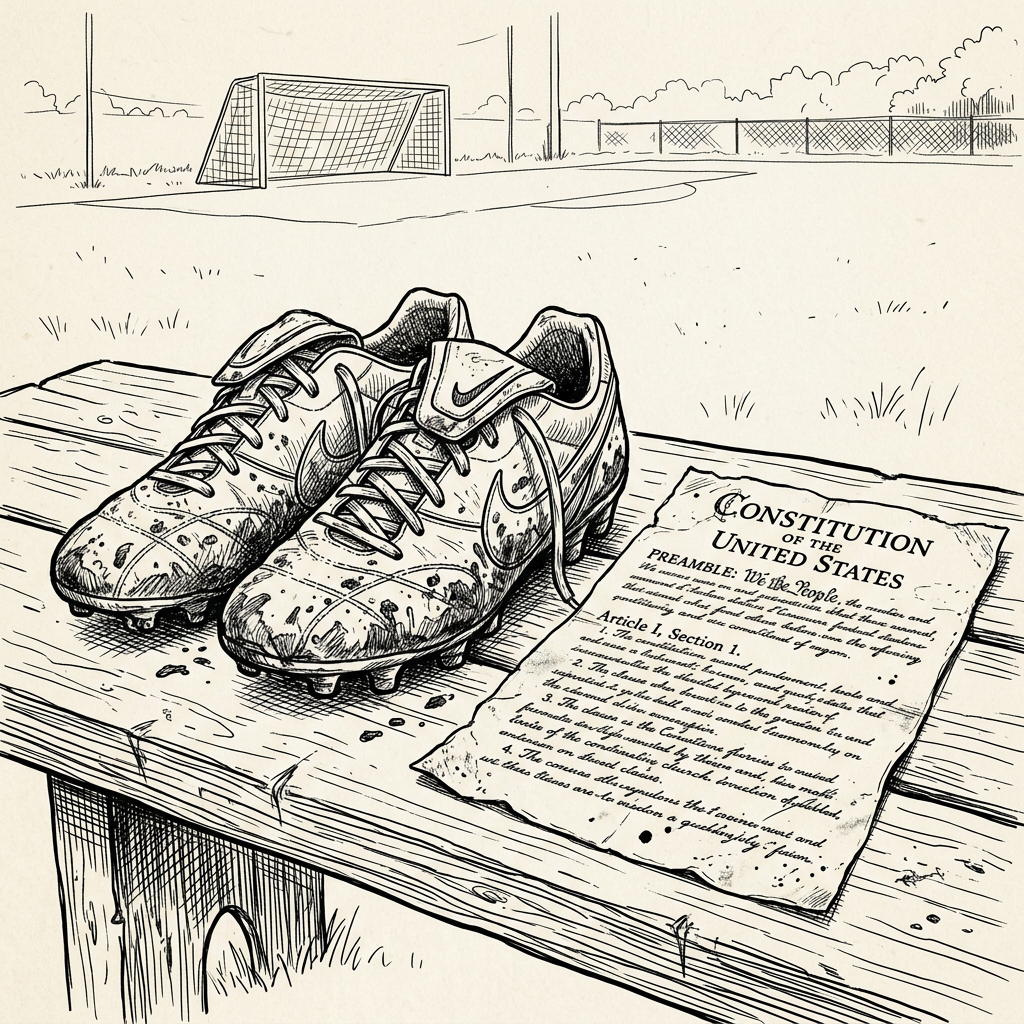
When Kicking Goals Built a Constitution
It sounds like a fairy tale, or perhaps a quirky social experiment, but in a small, tight-knit community, a local soccer club did something extraordinary: it built a government. This wasn’t a literal takeover of a country, but rather the creation of a self-sustaining, democratic micro-society. The catalyst was a shared love for the beautiful game, but what grew from those early kickabouts was a system of rules, responsibilities, and civic duty that mimicked the functions of a small state. The club became more than a weekend pastime—it became the community’s bedrock.
The Investment Rule That Became Common Law
The transformation began organically. Players and parents, tired of disorganized practices and broken equipment, started pooling money. This led to a simple but powerful rule: every member must contribute. This wasn’t a fee; it was an investment. The principle was straightforward:
- Financial transparency: All collected funds were tracked in a public ledger, visible to anyone at the clubhouse.
- Equal voice: Every paying adult, regardless of skill or background, got one vote on major decisions.
- Mandatory participation: To vote, you had to contribute time—coaching, field maintenance, or organizing events.
This “investment rule” evolved into a de facto constitution. It dictated how money was spent (always on community benefit, like field upgrades or equipment), how leaders were elected (by secret ballot), and how disputes were resolved (through a peer jury). The simple act of requiring something from everyone built a foundation of collective ownership. No one was a freeloader; everyone was a citizen.
Gambling’s First Touch — and the Kids’ Red Card
The most defining moment came when outside sponsors offered a lucrative deal. A betting company wanted to plaster its logo on the team’s jerseys, promising a huge cash injection. To many clubs, this is a no-brainer. But this community had a different priority. The club president, a former janitor, called a town hall meeting. He pointed out that 70% of the team’s youth players came from families struggling financially. He asked a pointed question: “Do we accept money from an industry that preys on the very people who come to watch our kids play?”
The debate was fierce. The board argued for the funds. But the community voted—overwhelmingly—to reject the gambling sponsorship. They issued a “red card” to the proposal. Key reasons for the rejection included:
> “We don’t want our children’s heroes promoting something that could ruin their parents’ paychecks.” — Anonymous club member at the meeting.
- Protecting vulnerable families: The community saw gambling as a direct threat to their economic stability.
- Preserving the club’s soul: They refused to trade their integrity for a quick dollar.
- Sending a message to kids: The club was a place for healthy competition, not chance-based risk.
This decision wasn’t just moral; it was legal. The club enshrined a rule in its bylaws: no partnership with any gambling entity. This became a cornerstone of their “government.”
How a Janitor Watched Democracy Form on Grass
The unlikely founder of this movement was a man named Carlos, the local school janitor. He was also the team’s most dedicated volunteer. He didn’t have power or wealth, but he had trust. After every practice, he’d sit on the grass with players and parents, listening to complaints and ideas. He noticed that the club’s problems were the same as the town’s: lack of resources, mistrust in leadership, and a desire for fairness.
Carlos proposed a simple democratic model: monthly open forums on the soccer field. Everyone sat in a circle, on the grass. No microphones, no stage. Here, the “government” was born. The key features of this “grassroots democracy” were:
- Direct participation: Anyone could speak for two minutes on any topic.
- Voting by show of hands: Decisions were made right there, visible to all.
- The “Silence Rule”: No electronic devices during meetings. Full attention to the speaker.
Carlos never ran for office. He just watched. He saw a community that had learned to govern itself by following the same principles as a good soccer team: passing the ball (sharing responsibility), playing your position (fulfilling your role), and scoring together (achieving common goals).
The Lasting Legacy of a Team‑Made Government
The club’s experiment didn’t stay on the field. Their success with democratic self-governance and ethical financial decisions inspired the actual town council. Neighboring communities started asking for advice on how to run transparent meetings. The club’s constitution was even used as a template for a local neighborhood association.
The most enduring lesson, however, is about priorities. In a world obsessed with revenue and growth, this small soccer team proved that community values can be a stronger currency than cash. By rejecting gambling, they didn’t just protect their kids; they built a fortress of trust. Their “government” was fragile, imperfect, and built on grass, but it was real.
> “A team isn’t just eleven players. It’s everyone who shows up, pays their fair share, and refuses to sell out.” — Carlos, in a later interview.
Conclusion
The story of this soccer team is a powerful reminder that governance isn’t something that only happens in parliaments. It happens wherever people agree to common rules. The team’s rejection of gambling wasn’t just a moral victory; it was a declaration of independence. They built a mini-government not on paper, but on practice—on shared sacrifice, transparent voices, and an unwavering commitment to the community’s well-being. They proved that sometimes, the most beautiful game isn’t just played on the field, but written in the bylaws of a club that chose people over profit.
Leave a Reply