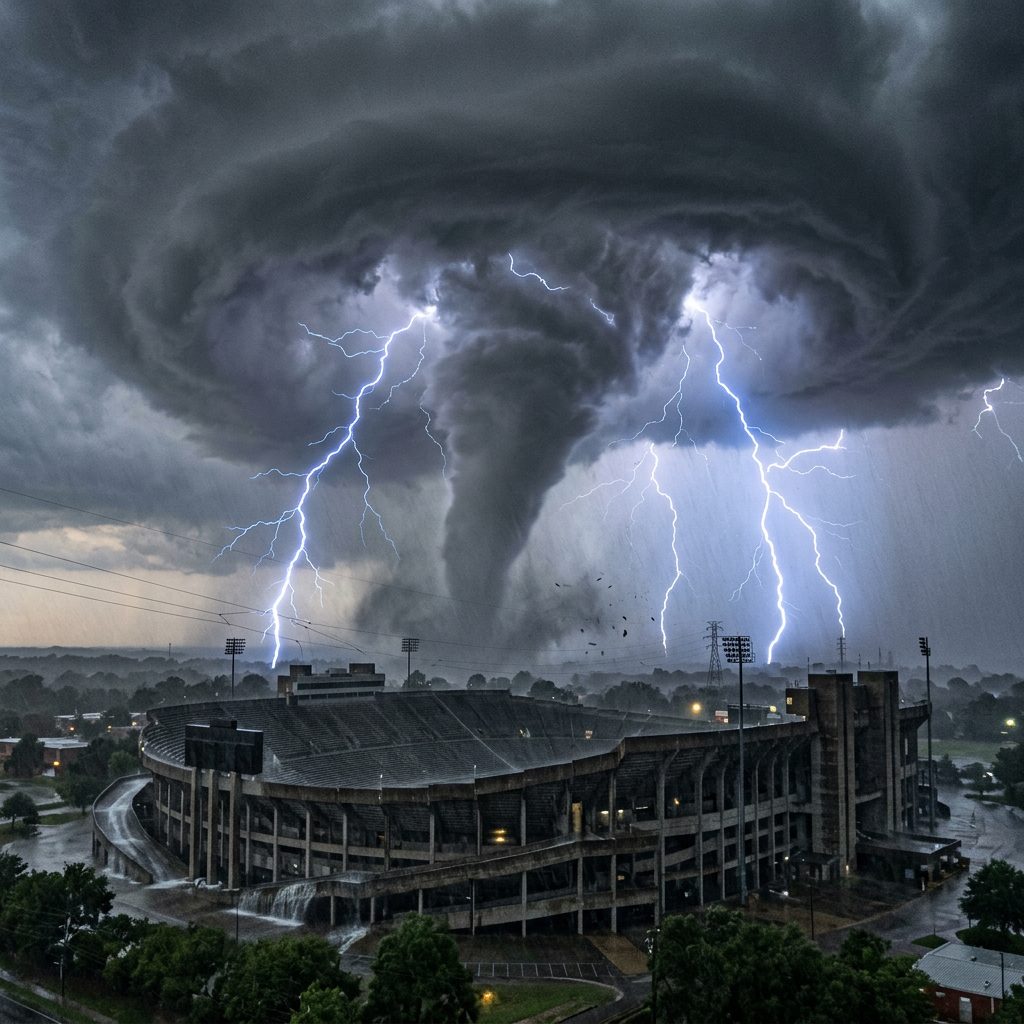
When the Storm Came for Our Town
The morning started with a strange stillness. Not the calm of a lazy weekend, but the kind of eerie silence that makes the hairs on your neck stand up. By noon, the radio was crackling with warnings that a Category 5 cyclone was barreling straight for our coastal district. In a town of barely 15,000 people, panic is a luxury we couldn’t afford. We had no high-rise hotels, no concrete bunkers, and no underground shelters. But we did have a stadium. And that unassuming patch of grass and concrete would become the single most important piece of infrastructure that night.
> “When the sky goes black and the wind starts to scream, you don’t need luxury. You need a roof that won’t fly away.”
Why We Built a Stadium, Not a Casino
Years ago, when the town council debated what to do with a plot of reclaimed land near the coastline, the arguments were fierce. Some wanted a commercial complex. Others dreamed of a casino resort to attract tourists. But a small group of engineers and community leaders pushed for a multi-purpose sports stadium. Their reasoning was simple: our region sat in the path of annual storm systems. We needed a place that could hold hundreds, even thousands, of people safely.
The stadium was built with three core principles in mind:
- Structural integrity above all – reinforced concrete columns, deep foundations, and a roof designed to withstand winds of up to 180 mph.
- Accessibility – wide ramps, multiple entry points, and enough open space to accommodate a small village.
- Utility redundancy – a backup generator, a rainwater harvesting system, and emergency storage rooms.
No one called it a disaster shelter publicly. That word scared people. We called it the community hub. But everyone secretly knew why it was built the way it was.
2,000 People, One Roof, No Power
By 4 PM, the first waves of people arrived. Families with crying infants, elderly couples clutching photo albums, and fishermen dragging their dogs on short leashes. The stadium staff worked like a well-oiled machine. They quickly sectioned off areas:
- Family zone – closest to the restrooms and medical supplies.
- Pet corner – away from the main crowd but still within view.
- Elderly and disabled priority area – near the wider exits and the backup generator.
Then the power went out. The lights died with a collective gasp from the crowd. For ten agonizing seconds, we were in total darkness. Then, with a low hum, the emergency generator kicked in. Dim, yellow lights flickered to life. No one cheered. But you could feel the tension release like a held breath.
The storm hit with fury. Rain came through the roof seams despite the engineering, and we used tarps and buckets to catch the drips. The wind howled so loud that you had to shout directly into someone’s ear to be heard. For seven hours, 2,000 people lived under one roof, sharing food, water, and stories. A local baker, whose shop was now underwater, used the stadium’s kitchen to churn out hundreds of flatbreads. A retired nurse set up a triage station with a first-aid kit and sheer willpower.
> “We had no internet, no phones, and no certainty. But we had each other, and we had this building.”
The Concrete That Held Back the Cyclone
When dawn finally broke, we stepped outside to a landscape that looked like a war zone. Trees were snapped like toothpicks, homes were flattened, and roads were buried under debris. But the stadium stood. Not a single structural beam had cracked. The roof, though dented in places, had held fast. The reinforced walls had deflected flying debris that would have shredded a wooden house.
The engineers who designed that stadium had used a technique called “tie-down anchoring” – steel cables buried deep into the ground, locking the roof structure to the earth itself. They had also installed wind-break fins on the southern side, which redirected the cyclone’s strongest gusts away from the main structure. These details, invisible to the casual observer, had saved lives.
That day, the stadium became more than a sports venue. It became a symbol of resilience. People who had lost everything told me, “I don’t know what I would have done without that place.” It wasn’t just the concrete that held back the cyclone. It was the foresight, the planning, and the refusal to build something frivolous when safety mattered more.
What Every Town Can Learn from Our Fortress
If your community is in a cyclone, hurricane, or tornado-prone region, here is what our experience taught us:
- Build for the worst-case scenario, not the average storm. A shelter that barely survives a Category 3 is useless during a Category 5.
- Invest in redundancy. Backup power, backup water, backup communication. One layer of safety is not enough.
- Train your community. We held drills because a local scout leader insisted. That familiarity made the night manageable.
- Don’t underestimate the power of simple amenities. A working toilet and a dry floor can be the difference between panic and calm.
- Make it multi-purpose. A building used daily for sports or markets stays maintained and valued. A shelter that sits empty becomes neglected and forgotten.
> “The best time to build a fortress is before you hear the sirens. The second-best time is right now.”
Conclusion
The cyclone took our roofs, our roads, and our routines. But it could not take our people. And that is because a handful of visionaries, years ago, chose to pour concrete with purpose instead of chasing profit with a casino. Our stadium is still standing today. Kids play soccer on the field where we once huddled in fear. It is a place of joy now. But we never forget what it was on that terrible night—a fortress, a sanctuary, and a testament to what happens when a community builds for the storms it knows will come.
Leave a Reply