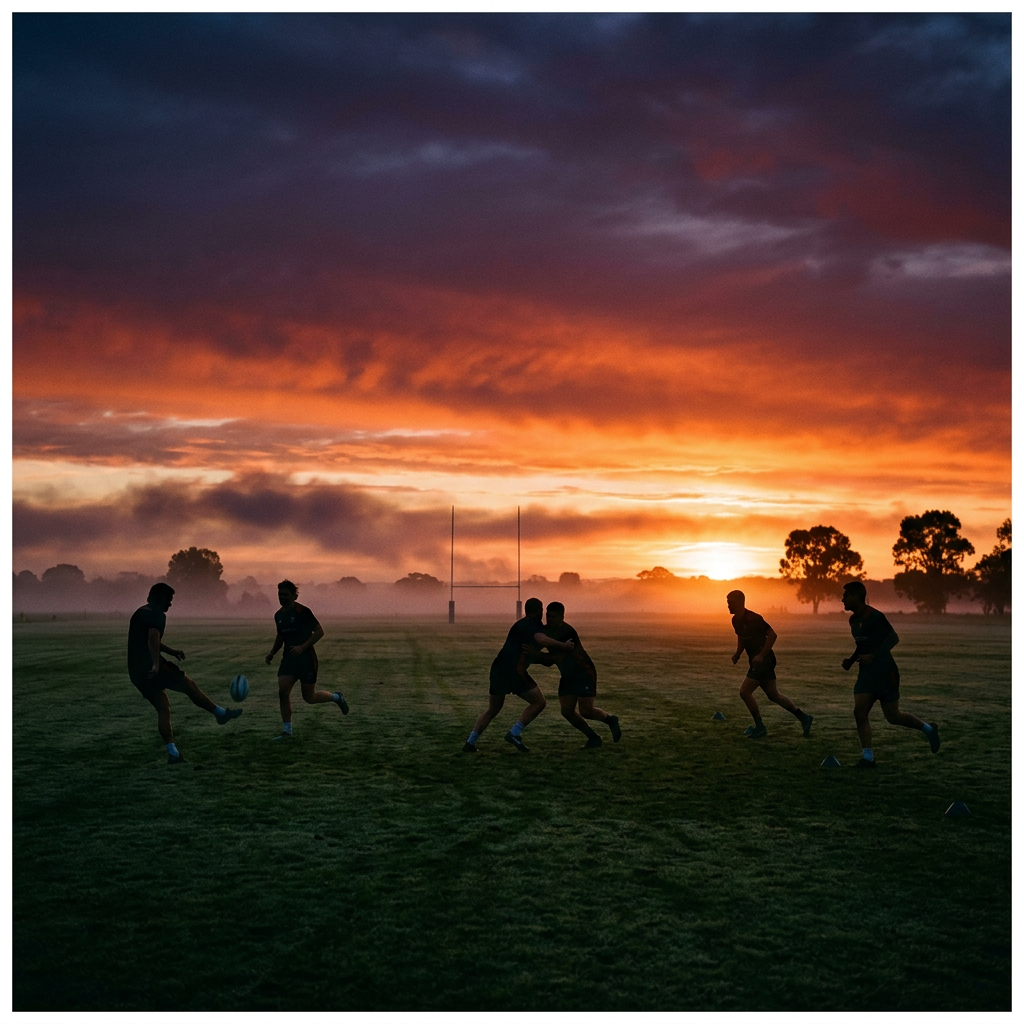
The Whisper That Changed Everything
There are moments in life when a voice cuts through the noise, and it doesn’t speak to the present. It speaks to a future so distant it feels like a rumor. For me, that voice belonged to Captain Elias. He didn’t coach us for the next game or the next season. He drilled us for a world that hadn’t been born yet—a reality that existed only in the uneasy corners of his vision. We were a ragtag group of teenagers, sweating under the floodlights, running plays that felt like algebra equations. But he saw something we couldn’t: a storm on the horizon, and the need for a new kind of readiness.
Banning Luck in a Game of Survival
Captain Elias had a single, unforgiving rule: luck is a liar. He believed that relying on chance was the fastest way to fall apart. So, he built a system designed to eradicate randomness.
- Decision Trees: Every choice on the field had a predetermined branch. If Plan A failed, Plan B wasn’t an option—it was a reflex.
- The No-Excuse Rule: Fatigue, weather, or a bad call were never reasons to stop. He’d say, “The world won’t care that you’re tired. It will care if you drop the ball.”
- Repetition Until Boredom: We practiced the same five-yard pass until our arms ached. He wanted the mechanics to be background noise, so our minds could focus on the unseen.
> “You don’t get to pick the moment. The moment picks you. The only question is if you’ve already rehearsed for it a thousand times.”
He treated the field like a survival game, not a sport. He was preparing us for a war where hesitation meant defeat—a war we didn’t even know was coming.
Drills for a World We Couldn’t See
The drills were strange, almost philosophical. They didn’t mimic any real opponent. Instead, they trained us for uncertainty itself.
- The Blind Shift: We would run formations with one player blindfolded. The rest of the team had to guide them using only coded verbal signals. This taught us to trust communication when sight failed.
- Silent Quarters: Entire practice sessions where no one was allowed to speak. We learned to read body language, shifts in weight, and the rhythm of breathing. It was terrifying and liberating.
- The Time Slip: Captain would suddenly call for a change of pace—three seconds to adjust from a slow jog to a full sprint. He was conditioning our nervous systems for the abrupt shifts of a world in flux.
He was less interested in winning a trophy and more in building a crew that could navigate a blackout, a collapse, or a revolution. We were learning to be fluent in chaos.
Building Civilization, One Practice at a time
Slowly, the drills began to feel less like sports and more like the blueprint for a small society. We weren’t just teammates; we were a training unit for a future community.
Key pillars of this “civilization drill”:
- Accountability as Currency: If you failed a drill, you didn’t run laps. You had to explain to the team, verbally, why you failed. This bred a culture of honesty, not shame.
- Collective Memory: We had to memorize each other’s strengths and weaknesses. A player who knew where to stand to cover for a slower teammate was worth more than any star athlete.
- Ceremony in the Mundane: Every practice started with a shared chant that wasn’t a cheer. It was a reminder: “We hold this space together. We are each other’s shelter.”
> “A team is a city that moves. If your city can’t move together, it will crumble in the first earthquake.”
Captain Elias was building a moving civilization, one built on reflex, trust, and the willingness to be uncomfortable for the sake of the whole.
The Benchwarmer’s View of a New Dawn
I was never the star. I spent most of my time on the bench, watching the drills unfold from a distance. From there, I saw the full architecture of his plan. The team that ran those drills didn’t just win games; they became a strange, resilient family. We learned that the world that wasn’t born yet is already pressing against the door. It’s the world of climate crises, economic shifts, and social change. Captain taught us that you can’t wait for that world to arrive to start preparing for it.
Years later, when the pandemic hit and the world paused, I didn’t panic. I felt the eerie calm of having been drilled for the unknown. My friends who were on that team called me. They said the same thing: “We’ve been here before. In practice.”
We were benchwarmers for a new dawn, but Captain had made sure we were ready to step onto the field when the rules changed. He didn’t just coach a sport. He planted a seed of adaptive courage that would bloom decades later.
Conclusion
The captain drilled us for a world that wasn’t born yet, but that world is now our reality. The drills felt absurd in the warm sun of youth, but they were the invisible scaffolding for a life built on readiness. We don’t play the game anymore, but we still move through life with the echoes of those silent quarters and blind shifts. The lesson endures: the best way to face the unknown is not to predict it, but to practice for its shape—with trust, repetition, and the quiet certainty that we can hold the space for each other, no matter what dawn arrives.
Leave a Reply