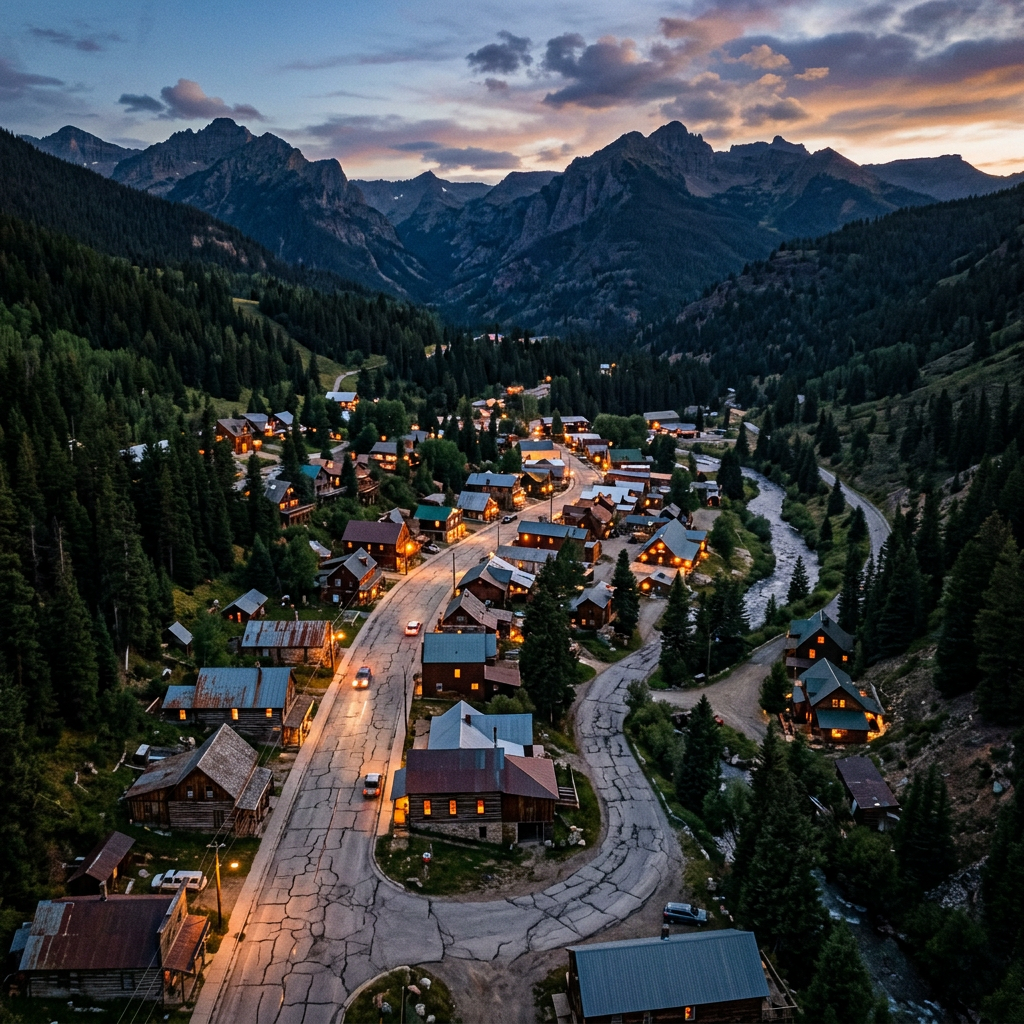
It started with a whistle. Not the kind that signals a foul, but the kind that ends a game—and a way of life. I remember the crisp autumn air in Bovec, a small mining town nestled between jagged peaks and fading hope. We had our Friday night high school football, a diner that served the best greasy fries this side of the Rockies, and a quiet desperation that hummed beneath the surface. No one suspected that the man in the striped shirt, the one we cheered for every Friday, was keeping a different kind of score. His ledger didn’t track yards gained or points scored; it tracked debts, favors, and the slow, silent death of our town’s soul.
The Night I Saw the Ledger
It was a Tuesday, three weeks before the state championship that never happened. I was working late at the Bovec Gazette, the local paper that was barely clinging to life. A knock came at the back door. It was Old Man Thorne, the town’s mechanic and my unofficial source for everything that mattered. He didn’t speak. He just shoved a worn, leather-bound book into my hands. The pages were yellowed, the ink smudged, but the numbers were clear. Names I knew—the baker, the sheriff’s deputy, the high school principal—were listed next to figures that made my stomach turn. Each entry was a marker, a debt of honor that had become a chain of shame. The last page was dated the previous Friday. The final entry read: “Bovec Titans: -17 points. Payment due: The Town.”
A Town’s Hidden Gambling Web
I had always suspected the whispers. The sudden wealth of some families, the quiet foreclosure of others. But this ledger revealed a sprawling network I couldn’t have imagined. It wasn’t just a few bad bets. It was a system, built on intimidation and shared complicity.
- The Bookies: Local business owners who ran the odds from back rooms.
- The Runners: Kids barely out of high school, paid to collect envelopes of cash.
- The Insiders: Coaches and players who were paid to shave points or throw critical plays.
- The Enablers: A silent majority who looked the other way for the promise of a quick payout.
The town was a closed loop of debt and desire. Every paycheck that went to the bookie was a bet against our future. And the ledger showed it all: the names, the amounts, the dates when ordinary people became accidental criminals. The referee’s name was there too, written in a shaky hand: “Markus Voss – Balance: The Soul of Bovec.”
The Referee’s Warning Words
I tracked down Markus Voss at a motel ten miles out of town. He was a ghost of the man I remembered from the sidelines—stooped, pale, his hands trembling. He didn’t deny it. Instead, he leaned in close and whispered a truth that will haunt me forever:
> “You think I started this? No. I just wrote it down. The real gamblers were the ones who thought they could bet on everything and lose nothing. The game was already rigged long before I blew the whistle. I just kept the score.”
He told me he wasn’t the mastermind, but the accountant. He recorded the bets to keep the peace, to prevent violence. But a ledger of peace is still a ledger of crime. His final words to me were: “Burn it. Or let it burn the town.” I couldn’t do either. The ledger was evidence, but it was also a mirror.
Score of Doom for Our Town
The night the story broke, Bovec died. Not in a single explosion, but in a series of quiet, devastating events.
- The football team forfeited the championship. Scholarships vanished. College scouts stopped calling.
- The biggest employer—the mine—cited a loss of community trust and pulled its expansion plans, laying off 200 workers.
- The bank called in loans. Main Street boarded up within a month.
- Families fractured. Divorces, fights, and whispered accusations tore through the town like a wildfire.
The scoreboard at the football field still stands, but the numbers are frozen at 0-0. It’s a fitting epitaph for a town that gambled everything on a lie. The referee’s ledger didn’t record a winning bet—it recorded the final tally of our collective loss. Every name in that book was a player in a game where the house always wins, and the house was our own willing blindness.
How Greed Broke Bovec’s Spirit
Looking back, the gambling was just a symptom. The real disease was greed, dressed up as hope. We wanted to believe we could beat the odds, that we were special. Bovec was a town of hard workers who forgot that the hardest work is building something honest.
> The saddest part isn’t the money lost. It’s the trust that was stolen. You can rebuild a mine, fix a stadium, or reopen a diner. But you cannot buy back a community’s faith in itself.
Markus Voss went to prison for conspiracy and fraud. I visited him once. He didn’t ask for forgiveness. He just said: “The worst gamble is betting your integrity on a sure thing. There are no sure things.” Bovec is a ghost town now, a cautionary tale whispered by wind through empty storefronts. The referee’s ledger sits in a sealed evidence box at the county courthouse, a monument to the day we learned that the only score that matters is the one written on your conscience.
Conclusion
I left Bovec a year after the trial. Sometimes I still see the ledger in my dreams: those neat columns of debt, the cold arithmetic of ruin. But I also remember something Old Man Thorne said as I handed him back the book: “We were all playing a game we didn’t understand. The referee just kept the score—we kept the shame.” If there’s a lesson in the dust and silence of our town, it’s this: don’t bet what you can’t afford to lose. And never, ever trust a man who wears a striped shirt and carries a leather book. In the end, the only winner was grief.
Leave a Reply