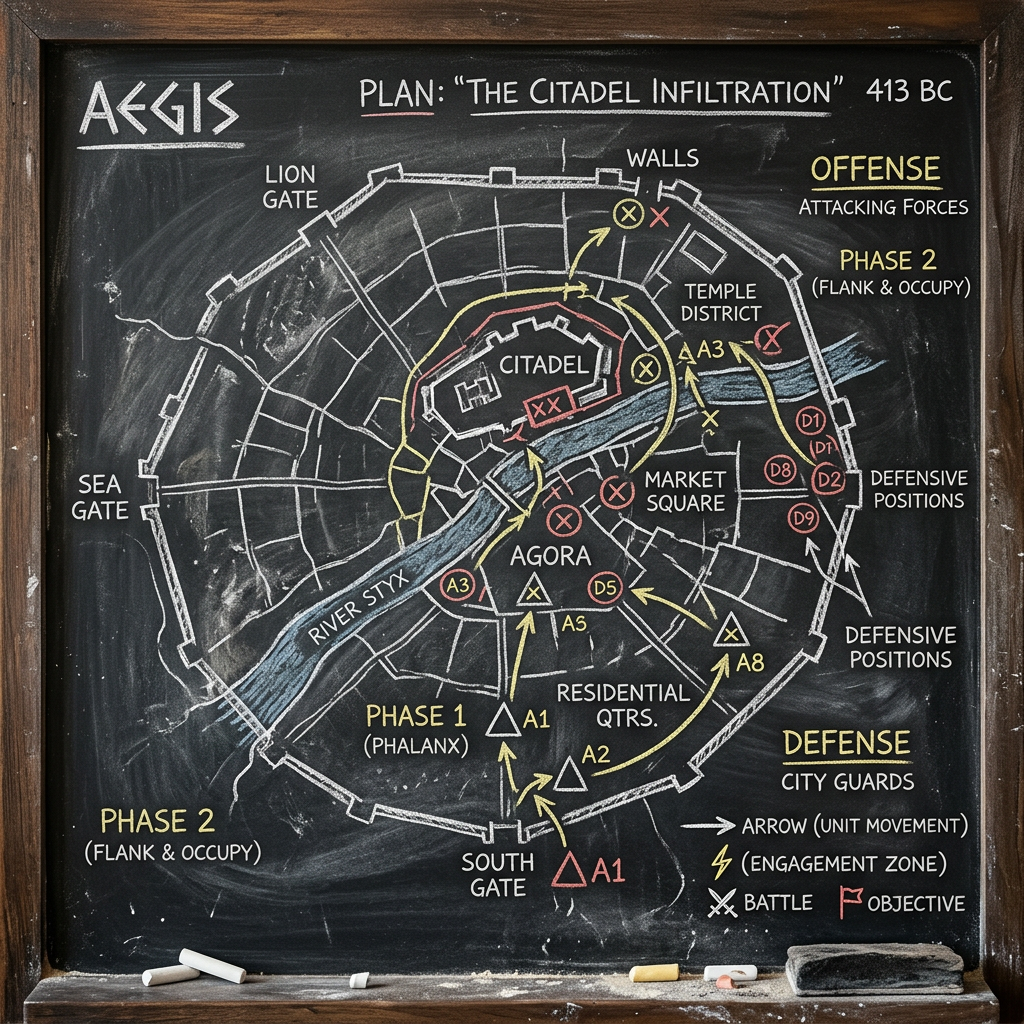
The Playbook That Looked Like an Ancient Map
It started with a dusty whiteboard marker and a coach who had a penchant for circular diagrams. Our team had been struggling for weeks, churning through offensive sets that felt clunky and disjointed. Then, one afternoon, our head coach, Mike, drew up a new play. He didn’t use the usual straight lines and crossing arrows. Instead, he sketched a series of concentric circles connected by curved paths. I squinted at the board. It didn’t look like a basketball play. It looked like a medieval fortress map.
The room fell silent. Someone muttered, “That’s a city wall.” Others laughed, but Mike just smiled. He explained that the play—nicknamed The Keystone—required our point guard to hold the center, while the wings rotated along the arc, creating a “rampart” of passing lanes. The visual was uncanny: our five players would form a pentagon within the key, with the center as the keep. Suddenly, the court didn’t feel like a rectangle of hardwood; it felt like a bastion under siege. The playbook had accidentally become an ancient cartographer’s dream.
When a Coach Saw Cities in Our Formations
Mike had always been obsessed with historical military tactics. He once told me that the best sports strategies are just battles fought in slow motion. “Think about it,” he said during a timeout. “The Greeks used the phalanx—tight, overlapping shields to protect the center. That’s a zone defense. The Romans used the testudo—a tortoise shell formation—to advance under fire. That’s a fast break with a screen.” He wasn’t wrong.
What we saw that day was his brain connecting two worlds. The play called The Drawbridge relied on sudden gaps opening in the defense, like a portcullis lifting. The Watchtower formation had a single player stationed at the top of the key, surveying the court like a sentinel. When we ran these plays in practice, our opponents couldn’t react fast enough. The geometry was too alien. They were used to modern, linear offenses; we were feeding them medieval siege lines.
- Key insight: A formation is only as strong as the story it tells.
- Coach’s note: If your team can visualize your play as a place they can defend, they will fight for it.
- Pro tip: When designing a set piece, try to see the empty spaces as “moats” and the filled spaces as “walls.”
Why Every Strategy Carries a Hidden Blueprint
This experience taught me something profound: no strategy is purely abstract. Every system we build—whether for a boardroom, a battlefield, or a basketball court—carries a hidden blueprint of previous cultures and ideas. The playbook wasn’t just X’s and O’s; it was an echo of a medieval settlement trying to survive against an invading army. The defensive shell we created mirrored the curved walls of a castle, designed to deflect frontal assault. Our offensive rotation traced the path of a patrol around a parapet.
The truth is that humans have been solving problems with similar geometric patterns for millennia. We just give them different names. In the 15th century, engineers designed star fortresses to eliminate blind spots. In the 21st century, we call those trapping angles. The blueprint is the same. The language has changed.
> Quote from Mike: “Every great offense is just a siege. You are either breaking down a wall, or you are building one.”
The Ancient Fortress Hidden in Our Team’s Plays
Once we recognized the pattern, we started seeing castles everywhere. The pick-and-roll became a battering ram—two players converging to crush a single defender. The zone defense evolved into a curtain wall, with the weak-side defender acting like a secondary gate. The most beautiful moment came during a championship game. Our opponents, a powerhouse team from across the state, ran a famous press break called The Cyclone. It was designed to confuse with motion.
We countered with The Bastion. Our point guard (the lord of the keep) held his position at the center of our half-court. The wings (the archers on the walls) spread out to the corners. The forwards (the gatekeepers) sealed the elbows. The result? They couldn’t penetrate our layout. They bounced off our perimeter like enemy infantry hitting a stone wall. The scoreboard told the tale: we held them to their lowest point total of the season.
- The lessons we learned:
- Structure creates security. When every player knows their “post on the wall,” confidence grows.
- Adapt ancient tactics to modern speed. A castle is slow; a fast break is not. Find the crossover.
- Name your formations with imagery. Calling a play “The Tower” gets more buy-in than “Spread Motion 2.”
Gambling Against the Walls We Built Together
There is a risk, of course, in leaning too hard into metaphor. A fortress can become a prison. We nearly lost a game when we refused to abandon The Bastion against a three-point shooting team that simply bombed us from outside the walls. The castle principle only works if the enemy doesn’t have trebuchets. We had to gamble. We had to take a chance and leave our walls to chase shooters on the perimeter.
The gamble paid off because we understood the blueprint’s limits. A fortress is designed for siege, not for cavalry pursuit. So we swapped our heavy infantry for light skirmishers—we went to a full-court press that looked less like a castle and more like a cavalry charge. The game turned on a single possession: our fastest guard intercepted a pass near center court, and we scored in transition. The walls had fallen, but we had won.
> Final advice from our team: “Build your walls to protect you, but leave a door open for the counterattack.”
Conclusion
What started as a joke—a whiteboard drawing that resembled a medieval map—turned into the defining philosophy of our season. The playbook looked like an ancient fortress, but it taught us something eternal: all strategy is just a conversation with the past. We are all projecting old shapes onto new turf. Whether you are running a football pattern, coding a software architecture, or planning a corporate merger, look for the hidden city in your design. The walls you build together might be the strongest strategy you ever find.
Leave a Reply