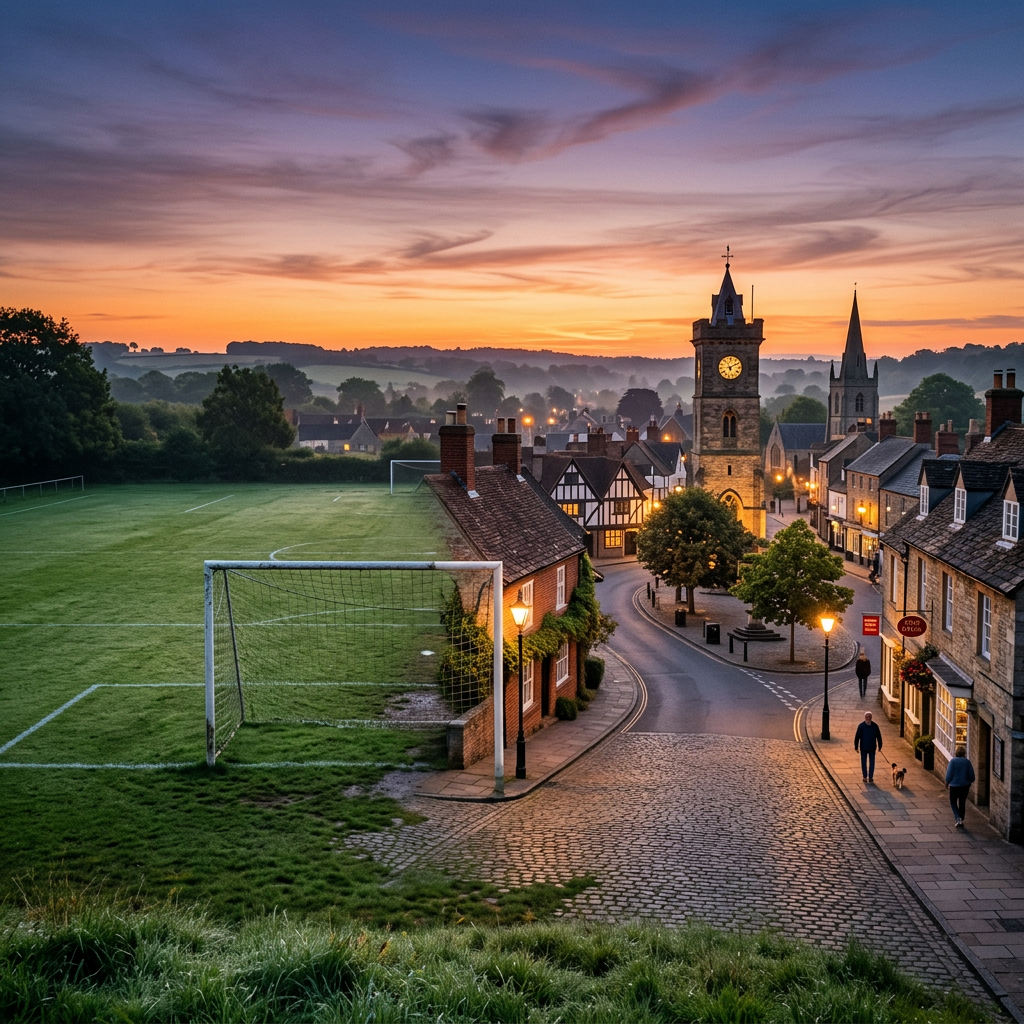
The Whistle That Changed Everything
It was a crisp autumn evening, the floodlights casting their familiar glow over a small-town soccer pitch. The home team was trailing by a goal, the crowd was restless, and the referee was about to blow the whistle for the second half. But instead of a tactical substitution or a motivational speech, something extraordinary happened. The players didn’t return to the field. They didn’t jog back for a corner kick or argue with the official. They simply walked off—cleats in hand, jerseys untucked—and never finished the game. This wasn’t a protest over a bad call. This was something deeper. This was a group of soccer players leaving the game to save their town.
Why They Left the Pitch Mid-Match
The reason wasn’t written in any playbook. Minutes before the halftime whistle, a player received a frantic phone call from his wife. The local dam—the aging concrete structure that held back the river running through their town—was showing signs of failure. Heavy rains the previous week had swollen the reservoir, and engineers had flagged an emergency. The town’s emergency services were stretched thin, and the only people within walking distance of the dam were the 22 men and women on that soccer field.
This wasn’t a decision made lightly. Soccer was more than a hobby in this community; it was a lifeline. The team had trained together since childhood, and their matches were weekly gatherings for neighbors, shopkeepers, and farmers. But as the players huddled in the locker room, they knew that saving the game meant nothing if there was no town left to play in. Within minutes, they agreed: the match was over. The real game was about to begin.
Marching Into Town, Not the Locker Room
What followed was not a chaotic scramble but a coordinated effort. The captain, a local firefighter by trade, took command. He divided the squad into teams: one group would head to the dam to reinforce sandbags, another would run door-to-door alerting elderly residents along the riverbank, and a third would commandeer the team’s minibus to transport children and pets to higher ground. The players didn’t even change out of their kits. They ran straight from the pitch, still wearing shin guards and muddy jerseys, into the dark streets of their town.
> “We didn’t need a memo or a meeting. We knew every alley, every drainage ditch, every family that lived near the river. We were the fastest response team they had.”
The crowd, initially confused and angry, soon understood. Spectators joined the effort. The local hardware store owner threw open his doors, handing out shovels and flashlights. A grandmother who had been cheering from the bleachers began organizing a makeshift shelter at the town hall. The team had become the catalyst for a community-wide mobilization.
Fixing Streetlights Instead of Scoring Goals
One of the most striking moments of the night came when a group of players noticed that several streetlights near the evacuation route had gone out, making it dangerous for cars and pedestrians. Without a second thought, they climbed ladders, replaced bulbs, and reconnected wiring. They were not electricians, but they were resourceful. One player, a former construction worker, used his knowledge of the town’s infrastructure to reroute water flow away from a collapsing embankment. Another, a nurse, set up a triage station in the local school gymnasium.
They didn’t score goals that night. Instead, they fixed streetlights, filled sandbags, and carried sleeping children to safety. The match scoreboard remained frozen at 1-0, but the real score was being written in the resilience of their town.
| Task | Players Involved | Outcome |
|---|---|---|
| Sandbagging the dam | 8 players | Prevented overflow |
| Evacuating homes | 6 players + 4 volunteers | 40 residents relocated |
| Restoring power | 3 players with electrical experience | 5 blocks relit |
| Medical triage | 2 players (nurse + EMT) | 12 minor injuries treated |
How One Night Saved Our Community
By dawn, the rains had stopped, and the dam held. The town was battered but intact. There was no flood, no loss of life, no missing children. The players stood exhausted, covered in mud and grime, their soccer jerseys now unrecognizable. But they were heroes.
In the weeks that followed, the town rebuilt stronger. A new community emergency plan was drafted, with the soccer team officially listed as a first-response unit. The town council voted to repurpose the old floodlights from the pitch into permanent lighting for the evacuation route. And the team? They finished their season—not with a championship trophy, but with something far more valuable: the knowledge that they had played the most important match of their lives off the field.
> “We practice for 90 minutes every week. That night, we practiced for our neighbors.”
Conclusion
Soccer is often called “the beautiful game,” but its beauty isn’t limited to perfectly curved free kicks or last-minute winners. Sometimes, the most beautiful moments happen when the whistle stops blowing—when players realize that the field stretches far beyond the chalk lines. The story of a team walking off the pitch to save their town is a reminder that true sportsmanship isn’t about winning a match. It’s about showing up when your community needs you most. And when those players left the game that night, they didn’t forfeit a match. They won something eternal.
Leave a Reply