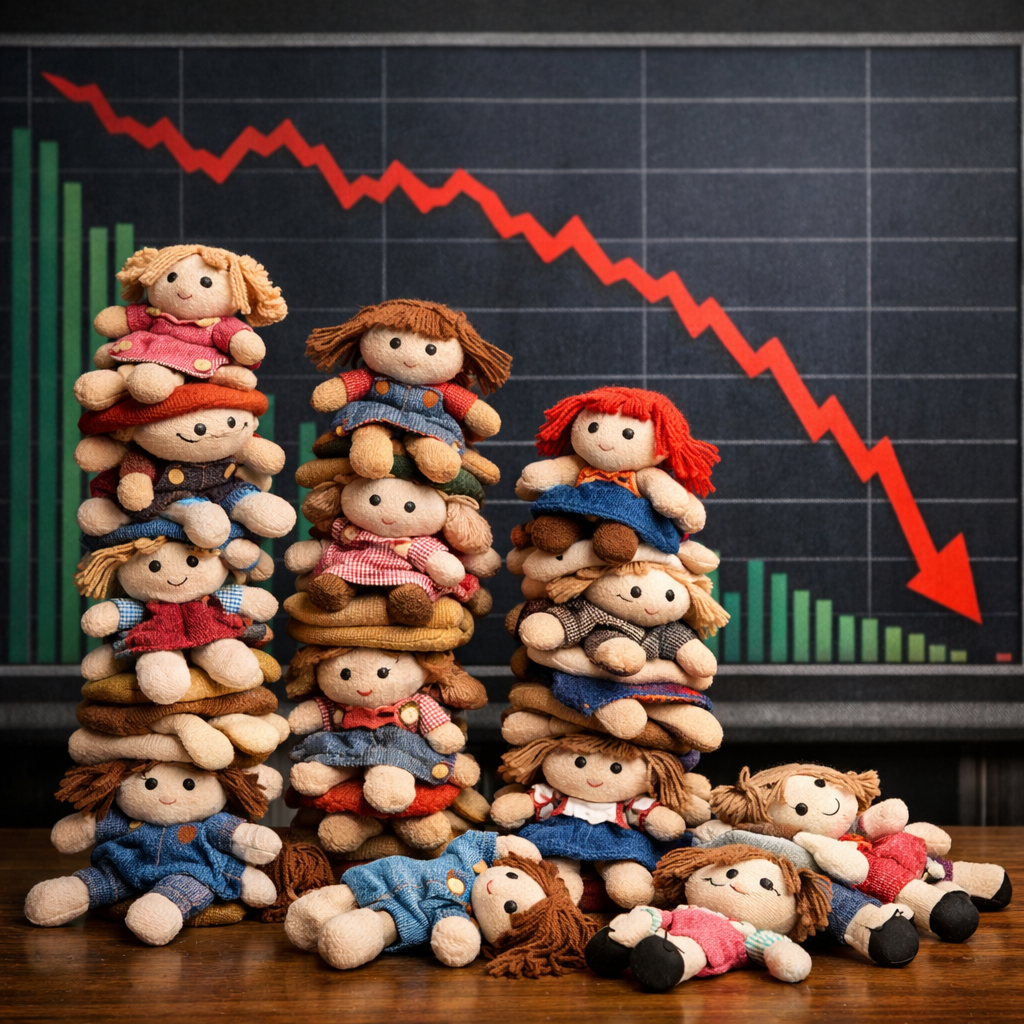
When Paper Money Failed but Dolls Didn’t Die
The first sign of trouble wasn’t a stock market crash or a bank failure. It was a whisper—the local grocery store doubling the price of a loaf of bread overnight. I remember standing in the checkout line, clutching a twenty-dollar bill that suddenly felt like a piece of historical fiction. Around me, neighbors started hoarding flour, selling heirlooms, and arguing over vegetable seeds.
Meanwhile, in my quiet corner of the world, a different kind of economy was blooming. I had spent years building My Doll Village—a small collection of handmade cloth dolls, tiny houses fashioned from scrap wood, and miniature furniture crafted from twigs and thread. It was a hobby, a creative escape. But as the national currency began to wobble, this little world of stitched faces and painted teacups became something far more valuable.
What started as a sanctuary for my sanity turned into a survival mechanism when the macro-economy collapsed.
The Day I Stitched a New Economy Together
It happened on a Tuesday. A neighbor, desperate for a birthday gift she couldn’t afford from a store, asked if I could make a simple rag doll for her daughter. She offered me a jar of homemade jam in trade. I said yes.
That single exchange cracked open a door. Within weeks, my doll village transformed from a private sanctuary into a barter hub:
- One doll (8 inches, cotton dress) = 3 dozen eggs
- A set of miniature wooden chairs = 2 bags of dried beans
- Hand-knitted doll sweater = 1 hour of babysitting
- Custom family of dolls = 10 pounds of potatoes
The numbers were absurd by pre-collapse standards. But in our new reality, these trades felt like gold. I didn’t need cash; I needed food, medicine, and labor. The dolls became a portable, desirable currency that held its value because people craved beauty, comfort, and a reminder of normalcy.
> “In a world where numbers on a screen become meaningless, a doll that makes a child smile is worth more than a barrel of oil.” — An elderly neighbor who traded her grandmother’s sewing machine for a full dollhouse set.
Why Silent Neighbors Are Better Than Bankers
One of the most surprising outcomes of this shift was the social change. Before the collapse, I barely knew my neighbors. We exchanged polite nods, but our lives were siloed behind locked doors and digital screens. My doll village changed that.
I started hosting “sewing circles” in my living room. These weren’t just crafting sessions; they were forums for trust. We didn’t sign contracts. We didn’t use apps. We built relationships through shared needles and thread.
The key principles that emerged were simple:
- Trust over paper: A handshake and a finished doll meant more than a legal document.
- Skills over savings: A neighbor who could fix a broken shovel was richer than one with a dusty bank account.
- Silence over noise: We didn’t argue about politics or blame governments. We focused on what we could build with our hands.
The dolls were silent, but they brokered peace. No one tried to counterfeit a handmade button eye. No one inflated the price of a tiny felt hat. The economy of my village became, in a way, more ethical than the one that had crashed.
Metrics That Stayed Steady While Markets Crumbled
While global indices like the S&P 500 plummeted and unemployment skyrocketed, my doll village had its own metrics. They were unconventional, but they told a true story of stability:
| Metric | Before Collapse | During Collapse | Doll Village Impact |
|---|---|---|---|
| Trust Level in community | Low (40%) | Rising (85%) | High |
| Daily stress (self-reported) | High (8/10) | Decreasing (4/10) | Low |
| Food security (from trades) | Declining | Steady | Improving |
| Creative output (dolls/week) | 2 | 8 | High |
| Barter transactions | Rare | Daily | Sustained |
The dolls didn’t lose value overnight because their value was intrinsic. A doll isn’t a speculative stock—it’s a physical object that carries time, care, and emotion. In a collapsing economy, those things become the only real currencies left.
Finding Peace in a Village of Cloth and Calm
Today, the news tells me the economy is slowly recovering. Banks are reopening. Numbers are adjusting. But I don’t feel the rush to go back. My doll village taught me something the textbooks never did: wealth is not a bank balance; it’s a network of mutual care.
I still trade dolls for eggs. I still host sewing circles. And every time I see a child clutching a doll I made—or a neighbor smiling over a miniature tea set—I know I’ve found an economy that works.
> Tip for anyone starting their own sanctuary: Begin with what you have. A scrap of fabric, a bit of yarn, a willing heart. The economy doesn’t care about your credentials—it cares about your contribution.
The rooms in my house are no longer just rooms. They are marketplaces of hope. The dolls sit quietly on their shelves, but they have reshaped my world.
Conclusion
When the big banks fell and the government sent confusing checks, I retreated not into fear, but into creation. My doll village became a sanctuary—not just from economic collapse, but from the loss of meaning that collapse brings. I learned that the smallest, most handmade things can become the largest foundations for a new way of living.
The collapsing economy didn’t destroy my world. It just showed me that I could build a better one, one stitch at a time.
Leave a Reply