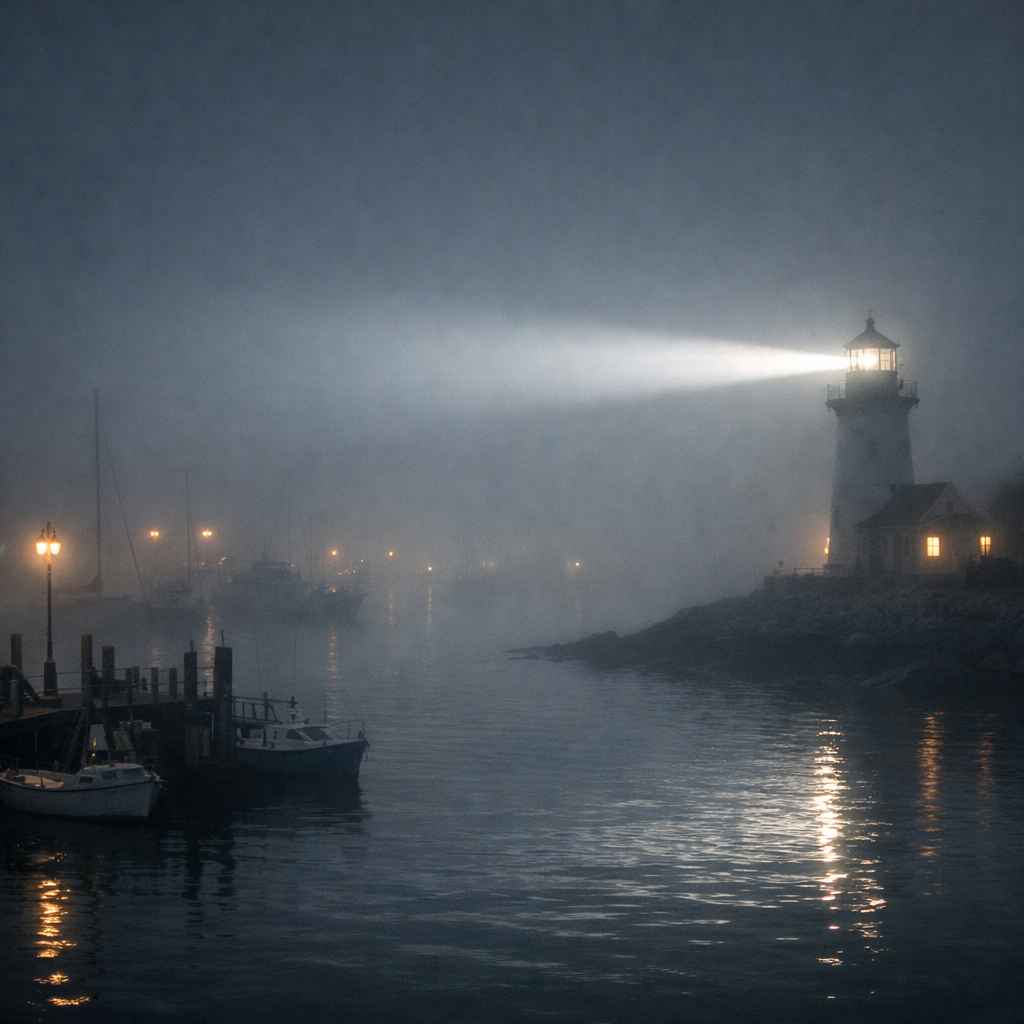
When the Fog Ate Sound and Markets Died
The fog didn’t roll in—it devoured. There was no gentle creep of mist, no softening of edges. One morning, the sky turned the color of old milk, and the world fell silent. The fishing boats couldn’t hear their horns. The coastal radios went dead. And the market—the last great trading post on the cliffside—plunged into chaos.
For three days, the fog didn’t lift. It swallowed every frequency, every signal, every whisper of data. The traders, who relied on a fragile network of sports index feeds and real-time odds updates, found themselves staring at blank screens. No numbers. No spreads. No bets to place. Only the sound of the sea gnawing at the rocks below.
I was there, watching from my small stone tower. I’d been a lighthouse keeper for thirty-seven years. I knew fog. But this was different—it wasn’t just weather; it was a digital blackout. And the market, teetering on the edge of a panic, needed a new kind of light.
The Lighthouse That Became a Signal Tower
My lighthouse wasn’t built for data. It was built for ships. But when the radios died, the traders started looking up at my beam. They had no way to verify prices, no way to confirm trades. Rumors spread like wildfire: the index is crashing, the fix is in, the whole market is a lie.
I began doing something I hadn’t done in decades. I climbed to the lantern room and started flashing coded signals—long and short bursts of light, using an old maritime alphabet. It was crude, but the traders were desperate enough to watch. I signaled the key numbers: the sports index held steady at 4,215. No crash. No manipulation. The fog had only eaten the sound, not the truth.
> “When the world goes quiet, the light must speak for itself.”
Within hours, the traders had set up a relay: a man with binoculars on the cliff, another with a chalkboard in the square. My flashes became the market’s only source of truth. The lighthouse had become a signal tower—not for ships, but for sanity.
Why the Sports Index Refused to Panic
You might wonder: why did the sports index matter so much? Because it was the bedrock. The market had long ago tied its health to the index—a composite of game outcomes, player stats, and betting flows. It was a self-correcting system, designed to absorb shocks. But in total silence, even the best system looks fragile.
I learned later that the index’s algorithms had a failsafe: when all external data vanished, it paused, locked in place, refusing to update. It didn’t crash. It didn’t spike. It sat there, patient as stone. The traders, who had seen bubbles burst and dominos fall, were stunned. The one thing they expected to break—the index—had simply decided to wait.
That decision saved the market from a cascade of panic sells. Without a signal to chase, the herd had nothing to stampede over.
> Key lesson: A system that knows when to freeze is smarter than one that always reacts.
Saving the Last Market from Machine Chaos
But not everyone trusted the light. A group of algorithmic traders—the ones who had never known a world without instant data—refused to believe my flashes. They said it was a hoax. They tried to launch their own fix: a mesh network of drones, buzzing into the fog to re-establish connections.
It was a disaster. The drones collided. The signals tangled. And the machines, starved of clean input, started inventing data. They generated phantom trades, ghost odds, false spreads. Chaos was descending.
I had to act. I climbed down from the tower, walked into the square, and faced the machine traders directly. I told them:
> “The fog will lift. The data will return. But right now, you have one source of truth: my light. Follow the flashes, or drown in your own noise.”
It was a gamble. But one by one, they shut down their drones. They pulled out binoculars. They started watching the tower again. The last market didn’t need faster machines—it needed a keeper’s patience.
A Keeper’s Light in a Flickering World
The fog broke on the fourth day. The sun came back. The radios crackled to life, and the screens lit up with the sports index at 4,218—three points higher than when the silence began. The market exhaled.
I returned to my tower, cleaned the salt off the lenses, and let the automation take over again. But something had changed. The traders no longer saw me as a relic. They saw the lighthouse as a failsafe, a last-resort anchor in a world that flickers in and out of connection.
I tell this story now not as a boast, but as a reminder: markets are made of people, and people need symbols they can trust. The sports index held steady because it was built to survive silence. The traders held steady because they chose to look at a light instead of a screen.
We saved the market that week. Not with code or speed, but with a simple, steady glow in the dark.
> Final thought: In a flickering world, be the light that doesn’t blink.
Leave a Reply