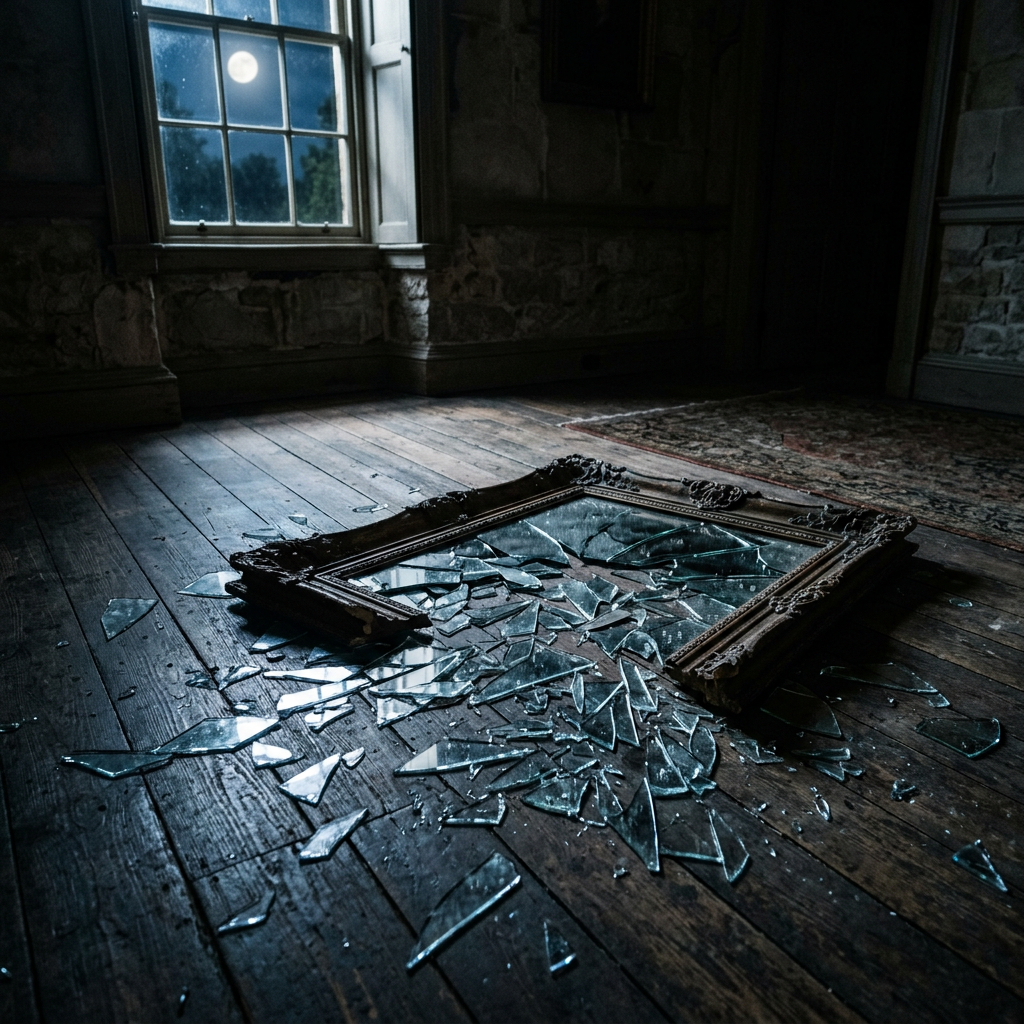
Some truths are not discovered—they are inflicted. They arrive like a thunderclap on a clear day, shattering the comfortable narratives we have built around ourselves. This is the essence of the Shattered Mirror—a moment when the carefully constructed illusion of reality breaks, revealing the jagged, and often unsettling, pieces of what lies beneath.
The Fall of the Splintered Mirror
The mirror in question is not made of glass and silver. It is a construct of the mind: a collection of beliefs, assumptions, and carefully curated memories that project a flattering image of our world. It works perfectly until it doesn’t. One day, the hairline fracture appears—a contradiction too large to ignore, a betrayal too deep to excuse, a fact too sharp to deny.
> “The moment the mirror breaks, you do not lose your reflection. You lose the comfort of not seeing the cracks.”
This fall is rarely quiet. It is accompanied by a sound like the shattering of crystal—a resonance that vibrates through every certainty you once held. The pieces scatter, and the image they once held is replaced by a thousand distorted versions of the same truth.
A Scroll of Broken Reflections
Examining the aftermath reveals a landscape of fragments. Each shard of the broken mirror tells a story, but none of them align perfectly with the others. This is the scroll of broken reflections—a record of what was, what is, and what will never be again.
Here are the truths often found written on these shattered shards:
- The Lost Glow: The shimmering promise of a future that now feels impossible or naive.
- The Sharp Edge: The painful realization of your own complicity or blindness in maintaining the illusion.
- The Flat Surface: The hard, undeniable facts that were once glossed over or ignored.
- The Cracked Vein: The pattern of a relationship, a belief, or a system that was flawed from the start.
Navigating this scroll is not about picking up the pieces and trying to glue them back together. The illusion is gone forever. Instead, it is about learning to walk barefoot through the broken glass without bleeding out.
The Illusion of Chance Dissolves
One of the most powerful illusions the mirror maintains is the idea of random chance and innocent coincidence. We attribute failures to bad luck, betrayals to misunderstandings, and systemic issues to “just the way things are.”
When the mirror breaks, this illusion is the first to dissolve. You begin to see the hidden architecture:
- The subtle manipulation you mistook for kindness.
- The pattern of neglect you called independence.
- The calculated moves you dismissed as mistakes.
The dissolution of chance is terrifying because it introduces agency. You can no longer blame the weather when you realize you chose to stand in the storm. As one unseen observer once whispered: “When you see the strings, you can no longer pretend the puppet dances alone.”
Pure Light That Shatters Smoke
If the broken mirror reveals fragments, then what follows is the pure light—a single, piercing beam that cuts through the lingering smoke of confusion and denial. This light is simple, direct, and often brutal.
It has no interest in soothing your ego. It simply illuminates what is. In this light, the smoke of excuses and rationalizations evaporates. You see clearly:
- That the person you trusted was never who you thought they were.
- That the path you were on was leading to a cliff.
- That the story you told yourself was a beautiful, fabricated lie.
This pure light offers no comfort. It offers only clarity. And in that clarity lies the first step toward genuine freedom, because you can only navigate a landscape you can actually see.
Amadou’s Witness to the Truth
Every story of a shattered mirror needs a witness. Let me introduce you to Amadou, a fisherman from a small coastal village. For years, he believed his partner, Sita, loved him. She told him stories, they shared a home, and he trusted her implicitly.
Then, one evening, he returned early from the sea. He found a letter, not addressed to him. The words on the page were not for his eyes, but they burned into his mind. The mirror did not crack; it detonated.
Amadou’s witness was not to the betrayal itself, but to the aftermath. He stood in the middle of their living room, surrounded by the shards of his former life. He did not scream. He did not cry. He simply witnessed.
> “To witness the truth is not to accept it. It is to stop pretending you do not see it.”
Amadou’s journey was not about forgiveness or revenge. It was about learning to see himself in a world with no reflection to comfort him. He had to learn who he was without the mirror telling him who he was supposed to be.
Conclusion
The Shattered Mirror is not a tragedy; it is an awakening. The breaking of the illusion hurts because it demands that we grow up, that we see the world as it is, not as we wish it to be. The pieces on the floor are not a mess to be cleaned up, but a mosaic of a new, more honest reality. To step through the empty frame where the mirror once hung is to leave behind the comfortable prison of lies and enter the terrifying, beautiful wilderness of the truth. It is the only path that leads to a life that is truly your own.
Leave a Reply