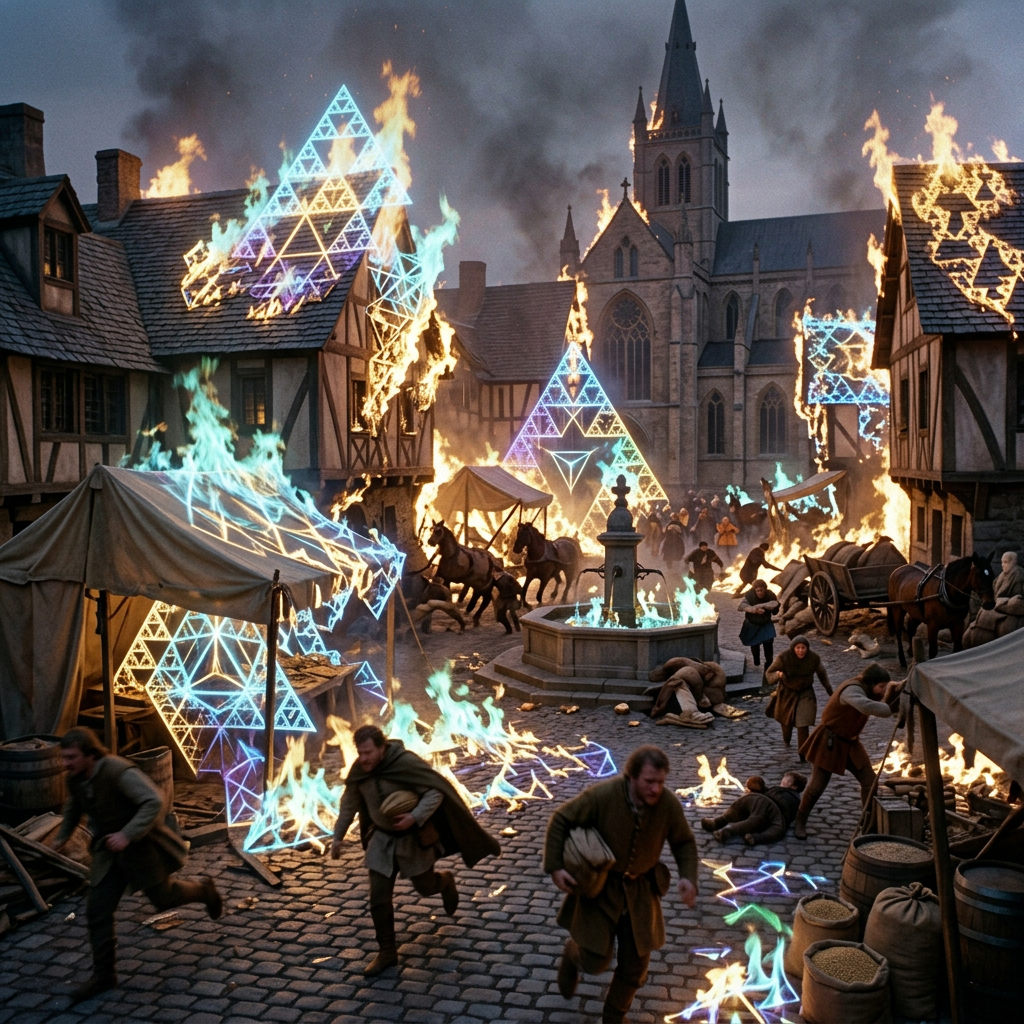
There are moments in history when the veil between the mortal and the divine grows thin, and the heavens speak not in whispers but in roaring judgment. The legend of the Third Trumpet is one such moment—a tale of fire, fortune, and the ultimate reckoning. When the sound echoed over the ancient hills of Berat, it did not announce a gentle dawn. Instead, it marked the immolation of a city’s soul, where the glittering altars of greed were reduced to embers. This is the story of how a sacred wind swept through the gambler’s havens, leaving behind nothing but ash and a haunting silence.
The Third Trumpet Sounds Over Berat’s Hill
The air above Berat grew thick and still, as if the world itself was holding its breath. Then came the blast—a low, resonant hum that swelled into a deafening declaration. It was not a sound heard with the ears alone, but with the bones and the spirit. The Third Trumpet is rarely spoken of in common lore; it is the one that calls for the upending of false idols, for the cleansing of places where luck is bought and souls are bartered.
- It was heard first by shepherds on the ridges, who saw the sky ripple like water.
- Then by merchants in the lower city, who felt their coins tremble in their purses.
- Finally by those within the walls of the pleasure halls, where laughter turned to screams.
The note did not fade. It lingered, a spectral vibration that warned of what was to come. This was no random calamity. It was a targeted judgment, a divine fire sale where the only currency was repentance.
Holy Fire and Ash: A Market’s Righteous Call
In the heart of Berat’s trade quarter stood the Veil Exchange—a sprawling bazaar of indulgence where fortunes were made and lost before the sun set. It was a place of stacked chips, spinning wheels, and dice that seemed to dance to the devil’s own tune. But the Third Trumpet did not ring to destroy the innocent. It came for the structures built on deceit.
Consider what the Market represented:
- A false economy of chance, where the poor were bled dry by the rich.
- An architecture of walls and curtains designed to hide corruption.
- A culture of gambler’s pride, where losing was a sin and winning a blasphemy.
When the fire came, it was not by accident. A strange, golden flame licked the base of the Exchange’s pillars, moving with purpose. It did not touch the nearby bakeries or the cloth stalls. It climbed the wood and the silk, consuming the gambling dens floor by floor. The call was clear: the holy cannot abide the unholy.
Gambler’s Citadels Crumble to Glowing Dust
These were no mere tents or temporary shacks. The gambler’s citadels were fortresses of opulence: thick stone walls, iron gates, and vaults stuffed with stolen wealth. Yet under the influence of the Third Trumpet, they became as fragile as sandcastles before the tide. The fire did not burn from without; it erupted from within—from the very tables where debts were paid with blood.
Key details of the collapse:
- The Ivory Spire, a tower of card players, fell in on itself as the marble glowed red and crumbled.
- The Gilded Pit, where fortunes wagered on a single turn of a card, melted into a river of molten gold that ran into the sewers.
- The Cage of Serpents, a notorious den of loaded dice, was swallowed by a sinkhole that opened beneath its foundations.
Each citadel’s ruin was unique, yet they shared a common truth: no amount of luck could save them. The gamblers, once so confident, fled into the night, their pockets empty and their eyes wide with the terror of a power they could not bargain with.
Selene of Berat Witnesses the Sacred Carnage
Among the chaos stood a single figure, unmoving—Selene, a woman known as the Oracle of the Ashen Path. She had foretold this day, but even she could not imagine its beauty. To her, the destruction was not a tragedy but a necessary surgery. She walked through the streets, her bare feet unburned by the coals that littered the ground.
Selene observed:
- The sacred geometry of the flames, which traced angelic symbols on the walls.
- The faces of the fleeing patrons, stripped of their masks of bravado.
- The silence that followed each crash, a profound quiet that felt like peace.
She whispered a single phrase to herself: “The house always wins, but today, the house was theirs.” Her presence was a testament to the idea that witnessing such a purge was a form of prayer. She did not weep for the walls; she prayed for the souls they had imprisoned.
The Fall of Chance: A River of Flame Purges
The final act unfolded as the flames gathered into a singular, flowing torrent. It was not a river of water that cleansed Berat, but a river of flame—a liquid, white-hot current that coursed through the main avenue, the Avenue of Dice. It burned away the pavestones etched with gambling symbols and the iron grilles of loan sharks.
What the river left behind was a blank canvas:
- No more painted promises of quick riches.
- No more shattered families addicted to the thrill.
- Only the clean scent of scorched earth and the possibility of rebirth.
The Third Trumpet faded as the last ember flickered out. The gambler’s citadels were gone. Berat’s hills, once dotted with the glitter of ill-gotten gold, stood dark and silent under the stars. The city would have to learn to breathe again, stripped of its false gods.
In the end, the story of the Third Trumpet is not about destruction for its own sake. It is a meditation on what must be burned away so that something genuine can grow. The gambler’s citadels turned to dust, but the soil beneath them, for the first time in decades, was fertile. Whether the people of Berat would plant seeds of virtue or rebuild their temples of chance remained to be seen. But for one night, the fire was righteous, and the silence was holy.
Leave a Reply