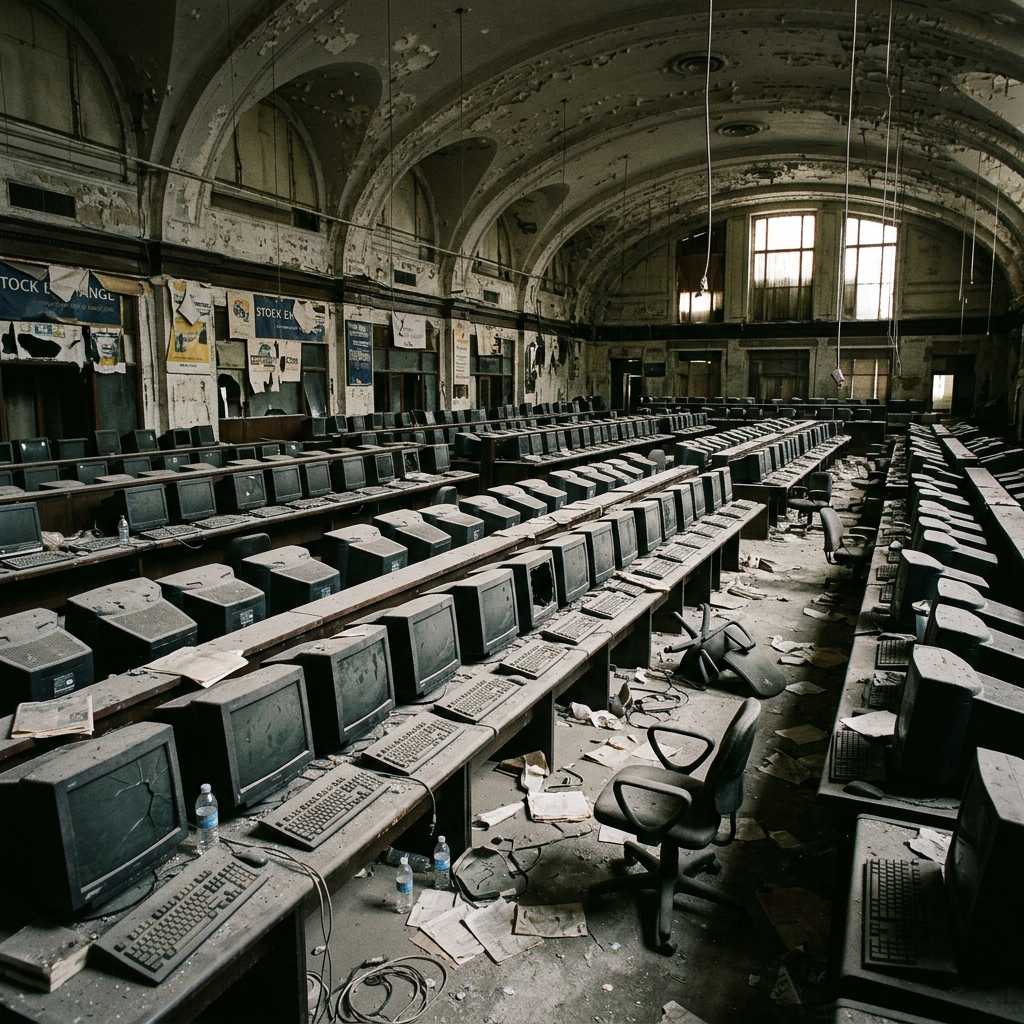
When They Voted to Bury a Future Without Gambling
It began not with a bang, but with a ballot. In a chamber somewhere between regulation and ruin, a committee of men and women in sharp suits decided that uncertainty was better than stasis. They voted to bury a future that did not include wagering—a future built on slow, predictable growth, on careful assessments and measured risks. Instead, they chose the roulette wheel. They chose the thrill of the spin, the rush of the red-black binary, the seductive whisper of “maybe this time.”
The decision was not irrational, they argued. It was progressive. They painted a picture where chance would liberate capital, where the chaos of gambling would unlock doors that prudence had kept locked. But as the votes were tallied, as the gavel fell, a strange thing happened outside the windows: the sky began to bleed.
The Sky Turned Red as Chance Defeated Order
I was standing on a terrace overlooking the city’s financial district when the light shifted. The clouds, once a neutral gray, absorbed a deep crimson glow. It wasn’t a sunset—it was too early, and the color came from everywhere at once, as if the atmosphere itself had been dyed by a wound. People on the streets paused. Some looked up and laughed nervously, others walked faster.
That was the moment order died. Not quietly, not with a whimper, but with a spectacle that demanded witnesses. The red sky became a symbol: the day when humanity collectively decided that the known path was too boring, too safe, too alive. They wanted the thrill of the fall. And so, the sky turned red as a warning, or perhaps as a celebration.
For those of us who understood what the vote truly meant, the color was a signal: from now on, everything was a bet. Your job? A bet. Your savings? A bet. The very air you breathe? A wager against pollution, against catastrophe, against the laws of probability that once kept the world spinning.
> Important lesson: When a society votes to institutionalize gambling, it is not voting for freedom—it is voting for a specific kind of tyranny, where the house always wins, and the players call it democracy.
I Watched Them Silence the Death of Wagering
In the days following, dissent was not merely discouraged—it was silenced. I attended a meeting where a small group of economists, the last holdouts of the Order Party, presented their final report. It was titled “The Death of Wagering: A Eulogy for Stability.” They had charts. They had models. They had proof that the chosen path led to ruin within a generation.
But no one listened. The room was filled with the newly empowered—traders, speculators, risk architects. They laughed. One of them stood up and said, “You speak of death as if it’s something to fear. Death is just the final payout.” The economists were escorted out. Their report was shredded. The death of wagering was not mourned; it was erased.
I watched this happen. I watched them silence the truth because the truth was inconvenient for their beautiful, bloody game. The red sky outside the window seemed to pulse brighter, as if feeding on the denial.
> Crucial insight: When you silence the voice that warns of collapse, you do not prevent the collapse—you merely ensure it surprises you.
Ash Fell Like Judgment on the Trading Floor
A month later, the first signs of decay appeared. But it wasn’t financial decay—it was literal. Ash began to fall from the red sky. Fine, gray-black particles that settled on the spotless marble floors of the Central Exchange. Traders, still high on the thrill of their new order, brushed the ash from their shoulders and continued shouting buy and sell orders.
The ash smelled of burnt paper and ozone. It came from nowhere—no volcanoes, no wildfires. It was as if the sky itself was disintegrating, slowly turning to cinders. Some called it an atmospheric anomaly. Others whispered that it was judgment. The ash fell like a slow, silent condemnation on the trading floor, covering screens, keyboards, and the expensive shoes of those who had voted for chance.
Yet no one stopped. The red sky, the falling ash—these were not deterrents. They were enhancements. The risk was now literal. Every breath carried the taste of smoke. Every trade was made under a canopy of possible fire.
> Reminder: In a system built on chance, even the weather becomes a gamble. And the sky does not offer favorable odds.
Rivers of Finance Run Red With a Chosen Lie
Today, the city’s financial heart is a river of red. Not just in the metaphorical sense of losses, but physically. The ash has settled into the canals, the fountains, the reflecting pools outside the banks. They run red, tinted by the particles that fall from the bleeding sky. Children play near these rivers, dipping their hands into the crimson flow, unaware that they are touching the aftermath of a choice they never made.
The architects of this new order call it adaptation. They call it progress. They call it the future. But I know the truth: we chose chance because we were afraid of the mundane. We chose the lie of perpetual excitement over the quiet truth of stability. The red sky is not a punishment—it is a mirror. It shows us exactly what we voted for.
And the rivers? They will run red until the last bet is settled. Until the house closes its doors. Until someone finally says, “Enough.” But I wonder if that day will ever come, or if we will gamble until there is nothing left to wager.
Conclusion
The day they chose chance over order was not a revolution—it was a surrender. We surrendered the boring but solid ground of predictability for the thrilling abyss of uncertainty. The red sky, the falling ash, the crimson rivers—these are not omens of a future to come. They are the current reality of a world that decided to bet everything, including its own sky.
As I write this, the ash continues to fall. The trading floors are still shouting. The children still play in the red water. And I am left with a single, haunting question: when the final bet is made and the house takes its last chip, who will be left to remember that we once had a choice not to gamble at all?
Leave a Reply